Trending


Kenyan entrepreneur Ruth Njeri Kabiru has built a certified potato seed business after an unsuccessful search for the corporate career she once wanted.
The 28-year-old founded and now directs Crop Care AgriHub in Kenya’s Nakuru County. She produces and sells certified potato seeds, trains farmers and helps growers start seed production. Kabiru began her journey into agriculture after joining a potato cooperative in Kuresoi during the COVID-19 pandemic.
Kabiru studied Business Administration and Finance at Maseno University. She also pursued the Certified Public Accountant qualification. After graduation, she hoped to work for a corporation in Nairobi. However, the COVID-19 pandemic made it difficult to find an internship.
“Everybody was saying, ‘we’re working from home. We’re not taking on interns right now’,” she recalled.
A friend later suggested a potato cooperative in Kuresoi. Kabiru applied and secured an internship. She expected to work mainly in the office. Instead, she began visiting farms, attending farmer training sessions and supporting field activities. She later became a trainer and taught farmers about potato production.
“Going to the field and interacting with farmers really was good for me,” she said.
That experience exposed her to one of Kenya’s biggest potato challenges: access to quality planting material. Kabiru noticed that some farmers kept potatoes from previous harvests to plant again. She initially wondered why farmers were storing freshly harvested potatoes instead of eating them. She later learnt that farmers were recycling them as seed for the next season.
Kabiru believed there was a better way. She leased one acre and started farming on her own. She secured her first potato seed through connections made during her cooperative work.
“That one acre would perform really, really well. I think I made over 350K in revenue, so that was good footing,” she said.
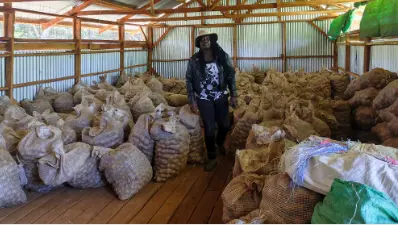
The result convinced her that farming could be profitable. It also showed her how seed quality can affect farm output. Kabiru then founded Crop Care AgriHub. Certified potato seeds are produced and inspected under specific standards.
The Kenya Plant Health Inspectorate Service says certified seed can improve yields by 30 to 50 per cent and help control diseases. However, certified seed remains difficult for many farmers to access. KEPHIS says certified seed production meets less than five per cent of Kenya’s national demand.
The agency attributes the shortage to limited seed multipliers and high production costs. Kabiru says producing certified seed is also expensive.
“Potato seed business is quite capital intensive, seriously, because you also have to pay for inspections from the government,” she said.
Seed producers must meet KEPHIS requirements before selling certified planting material. Kabiru said her seed is tested for diseases and carries KEPHIS labels.
“So for you to be a seed merchant in Kenya, you have to be registered with KEPHIS,” she said.
Daniel Kamithi, founder of Nakuru Potato Cooperative Union, has farmed potatoes since 1982. He said certified seed has improved potato production since its introduction in 2012.
“Certified seeds are standard seeds that have been studied, how to preserve them, how they work, and management of these seeds, for example, from insects, is well taught to farmers,” Kamithi said.
Waweru Karaithi, a farmer since 2012, has bought certified seeds from Kabiru for three years. He said recycled seeds have produced lower yields on his farm.
“I have learnt that recycled potato seeds end up losing their quality, and the quantity of production is also low compared to certified seeds,” he said.
Karaithi said a 50-kilogram bag of certified seed can produce up to five to seven 90-kilogram bags of potatoes on his farm. Kabiru says fewer than 10 per cent of Kenyan farmers currently use certified seed.
“But now, when it comes to harvest, the difference is like you know, night and day. Too big because one certified seed is free of diseases,” she said.
Kabiru has also noticed the strong role women play in potato farming. She says women often make up most of the farmers attending her training sessions.
“You will see in training, 80% will be women, not men but if you look at the farm, the title deeds are held by men,” she said.
She has also used social media to reach more farmers. Some customers contact her after seeing her farm activities and testimonials online. She provides information about seeds, fertiliser and farming methods before they buy.
“Occasionally I post testimonials from farmers. If somebody comes and gets seed from me and then they make a million that season. For me, I’m good,” Kabiru said.
She said farmers’ success gives her greater satisfaction, and Kabiru has also noticed more young people showing interest in agriculture.
“They are able to pay their school fees. They’re able to pay for their livelihoods, and they also have enough money to come back here. I’ve seen a rise of Gen Zs and Gen Alphas really wanting to get into farming,” she said.
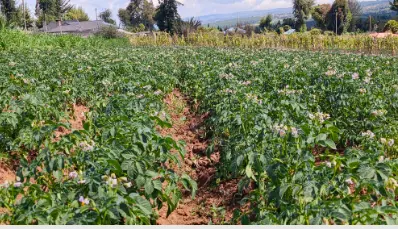
Potato is Kenya’s second most important staple crop after maize. It supports food security and provides livelihoods across the value chain. Production also grew significantly between 2018 and 2023, according to the Kenya Institute for Public Policy Research and Analysis. However, Kenya still produces far below its potential.
A 2026 study published in the European Potato Journal estimated average potato yields at below 10 tonnes per hectare. The potential yield is about 35 to 40 tonnes per hectare. Across Africa, potato production reached about 34.2 million tonnes in 2024, according to FAOSTAT data. That represented about nine per cent of global production.
Egypt, Algeria, South Africa, Morocco and Kenya are among Africa’s major potato producers. Kabiru believes wider access to certified seed could help Kenya increase production and eventually expand exports to neighbouring countries.
Kabiru’s work has also opened opportunities beyond her farm. She has secured sponsorship to attend the World Potato Congress in Kenya in October 2026. The event will bring together growers, researchers, policymakers, investors and other industry leaders from more than 60 countries. Kabiru sees the congress as an opportunity to showcase Kenyan farmers and build international partnerships.
Read More : Dangote to Launch $16 Billion Refinery in Kenya
“The significance is that it’s bringing all stakeholders in the potato industry globally and in Kenya.”
“So it’s a good opportunity for the world to see what Kenyan potato farmers are doing, because we’ll be showcasing what we do in our farms,” she said.
For Kabiru, the goal goes beyond selling seed. She wants to provide farmers with reliable information and quality planting material. She also hopes to help more small-scale farmers enter certified seed production. Her journey from finance graduate to seed producer shows how a failed career plan can lead to a new business opportunity.