Trending

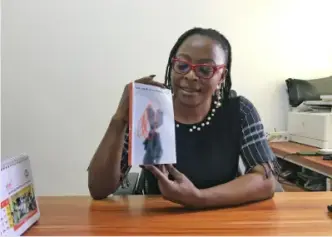
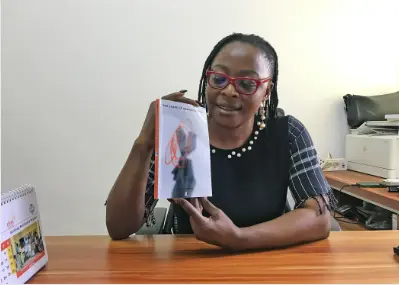
Cameroonian author Comfort Mussa has made her debut novella available in English and French Braille, giving readers with visual impairments greater access to literature.
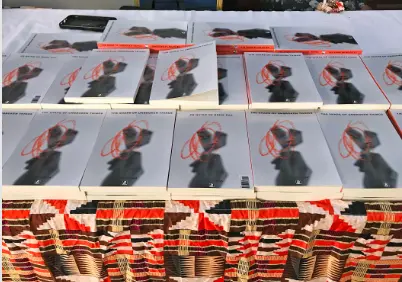
The book, The Shape of Unbroken Things, is also available in print and digital formats. Its publication marks an effort to make accessibility part of the publishing process from the start.
For Antoine Aymard Lindjeck, a 33-year-old journalist with Cameroon Radio and Television (CRTV), the Braille edition has made a major difference.
Sitting beneath the trees at Yaoundé City Council on a Saturday in October, Lindjeck read the French Braille edition with his fingers. He also read aloud his favourite passage, which begins with the dedication: “To my great-grandmother.”
“Whenever I’m feeling drained by life’s challenges and need a boost of energy, I turn to this book to remind myself that I’m not broken,” he said.
The novella follows a young Cameroonian woman living with a disability. She faces family expectations, love, stigma and pressure to hide her identity to gain acceptance.
Through loss, resilience and self-discovery, she learns that life’s challenges do not make her worthless. The story also explores how faith, community and self-acceptance can shape a person’s understanding of wholeness.
For Lindjeck, the book promotes resilience and unity while challenging the stigma faced by people with disabilities. Published by Bakwa Books, the novella has also addressed a problem Lindjeck experienced throughout his education: the shortage and high cost of Braille books.
He holds a degree in Modern Letters from the University of Yaoundé I. However, he says accessing learning materials was often difficult.
“I had a lot of difficulties in school. It was very tiring to have someone read a text for you to transcribe into Braille, which turned out in volumes,” he said.
“Braille books are not available in the market, and even to transcribe at the few printing houses, it is very expensive.”
His experience reflects a wider challenge for people with visual impairments in Cameroon and elsewhere.
According to the World Blind Union, less than 10 per cent of published books are made available in accessible formats. Many of these are also available only in English.
Acha Rita Ngum, a disability-inclusive development consultant, described Mussa’s publication as a major step for accessible publishing in Cameroon. She said it was difficult to establish how many books had been transcribed into Braille in the country. However, she described Mussa’s decision to make her work accessible before its public release as a first.
Ngum explained that readers with visual impairments and their schools often have to find resource centres to convert printed books into Braille. She also highlighted the cost and size involved in producing Braille editions.
“In the author’s mindset while writing, there is no consideration for persons with visual impairment. There is a huge challenge transcribing books into Braille. A printed book of 150 pages becomes about 800 pages in Braille,” she said.
“That is a stumbling block for many authors and publishers. But for The Shape of Unbroken Things, we noticed accessibility was already taken into consideration,” she added.
Cameroon has taken steps to strengthen access to information and education for people with disabilities. In 2022, the country ratified the Marrakesh Treaty. The agreement allows participating countries to make and share accessible versions of published works under specific copyright exceptions.
Cameroon also ratified the United Nations Convention on the Rights of Persons with Disabilities in 2022. The convention recognises the rights of people with disabilities to accessible education, information and cultural participation.
In 2024, the government validated its National Policy of Inclusive Education, which includes a roadmap to improve access to Braille materials for children with visual impairments.
Reforms are also underway at teacher training colleges to prepare educators to teach using Braille. However, Ngum said a gap remains between government policies and the availability of accessible books.
“We are very excited about this pace-setting trend initiated by Comfort Mussa. We are hopeful many other authors and publishers will follow, so persons with visual impairment can access the same resources at the same time as their peers,” she said.
Lindjeck described Mussa as “the locomotive that will pull other authors” towards considering readers with visual impairments. He also identified limited political commitment and the small number of schools that accept students with disabilities as major barriers.
Mussa, an award-winning journalist and disability advocate, said she considered accessibility from the early stages of writing the novella. After completing the first draft, she reviewed the manuscript with the size of the Braille edition in mind.
An encounter with a young blind girl also influenced her decision. The girl had asked what a picture was, prompting Mussa to think more carefully about how readers with visual impairments would experience the book.
The author said the Braille edition is larger than the print version. She therefore considered how easily students could carry it alongside their other schoolbooks. Mussa also revised parts of the manuscript to make the language more accessible to younger readers.
“I had to go back to the drawing board to rewrite the manuscript to ensure language access and leave some themes hanging because the book is a perspective of a teenager, a child who is in early secondary,” she said.
“And sometimes at that age, they don’t have everything figured out,” she added.
The book is available in English and French Braille, print and e-book formats. However, Mussa said the audiobook would come later.
“The audiobook will be released much later because we wanted students with visual impairment to read the Braille version first,” she said.
Dr Jean Pascal Somb Lingom, a blind lecturer and journalist with Cameroon Radio and Television, explained why Braille remains important for students. He said students who rely only on audiobooks may struggle with spelling and writing.
Reading Braille allows learners to feel the letters that form words. With audio alone, students may recognise a word when they hear it but still need to check how it is spelt.
For Bakwa Books, the publication is also an effort to rethink who can participate in literature. Publisher Dzekashu MacViban said the industry often treats literature as though everyone can access it, even though traditional publishing methods exclude some readers.
“We often speak about literature as though it were universally accessible, yet the ways books are produced and consumed privilege certain readers while excluding others,” he said.
“Bakwa addresses this by making sure the book is available in as many formats as possible, and centres accessibility in the audience’s experience,” he added.
The print edition combines English and French in a tête-bêche format. This means each language begins on the opposite cover, allowing readers to turn the book over to switch languages.
Separate English and French Braille editions were produced in collaboration with the Coco Bertin Inclusive Vocational Training Institute (IFPICB). Bakwa Books has previously published bilingual works, including Your Feet Will Lead You Where Your Heart Is / Le Crépuscule des âmes sœurs in 2020.
MacViban said the publisher’s translation experience helped it expand its approach to accessibility.
“With Comfort Mussa’s book, we extended this thinking beyond linguistic accessibility to include different modes of reading, particularly through the production of English and French Braille editions,” he said.
He added that Bakwa Books hopes to make accessibility a standard part of its publishing process. However, he acknowledged that production costs and the need for specialist partners remain challenges for an independent publisher with limited resources.

The Braille editions were produced at the Inclusive Vocational Training Institute run by the Club des Jeunes Aveugles Réhabilités du Cameroun (CJARC), an organisation that supports people with visual impairments.
The centre first received the digital manuscript and checked it before converting the text into Braille using specialised software. It then printed the editions with a Braille embosser. The centre has 12 machines, each capable of printing 450 copies an hour.
For Mussa’s novella, the first print run consisted of 25 Braille copies: 15 in French and 10 in English. CJARC General Manager and co-founder Coco Bertin said production cost more than FCFA1 million (about $1,704).
Although producing additional copies is expected to cost less, each Braille copy sells for about FCFA30,000. This is three times the FCFA10,000 price of the printed edition. Despite the cost, some schools have bought Braille and print copies for their libraries, even though the novella is not on the school curriculum.
Mussa is also donating Braille copies to schools with students who have visual impairments. She said proceeds from the book launch would help produce more copies. For Lindjeck, the effort represents a question of equal access and participation.
Read More : How AI Is Giving African Events an Afterlife
“I am comforted because as an intellectual, a person living with disability in an intellectual profession like journalism, I can draw from this book of experiences,” he said.
“It can enrich a report and comment,” he added.
Credit: Leocadia Bongben by Bird Story Agency.