Trending
The International Monetary Fund (IMF) has downgraded its 2026 economic outlook for the Middle East and Central Asia, projecting a regional contraction as war-related disruptions to shipping and oil production weigh on economic activity.
In its latest World Economic Outlook report, the fund forecast that the region’s economy would shrink by 0.3 per cent in 2026, reversing its projection of 1.9 per cent growth made six months earlier.
The IMF attributed the downgrade partly to the prospect of a prolonged closure of the Strait of Hormuz, which would extend beyond the assumptions underpinning its April forecast. It expects a significant recovery in 2027 if the strategic waterway reopens and economic activity returns to normal.
Read More : Dangote Refinery Extends IPO Deadline
The conflict began in late February with US-Israeli strikes on Iran. Tehran has since sought to restrict access to the Strait of Hormuz, repeatedly attacking vessels travelling through the waterway without its authorisation.
The United States has responded with a counter-blockade on Iranian ports and increased naval escorts for ships belonging to allied countries.
According to the IMF, Iraq, Kuwait, Qatar and Bahrain face the most severe economic consequences from disruptions to shipping and production. All four countries sustained damage to oil installations during the fighting.
The fund projected that their economies would contract by double digits in 2026 before recording double-digit growth in 2027 as oil production, exports and logistics recover.
Saudi Arabia, the world’s largest crude oil exporter, is expected to record a 3.3 per cent economic contraction this year, followed by growth of 7.9 per cent in 2027.
The projection was issued before a series of deadly attacks on Riyadh airport that began last week.
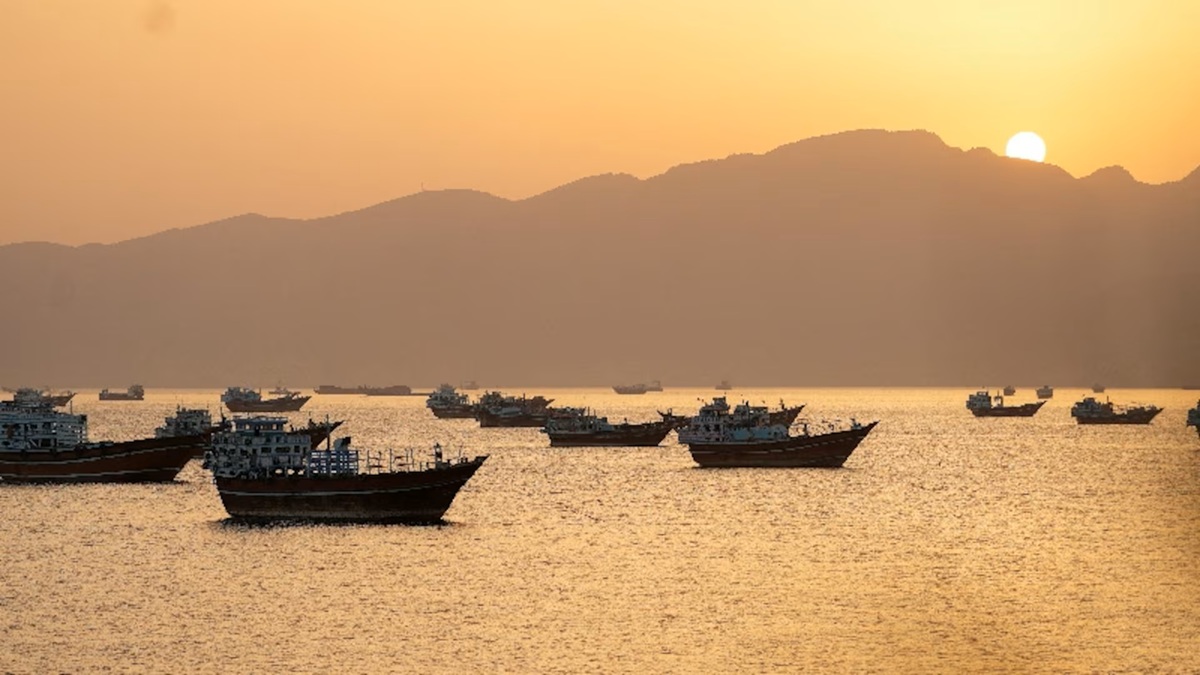
Despite the disruption, the IMF considers Saudi Arabia less exposed than several other regional economies because of its more diversified export routes.
The kingdom has relied on its East-West oil pipeline to transport crude to its Red Sea coast, reducing its dependence on shipments through the Strait of Hormuz.
However, the pipeline was temporarily shut in September after strikes attributed to Iran-backed groups in Iraq damaged the infrastructure.
Saudi oil facilities and tankers in the Red Sea have also faced repeated attacks by Yemen’s Houthi movement, an ally of Tehran. The attacks have continued since the civil war between the Houthis and Yemen’s Riyadh-backed government reignited in July.
The United Arab Emirates, which has coastlines on both sides of the Strait of Hormuz, is forecast to see its economy shrink by 3.9 per cent in 2026.
Read More : China Agrees to ‘Moderate’ Car Exports to Europe
Oman is expected to be the only Gulf country to maintain positive economic growth this year, with the IMF projecting an expansion of 2.4 per cent.
Iran’s economic outlook has also deteriorated sharply, with the fund forecasting a 7.6 per cent decline in gross domestic product as the country faces the combined effects of the war, the blockade and US sanctions.
Other Arab economies are expected to remain relatively resilient to rising energy and food prices, although the IMF warned that regional disruptions continue to weigh on the broader outlook.