Trending


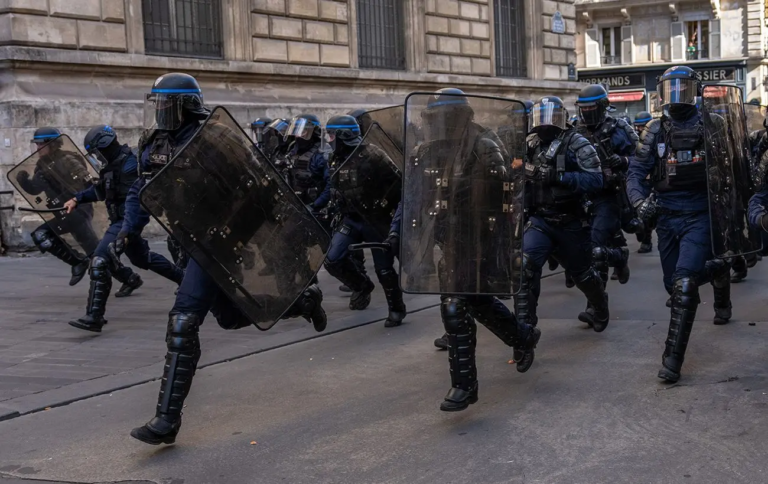
Poland has deployed riot police at its Constitutional Court as Prime Minister Donald Tusk’s government clashes with senior judges over judicial reforms and proposed criminal.
The dispute centres on the government’s efforts to prosecute two senior judges linked to changes made under the former Law and Justice (PiS) administration.
Justice Minister Waldemar Żurek said he had asked for the court’s President, Bogdan Święczkowski, and Vice-President, Bartłomiej Sochański, to lose their immunity from prosecution so they could face criminal charges.
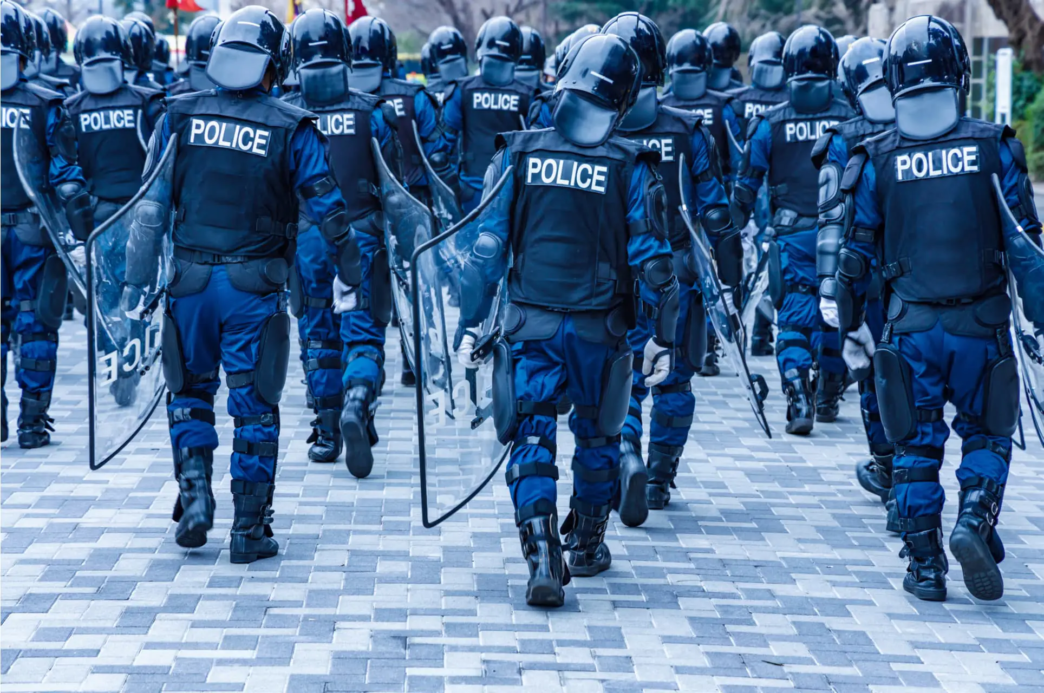
Riot police arrived at the court in Warsaw on Friday, as PiS supporters gathered outside to protest the move. Officers were deployed to prevent demonstrators from entering the building.
Tusk defended the government’s actions, saying his administration was committed to restoring the rule of law.
“Restoring the rule of law is our duty. After years of Law and Justice’s lawlessness, this is a difficult, sometimes painful process that requires decisive action. There is no other way,” he wrote on social media.
However, the Constitutional Court rejected the government’s position. In a social media statement, it said Święczkowski and Sochański remained the court’s legally appointed senior judges.
“All persons participating in these actions are committing the crime of a coup d’etat,” the court said.
The dispute has deep roots in changes made to Poland’s judiciary under the PiS-led government, which took office in 2015.
The administration appointed judges to the Constitutional Court to secure a majority. The court can decide whether legislation is constitutional.
However, the European Court of Human Rights and the Court of Justice of the European Union later ruled that three judges appointed by the PiS majority had been improperly selected because the previous parliament had already filled their positions.
The European courts also ruled that Poland’s Constitutional Court was no longer an “independent and impartial tribunal”.
Tusk’s government has relied on those rulings to stop publishing the court’s decisions. However, it has struggled to reverse the judicial changes introduced under PiS.

Former President Andrzej Duda and current President Karol Nawrocki, who is backed by PiS, have used their presidential veto powers to block some of Tusk’s reforms.
Nawrocki has also refused to swear in five judges elected by parliament since March, citing alleged flaws in their selection process.
One of the judges, Anna Korwin-Piotrowska, has since been placed in temporary charge of the court. Earlier this month, the Council of Europe’s Venice Commission urged Nawrocki to swear in the five judges so they could take their seats.
Żurek said Święczkowski and Sochański should face criminal charges for preventing the newly elected judges from taking part in court proceedings.
Meanwhile, Nawrocki cut short his trip to Senegal to attend the Summer Youth Olympic Games and ordered his plane to return to Warsaw. The government’s latest move has also drawn criticism from some legal experts.
Lawyer Marcin Matczak, a critic of the PiS-era judicial reforms, said the suspension of Święczkowski had no legal basis.
“Today’s action at the Constitutional Court, in my opinion, buries this body and the issue of the rule of law for two decades,” Matczak wrote on social media.
Read More : US Jails Two Chinese Nationals For Spying
“Images of armed police and legal interpretations according to which the minister of justice can remove the president of the Constitutional Court by decree will have a powerful, anti-rule of law backlash for years to come,” he added.
The dispute comes before parliamentary elections scheduled for next year. Some observers see Tusk’s actions as an attempt to strengthen his support among voters who want judicial reform.
However, critics have also questioned his approach. In September, Tusk nominated Maciej Berek, a lawyer and former minister in his cabinet, as a candidate for the Constitutional Court.