Trending

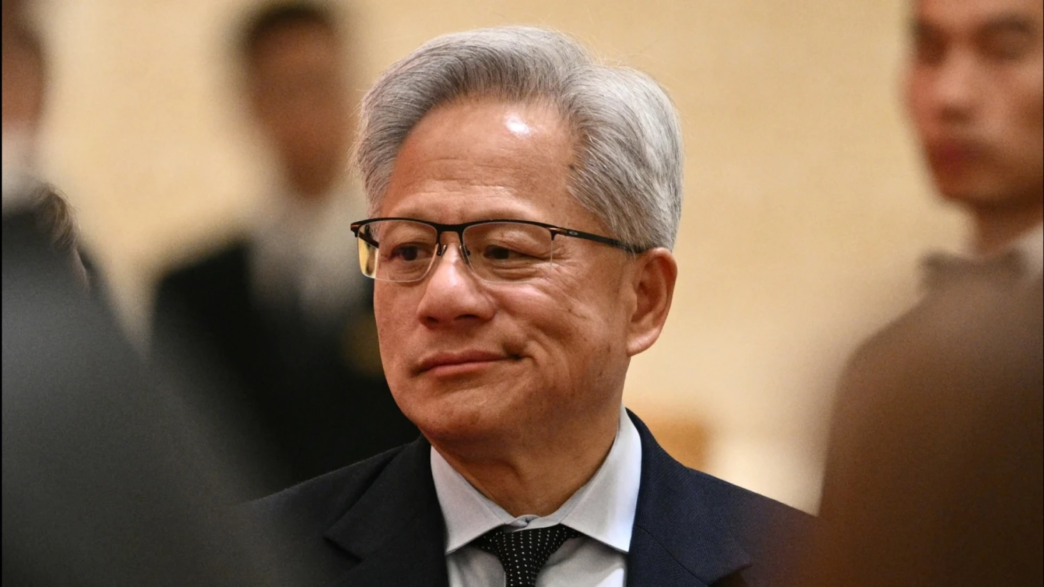
Huang stepped down on Thursday following reports of two extramarital affairs, including one involving a woman accused of spying for China. His departure followed mounting pressure from Nvidia’s board, with Chief Financial Officer Colette Kress appointed interim chief executive.
The controversy has weighed heavily on Nvidia’s market value, with its shares losing approximately 20 per cent since the initial allegations surfaced late last month.
Following Huang’s resignation, the company’s stock plunged nearly 14 per cent before recovering to close just over four per cent lower. Shares subsequently gained one per cent in after-hours trading.
The developments have intensified scrutiny of Nvidia’s corporate governance and raised questions about the stability of the AI sector, where investors have already expressed doubts about profitability and substantial infrastructure spending.
US Senate Banking Committee Chairman Tim Scott has requested testimony from Huang and Commerce Secretary Howard Lutnick over national security concerns involving advanced semiconductor exports to China.
“Recent reports raise serious concerns about our national security and the protection of sensitive U.S. technology,” Scott wrote on X.
Despite the uncertainty, market analysts believe Nvidia’s operations and existing projects are unlikely to be immediately disrupted.
Meanwhile, Nvidia’s competitors, Broadcom and Advanced Micro Devices, recorded gains in New York, although Wall Street’s three major indices closed lower.

Across Asia, Tokyo and Taipei ended Friday’s session with modest gains, while Seoul declined by one per cent. Hong Kong, Shanghai, Sydney, Singapore, Wellington, Manila and Mumbai also recorded losses, while Bangkok and Jakarta advanced.
Investors are also monitoring Anthropic’s anticipated stock market debut next week. The Claude chatbot developer’s initial public offering is expected to raise more than $60 billion, providing another test of investor confidence in the AI industry.
Beyond technology stocks, geopolitical developments have influenced financial markets following President Donald Trump’s comments suggesting reduced interest in reaching a peace agreement with Iran.
“We don’t need a deal with Iran. Those days have long since passed,” Trump wrote on Truth Social.
Oil prices edged higher on Friday after substantial gains in the previous session, reversing some of the declines recorded earlier this month when expectations of improved US-Iran relations had weighed on crude prices.
Read More : China Approves First Oral GLP-1 Weight-Loss Pill
Currency markets also remained volatile as the US dollar climbed above 160 Japanese yen for the first time since early September.
The dollar’s appreciation, supported by expectations of further Federal Reserve interest rate increases, has fuelled speculation that Japanese authorities could intervene to stabilise the yen.
With Nvidia’s leadership transition, Anthropic’s anticipated listing and geopolitical uncertainty influencing sentiment, investors remain focused on whether the technology sector can sustain its growth while broader financial markets face renewed pressure.