Trending

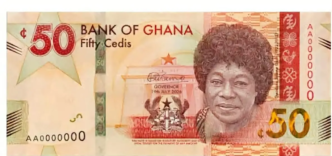
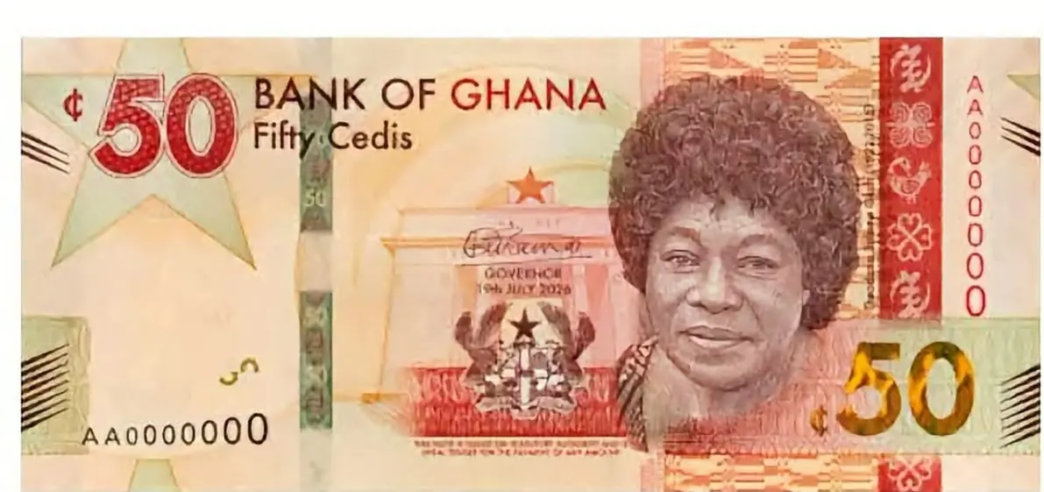
The Bank of Ghana has defended the portrait of national flag designer Mrs Theodosia Salome Okoh on its new GHC50 Heritage Series banknote, insisting that the image was developed from her photographs and not those of her sister, Dr Letitia L. Obeng.
The clarification followed public concerns that the portrait bore a closer resemblance to Dr Obeng than to Mrs Okoh.
The central bank, in a statement issued on Friday, said it used different photographs of Mrs Okoh to develop the image, which was then converted into an engraved artistic representation suitable for banknote production.
It explained that adjustments were made to meet the technical and security requirements of currency printing.
Among the changes was the replacement of Mrs Okoh’s familiar head-tie with a hairstyle commonly worn during her period.
The bank stated that the alteration contributed to public perceptions that the portrait looked different and resembled her sister.
“The photographs were used to create an engraved artistic representation suitable for banknote printing,” the statement said.
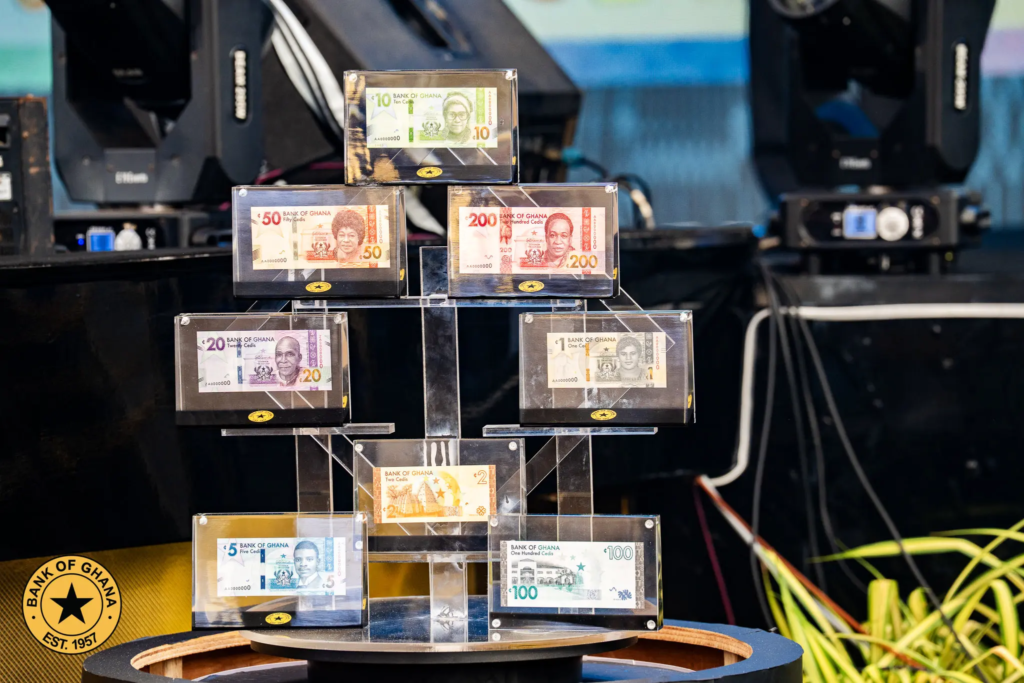
. Credit: BOG.
The bank thanked the Okoh family for its engagement and acknowledged public interest in preserving Ghana’s national heritage.
It said the portrait was intended to honour Mrs Okoh and her contribution to Ghana’s national identity through the design of the country’s flag.
The central bank also reaffirmed its commitment to representing distinguished personalities featured on Ghanaian currency with dignity and respect.
The GHC50 Heritage Series notes are scheduled to enter circulation on December 1, 2026.
The clarification comes after Ghana unveiled redesigned banknotes on Thursday, featuring smaller dimensions, improved durability and upgraded anti-counterfeiting safeguards.
The central bank said the redesign was necessary because some existing banknote designs had been in circulation for more than two decades, while counterfeiting technology and international security standards had continued to evolve.
The new notes are made from reinforced cotton paper and are designed to withstand frequent handling and Ghana’s tropical climate, reducing wear and the cost of replacing damaged currency.
https://t.co/ex3QA1dNUm
— Bank of Ghana (@thebankofghana) November 13, 2026