Trending

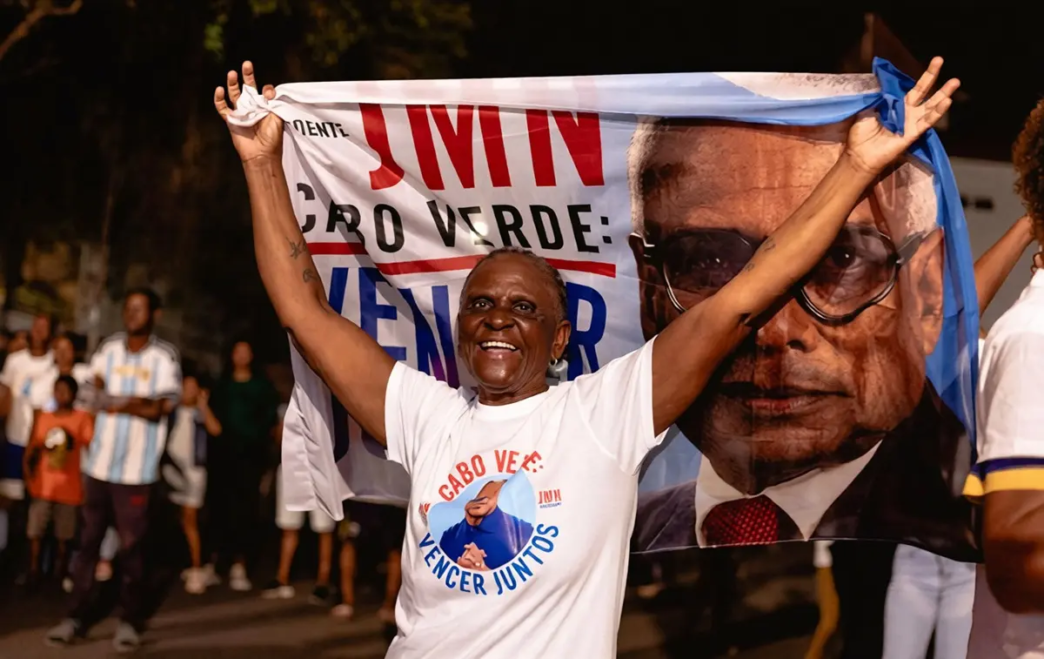
Voters in Cape Verde went to the polls on Sunday to elect a president, with incumbent Jose Maria Neves seeking another five-year term against five other candidates, including the country’s first female presidential contender, Joana Rosa Amado.
Voting began at 0900 GMT and was scheduled to close at 1900 GMT, with provisional results expected overnight.
The election is taking place in the West African island nation, which has gained international attention this year following its national football team’s first-ever qualification for the World Cup knockout stages and the arrival of a cruise ship carrying passengers linked to a hantavirus outbreak.
Read More : Iran Attacks US Base in Bahrain
Situated in the Atlantic Ocean, about 600 kilometres off Senegal’s coast, Cape Verde consists of 10 volcanic islands and has increasingly attracted international tourists.
Cape Verde has maintained a reputation for political stability and democratic governance, distinguishing it from several West African countries that have experienced tensions surrounding presidential elections in recent years.
The country is regarded as one of Africa’s established democracies and has recorded economic growth over the years.
Its culture is associated with morabeza, a Creole term reflecting hospitality and openness, as well as vibrant carnivals and distinctive musical traditions.
The 2026 Ibrahim Index of African Governance by the Mo Ibrahim Foundation placed Cape Verde third among 54 African countries.
The country operates a semi-presidential system in which the prime minister exercises most executive powers, while the president serves primarily as a constitutional guardian and national representative.
The president appoints the prime minister based on the outcome of parliamentary elections and represents Cape Verde in international affairs.
Six candidates are contesting Sunday’s election, with Neves, 66, and Amado, 61, a lawyer and former justice minister, emerging as the main contenders. Both have the backing of the country’s two major political parties.
Neves, who was first elected president in 2021, previously served as prime minister from 2001 to 2016 and led the African Party for the Independence of Cape Verde (PAICV).
His political career has also included service as a lawmaker and mayor.

The PAICV, which won the legislative elections in May, is backing his bid for a second presidential term.
During a campaign rally this week, Neves argued that the country needed experienced leadership capable of guiding it through global uncertainty and maintaining national unity.
“In these times of international uncertainty, it is essential that Cape Verde continues to have a patriotic, experienced president capable of inspiring Cape Verdeans”, he said.
Amado is contesting on the platform of the opposition Movement for Democracy (MpD). Her campaign slogan, “Listen to Cape Verde”, focuses on understanding the concerns and expectations of citizens rather than making sweeping promises.
She also highlighted the significance of having a woman elected president, saying it would encourage young women and girls to aspire to the country’s highest political office.
“The election of a woman to the presidency would show many young women and young girls that no government job is barred from them,” she told the press.
Another contender is 45-year-old surgeon Gilson Alves, who has campaigned on an anti-corruption platform. His proposals include allowing private gun ownership and restoring the death penalty.
Cape Verde was classified as an upper-middle-income country by the World Bank in July, following economic expansion driven largely by tourism and a 16.8 per cent rise in gross national income per capita between 2023 and 2024.
Despite the progress, the island nation continues to face significant challenges, including income inequality, geographical isolation and limited affordable transport links between its islands.
Both leading candidates have pledged to improve air and sea connections across the archipelago and expand accommodation facilities to support the tourism industry.
Read More : 12 Dead, 16 Injured in Iran Bus Crash
The rising cost of living, fuel prices and youth unemployment are also major concerns for voters.
Since the COVID-19 pandemic, many young Cape Verdeans, including university graduates and professionally trained workers, have left the country in search of opportunities abroad.
The continued migration has contributed to labour shortages in several sectors.