


 Trending

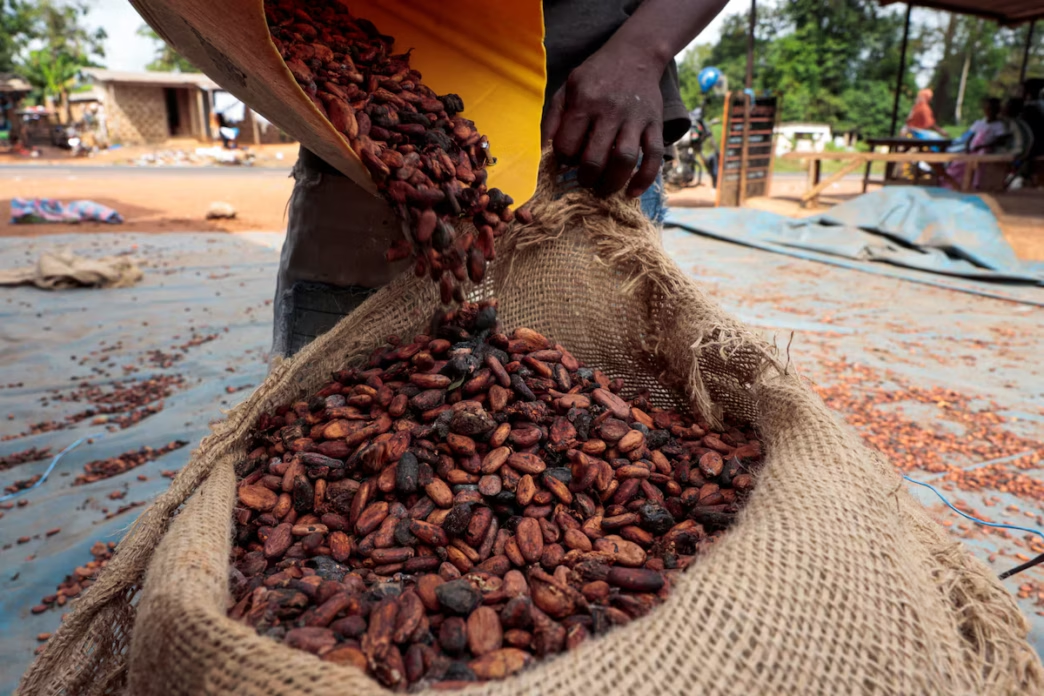
Nigeria exported cocoa beans worth $142 million to the United States, with other agricultural products also contributing to trade between the two countries.
US Consul General in Lagos, Brandon Hudspeth, disclosed this in a News Central TV documentary examining commercial and investment relations between Nigeria and the United States.
Hudspeth said the American market had a strong appetite for Nigerian agricultural products, including cocoa, cashews, prawns, hibiscus and ginger.
“Americans love them some cocoa beans, right? So we end up being, by volume, the largest consumer of chocolate on the planet,” he said.
“And as you know, Nigeria produces high-quality cocoa beans. So to the tune of $142 million, Nigerians exported cocoa beans to the United States, but it doesn’t end there. There are cashews, there are prawns, hibiscus, ginger. These are products, speciality goods that Nigeria does well that the United States has an appetite for.”
He said agricultural trade accounted for about $870 million of the nearly $15 billion in overall trade between Nigeria and the US.

“Earlier, I said that the overall economic trade relationship between Nigeria and the United States was $15 billion. $1 billion, almost $1 billion of that, is in the agricultural sector, about $870 million, because of this comparative advantage I just talked about,” Hudspeth added.
The documentary also examined the challenges facing Nigerian agricultural exporters, particularly the need to meet international quality and regulatory requirements.
Agribusiness and export specialist Anthony Nyong said the effectiveness of existing trade frameworks depended largely on how they were implemented.
“I think part of the reason is not just the steps or the frameworks that exist, it’s actually the execution,” he said.
Nyong explained that inconsistencies between product samples submitted for testing and the actual bulk shipments could lead to export rejections.
“Right now the way this works is samples are tested, but if the sample doesn’t match the bulk or the bulk doesn’t match the sample, it’s going to face rejections,” he said.
He also said Nigeria could benefit from efforts by American businesses to diversify their supply chains following disruptions in global trade.
“Americans need to diversify their supply chain. There has been a lot of supply chain disruptions. And fortunately, Nigeria is poised, strategically located, to be able to merge and bridge that gap,” Nyong said.

However, he identified access to financing and compliance with export regulations as major requirements for Nigerian farmers and businesses seeking to supply the US market.
He said exporting to the United States involved requirements different from those of other markets, including China and the Middle East.
“You have to be able to be compliant to the FDA’s, food, SPS. Those are things that requires, that has a learning curve as well,” he said, referring to US Food and Drug Administration requirements and sanitary and phytosanitary standards.
Nyong called for a structured support system to help businesses understand and meet the requirements for accessing the American market.
He also identified traceability as a critical requirement for agricultural exporters.
“I think right now, I would say the most important, the most critical for every player is traceability,” he said.
The documentary further highlighted the need for investment in food processing, cold storage and transportation infrastructure to maintain product quality from harvest to export.
It noted that strengthening agricultural trade would require financing and private-sector partnerships, alongside digital tools to support small-scale farmers and reduce transportation risks.