


 Trending

Ten months, one walk-off and a ruling in Lausanne
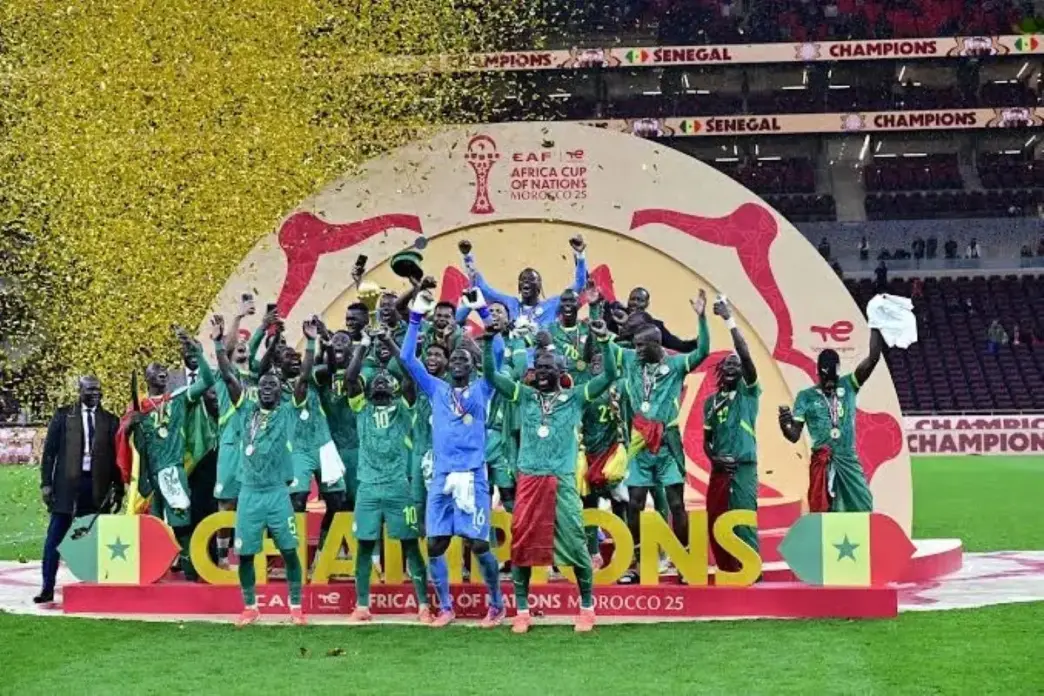
The Court of Arbitration for Sport (CAS) has ended the longest night in recent African football history. In a ruling announced on Tuesday, November 24, 2026, the Lausanne-based tribunal upheld an appeal by the Senegalese Football Federation (FSF) against the Confederation of African Football (CAF) and the Royal Moroccan Football Federation (FRMF), confirming that Senegal’s 1-0 victory over Morocco in the 2025 Africa Cup of Nations final stands.
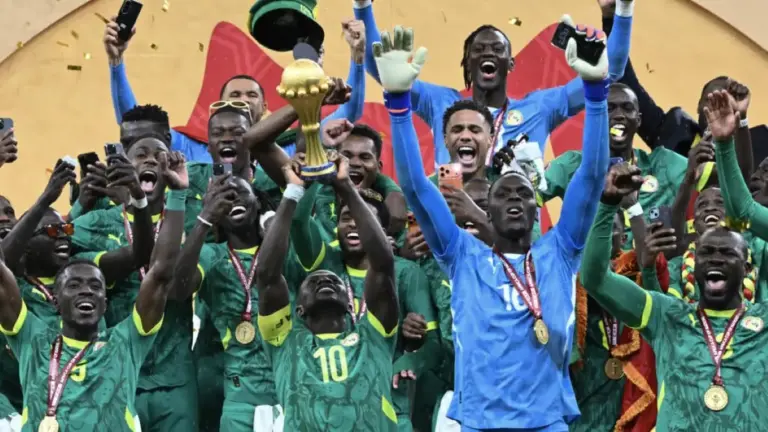
The Teranga Lions are African champions once more.
The decision closes a saga that began on the evening of January 18, 2026, at the Prince Moulay Abdellah Stadium in Rabat and has run, through boardrooms and hearing rooms, for more than ten months.
Read More : Senegal Reclaim AFCON Title After Appeal
The Night in Rabat
Morocco, the hosts, were chasing a first continental crown since 1976 before a packed home crowd. Senegal, champions in 2021, were chasing a second. The match stayed goalless into stoppage time, and tension had built steadily in a tournament in which opponents had complained about refereeing decisions favouring the hosts.
Then came the moments that turned a final into a crisis. Deep into added time, Senegal appeared to have scored a winner, only for Congolese referee Jean-Jacques Ngambo Ndala to rule it out for a foul. Moments later, after a VAR review, he awarded Morocco a penalty, judging that Senegal defender El Hadji Malick Diouf had fouled Brahim Diaz inside the area.
Senegal’s response was extraordinary. Led by coach Pape Thiaw, the squad left the pitch in protest and headed down the tunnel, leaving the Moroccan players, the officials and a bewildered global audience waiting. There were scenes of unrest in the stands and around the pitch. The stoppage lasted well over fifteen minutes, and it was the first walk-off in an AFCON final. Sadio Mané, the team captain, was the only Senegalese player who looked visibly uncomfortable with the protest.
Eventually, both teams returned, and the referee blew his whistle to restart play at the 109th minute of elapsed time (90+19). Diaz stepped up and tried a Panenka, which Edouard Mendy gathered comfortably.
The match went to extra time, and Pape Gueye scored the only goal of the night, Senegal’s first ever in an AFCON final. Mané lifted the trophy.
From the Pitch to the Boardroom
The celebrations did not last. Morocco immediately took the matter to CAF, arguing that Senegal’s walk-off breached the competition’s rules, and CAF’s disciplinary machinery began imposing sanctions on individuals and federations, including a suspension for Thiaw and another for Moroccan captain Achraf Hakimi.
The real blow came on March 17, 2026, when CAF announced it had stripped Senegal of the title. Citing Article 82 of the AFCON Regulations, it ruled that by leaving the field, Senegal had forfeited the match, awarding Morocco a 3-0 win and the trophy. For Dakar, it was a title won on the pitch and lost in a boardroom. Senegal announced it would appeal to CAS.
The decision drew criticism well beyond Senegal. Critics argued that only the referee can abandon a match after a walk-off, and that CAF was substituting its own judgment for a decision the official had already made on the field.
The Argument at CAS
Before a three-member panel composed of Professor Gérald Simon of France as President, Professor Dr Ulrich Haas of Germany and Professor Luigi Fumagalli of Italy, the case came down to one question: who gets to decide whether a match that has been interrupted should resume?
Senegal’s case rested on the so-called ‘field of play’ doctrine. CAS, as the Swiss Federal Tribunal recently described the practice, refrains from reviewing decisions taken on the playing field by referees or other officials responsible for applying the rules of the game, unless there is evidence that those rules were applied arbitrarily or in bad faith.
Senegal argued that Ngambo Ndala’s decision to restart the match at the 109th minute and let it finish with a sporting result fell squarely within that protection.
The FRMF disagreed. It argued the decision was not a field-of-play matter at all, and that Senegal had breached Articles 82 and 84 of the AFCON Regulations, which, it said, should have led the referee to end the match early.
An in-person hearing took place behind closed doors at CAS headquarters in Lausanne on Thursday, October 8, 2026. The parties did not agree to an expedited procedure, so the case followed the standard timeline under CAS rules, which explains why the verdict arrives only now.
The Reasoning
The panel sided with Senegal. In its reasons, it found the ‘field of play’ doctrine applicable and held that the referee’s decision to resume the match or to stop it fell definitively within his sole authority. By blowing his whistle to restart play, it said, the referee had judged that the conditions for resuming had been met: both teams were back on the pitch, and both had expressed their willingness to play on.
The panel also acknowledged the circumstances in which that decision was taken, noting that the referee had to act in an atmosphere of extreme tension.
The implication is plain. Once the referee restarted the match and it ran to a sporting conclusion, CAF had no basis to overturn the result by treating the earlier walk-off as a forfeit. Morocco’s 3-0 award falls away, and the 1-0 scoreline from Rabat is restored.
What it Means
For Senegal, it is vindication, and a second AFCON star, confirmed in court rather than on the pitch alone. For Morocco, it is a bitter end to a campaign that ended up being fought in two arenas.
For African football, the ruling is a reminder with two edges. It affirms that the referee’s authority on the field cannot be rewritten after the fact, which protects the integrity of results. But it does nothing to erase the image of January’s final: a protest that nearly ended the match, a continental body that reversed a result, and a ten-month wait to be sure of a champion.
Questions about governance, officiating and the management of such flashpoints now fall to CAF.
The trophy that Sadio Mané lifted in Rabat stays with Senegal. This time, it is theirs for good.