Trending
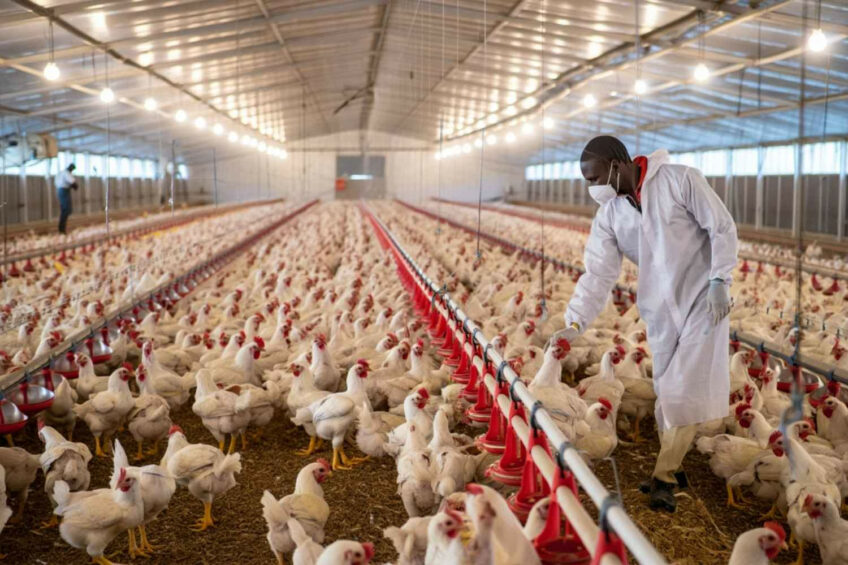
Africa’s poultry industry is undergoing a major transformation, moving away from reliance on imports toward coordinated, policy-led domestic production. Across the continent, countries are aligning finance, skills, and regional partnerships to boost output.
Gabon is leading the charge, planning to ban chicken imports by 2027 and looking to Senegal—long celebrated as Africa’s poultry success story—for guidance.
Industry analysts say this shift is more than an isolated reform. It signals a continent-wide effort to reposition poultry as a strategic sector, driving food security, employment, and industrial growth.
“The poultry industry is becoming central to how African countries think about food security and economic resilience,” according to Daniel Njiwa, director of inclusive markets, trade, and finance at AGRA, pointing to the growing alignment between production and market systems.
Gabon, the latest case, is seeking to replace frozen imports with locally produced chicken and retain value within the economy, a shift that reflects a broader continental repositioning of poultry value chains.
Gabon currently imports about 85,000 tonnes of chicken annually while producing just over 4,000 tonnes locally, according to trade and industry data. To close this gap, the government has launched a CFA6.8 billion ($12 million) credit fund for agriculture and poultry projects through the Bank for Commerce and Entrepreneurship in Gabon.
Momentum is further building through major industrial partnerships. In October 2025, Gabon signed an US$83 million agreement with Algeria’s Groupe Graine International to develop seven breeding farms, a hatchery, and an industrial slaughterhouse expected to produce over 72,000 tonnes of chicken annually by 2027. Earlier in the month, a partnership with Turkish firm Hakan Kiran was finalised to establish a new broiler facility and modern feed mill, further supporting the push toward self-sufficiency.
Senegal provides the model behind this transition. After banning poultry imports in 2005, the country tripled domestic production over 15 years, building capacity across hatcheries, feed systems, and disease control.
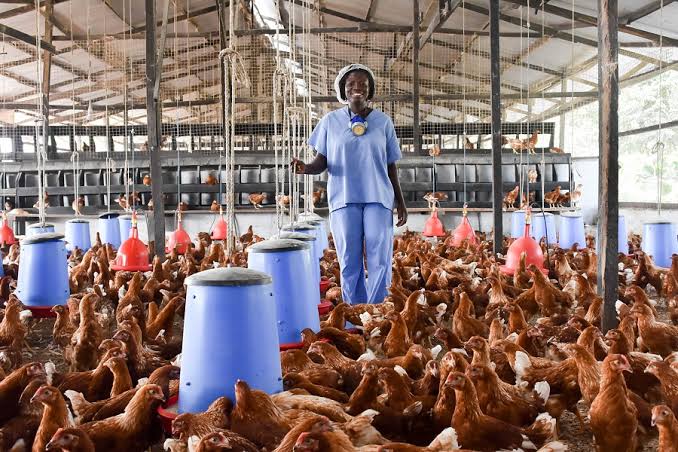
A formal sector strategy introduced in 2010 laid the groundwork for expansion, followed by the establishment of an interprofessional body in 2013 that brought together producers, processors, and distributors to coordinate industry growth.
Broiler chick production rose by 40.47% between 2015 and 2019 to reach 51.4 million units, while laying hen numbers increased by 13.48% to 3.4 million birds, according to the Agricultural and Rural Foresight Initiative.
Feed production linked to the poultry sector also expanded, rising by 17.62% over the same period to 328,000 tonnes.
Over the longer term, Senegal’s chicken meat output grew from 29,042 tonnes in 2005 to 159,502 tonnes in 2024, according to the Food and Agriculture Organisation.
Gabon hopes to replicate Senegal’s success story by pairing finance with workforce development. The government plans to train 40,000 workers across the poultry value chain, including farmers, processors, feed producers, and veterinarians.
The focus is on practical feed formulation, biosecurity, brooding, and processing standards. The strategy reflects a recognition that infrastructure without skills will not deliver production at scale.
Across Africa, governments are treating poultry as a strategic sector in the continent’s quest for food security. South Africa and Egypt operate industrial-scale, highly efficient sectors that provide benchmarks.
According to Wandile Sihlobo, chief economist of the Agricultural Business Chamber of South Africa (Agbiz), “The poultry industry has been a central focus of South Africa’s trade discussions for over a decade. The debate has primarily centered on balancing imports and policy space to cushion the domestic industry in its efforts to expand.”
According to the 2025 BFAP Competitiveness Benchmark Report, South Africa now ranks second worldwide in poultry competitiveness, surpassing the United States and trailing only Brazil.
Feed conversion efficiency has improved by 14.1% over the past decade, with South African producers achieving the shortest production cycle of 31.5 days and higher carcass weights. These gains have helped offset rising feed costs, energy challenges, and disease outbreaks, ensuring that production costs remain below those of the US and most European producers.
Izaak Breitenbach, CEO of the SAPA Broiler Organisation, notes, “Despite numerous challenges, our industry has demonstrated remarkable resilience and innovation.”
Despite this, imports remain significant, projected at 270,000 tonnes in 2026, highlighting the gap between demand and domestic supply.
This dual reality is most visible in South Africa, where a relatively advanced poultry industry still relies on imports to stabilise supply.
Investment is, however, accelerating. Gabon has signed agreements with investors to build seven poultry farms, a hatchery, and an industrial slaughterhouse expected to produce 72,000 tonnes annually by 2027.
Additional plans include feed mills to reduce input costs, which can account for up to 70% of total production expenses.
Across the continent, similar production-led strategies are emerging.
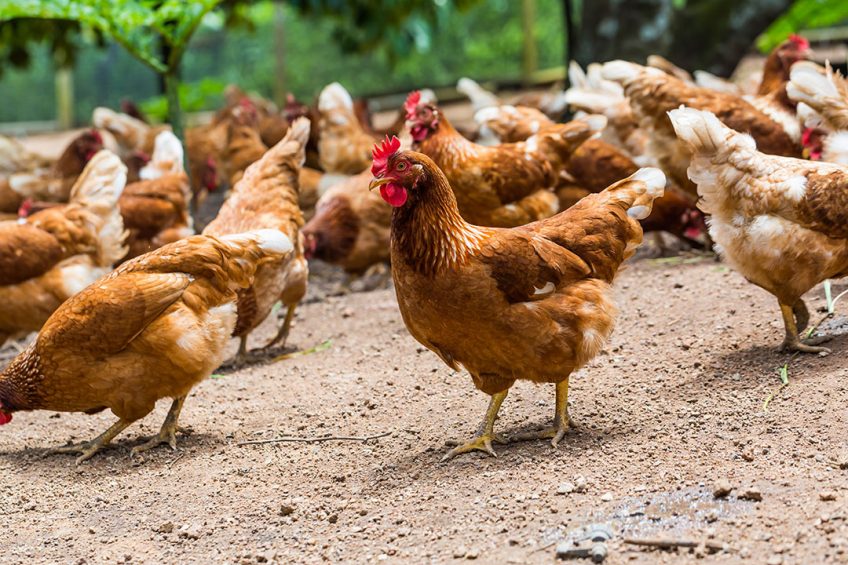
In Ghana, the government is scaling poultry from the household level through the Nkoko Nkitinkiti program, a flagship initiative under its Feed Ghana agenda.
More than 700 households in the West Akyem Municipality have recently received chicks, part of a broader rollout that has already distributed 720,000 birds to 13,000 farmers across 12 districts.
The program targets a sharp structural shift. Ghana aims to raise poultry self-sufficiency from about 12% to over 75% by 2028 while reducing an annual import bill estimated at $400 million.
This decentralised approach complements industrial strategies seen elsewhere.
In Angola, long dependent on imports from Brazil, the US, and the EU, domestic production is now expanding as foreign exchange constraints and high logistics costs reshape incentives.
Poultry output is projected to grow by 9% to 60,000 tonnes in 2026, while consumption rises by 5%, according to USDA-linked analyses.
Yet structural constraints persist, particularly among smallholders who produce over 70% of Africa’s poultry.
Mortality rates remain high, reaching up to 50% in some systems, with chick mortality as high as 75%, while preventable disease costs farmers more than $1 billion annually.
This is driving the adoption of technology to improve productivity in some markets.
Kenya-based agritech firm Poulguard Intelligence is bringing precision technology to poultry management with AI-powered monitoring systems that track flock behaviour using cameras and computer vision.
The system detects early signs of disease, heat stress, or unusual activity in real time, allowing farmers to intervene before outbreaks escalate. Pilot deployments across Ruiru, Juja, and Thika have reduced unexplained mortality by up to 18% and improved feed conversion ratios by 6%, according to company data.
“Before installing the system, we were losing nearly 1,200 birds a month to sudden illness,” said Samuel Mwaura, a Juja poultry farmer. “Now we catch problems early, and productivity has improved noticeably.”
Bonface Orucho, bird story agency.