Trending

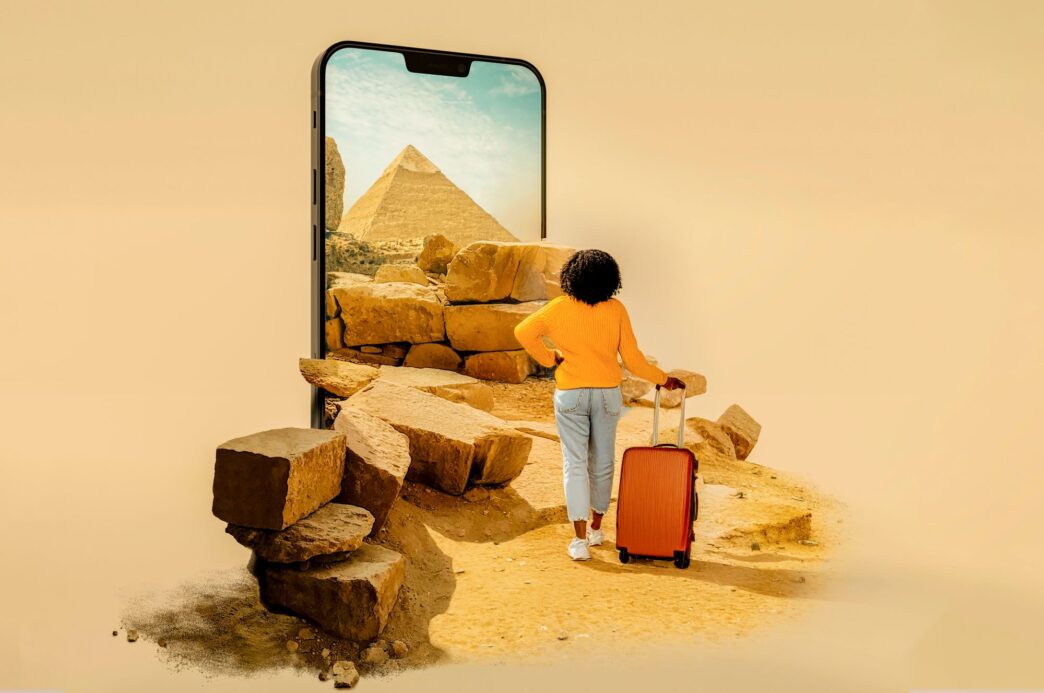
African women are among the strongest voices in the solo travel sector. Diana Daisy Gau is among the many who have embraced the freedom and flexibility that independent travel offers. She uses her social media pages to share her journey and influence how Africans experience global travel.
When you land on Diana Daisy Gau’s TikTok page, the first thing you notice is a grid that resembles a shifting travel tapestry. Thumbnails flow from rainforest greens to desert browns, island blues, and the soft gold of evening markets. One frame shows her picking through a market in Suriname, another captures her laughing from the back of a pickup truck in Laos, and others place her on a canoe in Guyana or learning to fold pandanus leaves in Kiribati.
Nothing about the page feels polished for perfection. Its appeal lies in its immediacy, the quick edits, shaky transitions, and spontaneous laughter. It feels less like a brand and more like a rolling, unfiltered diary shared with more than 330,000 followers across TikTok, an additional 107000 on Instagram, more than 1 million followers on Facebook and another close to 200000 subscribers on YouTube, many of them young African women mapping their own future journeys through her lens.
“It’s been eight months since I tasted Kenyan food. This is the first time. We call it ugali, and this is how we eat it… I just landed in the world’s least visited country. Most travellers I interviewed didn’t even know the answer. Tuvalu only gets about 3,000 tourists a year,” she explains in different video posts.
One thumbnail, now the most recognisable on her feed, opens with the window of a small aircraft descending into Kavieng, a remote coastal town in Papua New Guinea. As she steps onto the tarmac, the camera catches a sudden rush of movement, children running toward her, elders waving her closer, and soft drumbeats rising from the tree line. She flips the camera to herself briefly, half-amused, half-humbled, before cutting to her first conversations with the community.
That video, posted in July 2025, travelled far beyond her usual circle. It reached mainstream news across the Pacific and Africa. Eventually, it led to something few solo content creators ever experience: an invitation to meet Papua New Guinea’s Head of State, who had followed the conversation unfolding around her visit. Gau’s expeditions are a part of a growing travel trend taking shape in Africa. African women are driving the momentum of mainstreaming solo travel more visibly than ever.
Elsewhere in Nigeria, Udoh Ebaide Joy, known online as Go Ebaide, has expanded her solo motorcycle journey across West and North Africa, including a documented leg into Morocco. Her continent-spanning ride has now stretched through roughly 20 countries and more than 23,000 km, following an initial 9,000 km route from Mombasa to Lagos that first drew widespread attention across African and international media.
She shares the journey across TikTok, Instagram, and YouTube, and her high-profile attempt to set a Guinness World Record sparked national debate after the organisation refunded her application fee and said it would review the category. Udoh has since turned the ride into a broader platform, launching African People’s Records and a “Go Ebaide Homecoming” initiative aimed at spotlighting African achievements and expanding who gets formally recognised.
“Travelling alone as a woman is brave, but feeling lonely doesn’t have to be part of the journey,” says solo-travel advocate and content creator Diana Kemunto, who works with Expedition Safaris, a Kenyan travel company.
For her, emotional experience remains one of the most significant unseen forces shaping travel decisions. “The emotional side of solo travel is often overlooked in industry conversations, even though it shapes how women choose routes, accommodation, and activities.”
She argues that this emotional current is universal. “Every woman who travels solo eventually faces the same moment. You’re in a café or an airport lounge, scrolling through your phone, and a small wave of loneliness hits you. It happens to even the most seasoned travellers.”
Kemunto is clear that these moments should not be misunderstood. “Loneliness is just your mind adjusting to new environments, new rhythms, and the silence that comes when you step away from your normal life. It’s temporary. It passes. But it does influence how safe and grounded a traveller feels.”
This shift in emotional awareness now sits at the centre of one of Africa’s most dynamic tourism developments of late 2025, and the trend’s growth is visible in the numbers. According to Atlys, 45% of women applying for solo visas on the platform said they were planning or considering solo travel in 2025, up from 37% a year earlier. Atlys also recorded noticeable spikes in solo-visa searches in October and November, suggesting growing curiosity.
Hostelworld’s State of Solo Travel 2025 report echoes this pattern. About 66% of solo travellers on its platform fall between 18 and 30, and roughly 60% are women. These numbers closely match what operators are reporting for city-plus-safari routes, cultural loops, coastal escapes, and small-camp circuits across Kenya, Tanzania, South Africa, Rwanda, Mauritius, and Ghana.
As demand rises, operators are refining products not only around safety, but around the emotional curve of travelling alone. “Women don’t just want safety. They want environments where connection happens naturally, a friendly guide, a communal dinner table, and small group activities. These things matter more than most people realise,” Kemunto says.
Her guidance has become a blueprint for product design. “A loose daily routine helps. A morning plan, an afternoon anchor, and an easy evening option. When a day has rhythm, confidence stays high, and the emotional dips stay low.”
Operators appear to be deeply absorbing this logic. In November, The Safari Collection launched a “Single Rates Waived, Solo Safari Special,” removing single supplements at selected properties during soft-season windows. Elewana tested similar waivers during the green and mid-season periods, targeting guests who typically avoid single-occupancy rooms due to cost barriers.
For Kemunto, this is the right direction. “If a product feels isolating, solo women will avoid it,” she says. “If it feels predictable, welcoming, and socially alive, they will book it, and they will return.”
Representation is emerging as another stabilising pillar. Dunia Camp in the Serengeti, Africa’s first all-women-run safari camp, continues to attract solo female travellers who cite its staffing model as a source of reassurance and relatability. Its influence extends beyond symbolism. It shows how gender-balanced teams and relatable hosts directly shape booking confidence. The training funnel behind this is widening. The African Bush Camps Foundation is scaling its Female Guides initiative, aiming to reach up to 25 women across Botswana, Zambia, and Zimbabwe by the end of 2025.
Destinations themselves are adapting. Kemunto argues that the best-performing circuits are those that build social touchpoints into itineraries. “Destinations that create social touchpoints, walking tours, cooking classes, craft workshops, women-led activities, consistently rank higher among solo female travellers,” she says.
For her, connection is not about extroversion. “You don’t need to be extroverted to connect. You need spaces where the interaction is organic. Solo women thrive in environments that are warm, transparent, and gently social.” Safety remains foundational.
“Confidence abroad comes from balance. Be open, but stay aware. Trust first instincts, meet new people in public places, and don’t overshare accommodation details too early. These small decisions shape the entire experience.”
Kemunto’s parting message, now echoed widely among solo travellers, captures the more profound change. “Solo travel isn’t about being fearless. It’s about discovering the strength you didn’t know you had. The loneliness passes. The confidence stays.”
Credit: Bonface Orucho, Bird Story Agency