Trending
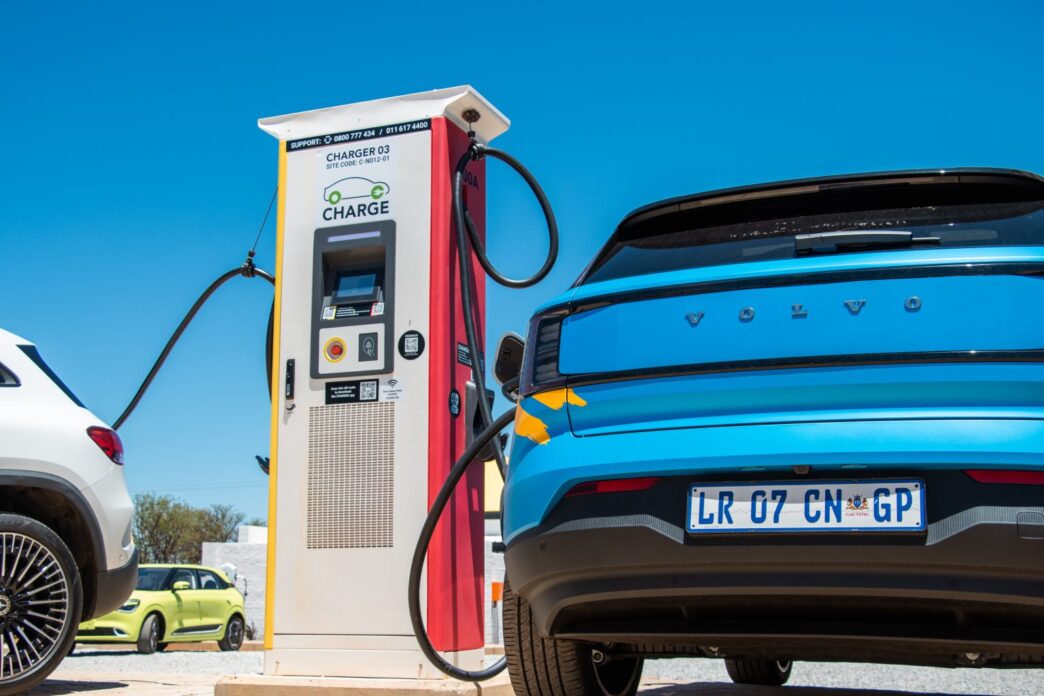
South African electric vehicle infrastructure firm Zero Carbon Charge (CHARGE) has launched the first of two off-grid, solar-powered charging stations along the key Johannesburg-Durban N3 corridor.
Positioned on one of the country’s busiest passenger and freight routes, the new facilities are designed to operate entirely independent of the national grid.
This launch highlights a growing push to expand charging infrastructure as electric vehicle adoption accelerates across Africa’s most industrialised economy, even as severe grid constraints and domestic energy insecurity pose challenges to large-scale electrification.
The decision to build entirely off-grid infrastructure is a strategic move to bypass the limitations of the state power utility, Eskom.
The national grid suffers from constrained capacity, ageing infrastructure, and recurring power cuts, making it ill-equipped to accommodate a surge in demand from electric vehicles.
CHARGE co-founder and chairman Joubert Roux emphasised at the launch that establishing independent solar stations along key transport corridors reduces dependence on volatile fuel prices while creating greater energy and transport cost stability over the long term.

The rollout aligns with strong momentum in the domestic EV market.
According to digital automotive marketplace AutoTrader, search engagement for EVs skyrocketed by over 200 per cent, with a 45 per cent month-on-month increase between February and March 2026.
Furthermore, data from industry body Naamsa shows that new energy vehicle (NEV) sales grew by 7.1 per cent to 16,716 units in 2025, building on a massive 100.6 per cent surge the previous year.
Read More : Ramaphosa Reinstates Suspended Police Chief
Although the local market is still in its early stages—with NEVs making up just 2.8 per cent of total new car sales—interest is clearly intensifying.
Looking ahead, CHARGE intends to scale up its operations rapidly, targeting the installation of 60 stations nationwide by the end of next year to establish a denser network.
While the initial phase of the rollout caters directly to passenger vehicles, Roux revealed that the company also plans to expand into commercial transport by developing dedicated charging hubs for trucks.