Trending


Countries must work together to combat the financing of terrorism, as terrorists “respect no border”, the president of the international terrorist financing and money-laundering watchdog has said.
“The terrorists respect no border. They have no limit. So countries cannot have the luxury of not working together. We need to cooperate,” Elisa de Anda Madrazo told AFP on Tuesday ahead of a gathering on combatting terrorism financing on the sidelines of the G7 finance ministers’ meeting in Paris.
Based in the capital of France, the Financial Action Task Force is an international organisation that assesses the efforts of over 200 nations and jurisdictions to stop money laundering and the funding of terrorism.
It creates a “grey list” of countries that are under closer scrutiny for financial transactions.
De Anda Madrazo’s comments come as international cooperation has taken a hit due to hardening stances of major powers, particularly the United States, Russia and China.
“We need to exchange information,” she said, citing the 2024 Olympic Games in Paris as an example.
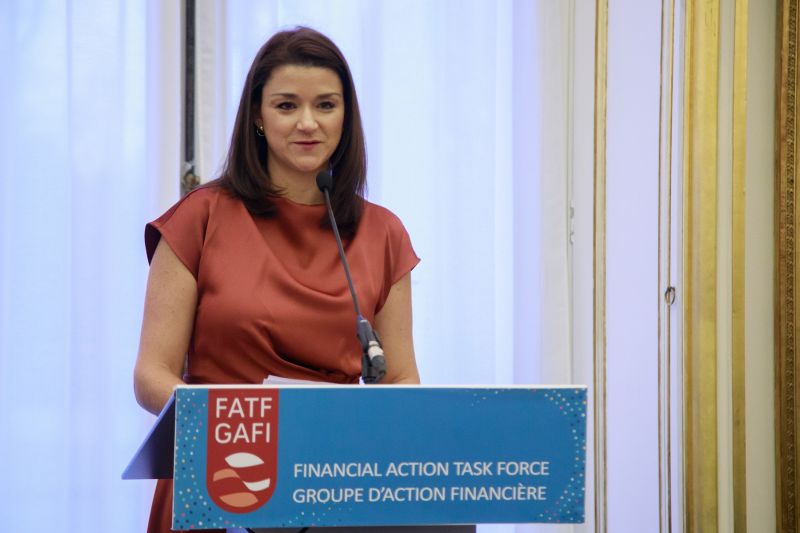
“There were diverse terrorist attacks that were destroyed and stopped because of financial intelligence. So we know it works and we know it can deter the attacks. There’s no luxury to stop cooperation. We need to work stronger together and closer together.”
The French presidency stated that the objective of the fifth “No money for terror” conference, which is attended by several dozen delegations, is to “continue working so we can keep up with innovations, adapt methods and tools, and share best practices.”
The weakening of Al-Qaeda and the Islamic State group to the advantage of their territorial offshoots, as well as the emergence of domestic threats from lone individuals, have been observed by intelligence services as a fragmentation of terrorist threats, especially jihadist ones.
Technology tools and funding sources have also changed.
“The panorama that we have now is completely different than the one that we had in 2018 when this conference started. Back in the day it was more centralised,” de Anda Madrazo said.
“Today we have virtual assets, we have digitalisation and an economy that has a different architecture. And the combination of the traditional mechanisms and the new technologies is indeed a challenge for the authorities to tackle as a risk.”