Trending


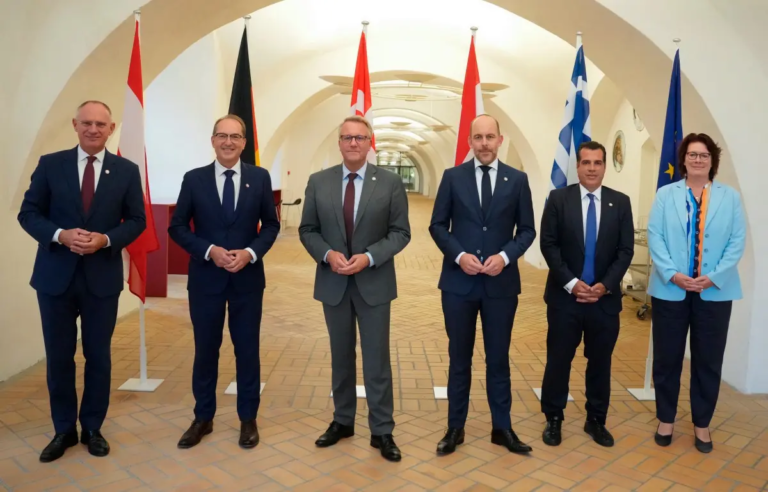
Five European Union (EU) nations—Denmark, Greece, Austria, Germany, and the Netherlands—have joined forces to establish offshore “return hubs” for rejected asylum seekers in a partner country outside the bloc.
Speaking in Copenhagen, Danish Migration Minister Morten Bodskov announced that the coalition expects to secure an agreement with a non-EU nation around New Year’s Day.
Greek Migration and Asylum Minister Thanos Plevris confirmed that advanced negotiations aim to make the offshore facilities fully operational by 2027.
While officials declined to name the candidate host nations, Uganda and Rwanda have emerged as potential locations, with Rwanda confirming preliminary talks with European countries in August.
The initiative follows the European Parliament’s approval of stricter migration rules granting broader detention powers.

Participating ministers argued the model transforms EU migration policy, destroys the business model of human traffickers, and provides new opportunities for irregular migrants who cannot return to their home countries.
The plan faces fierce opposition from human rights groups, European lawmakers, and key EU leaders.
Critics like French President Emmanuel Macron dismissed the concept as ineffective and contrary to European values.
At the same time, European Parliament member Melissa Camara condemned the move as a violation of human dignity.
Similar offshore detention schemes have encountered severe setbacks, including Britain abandoning its Rwanda deportations and Italy facing legal roadblocks over its processing centres in Albania.