Trending
Japan’s Prime Minister Sanae Takaichi has renewed her pledge to pursue a world without nuclear weapons as she marked the 81st anniversary of the atomic bombing of Nagasaki and honoured the victims.
Takaichi attended the Nagasaki Atomic Bomb Victims Memorial Peace Prayer Ceremony on Sunday, where she paid tribute to those killed in the August 9, 1945, attack and honoured survivors of the bombing.
“Eighty-one years since the bombing, I deeply feel the immense efforts of the citizens of Nagasaki, who have steadfastly rebuilt this scorched city into one of beautiful revival, as well as the profound value of peace,” Takaichi wrote in a statement.
Read More : UK Police Bail Five Suspects in Airbase Plot
The United States dropped an atomic bomb on Nagasaki on August 9, 1945, three days after the bombing of Hiroshima.
The attacks, followed by Japan’s surrender, brought the Second World War to an end.
Tens of thousands of people were killed immediately, while many more died later from injuries and radiation-related illnesses.
Takaichi said Japan would continue to promote nuclear disarmament, describing the country as “the sole victim of wartime nuclear attacks.”
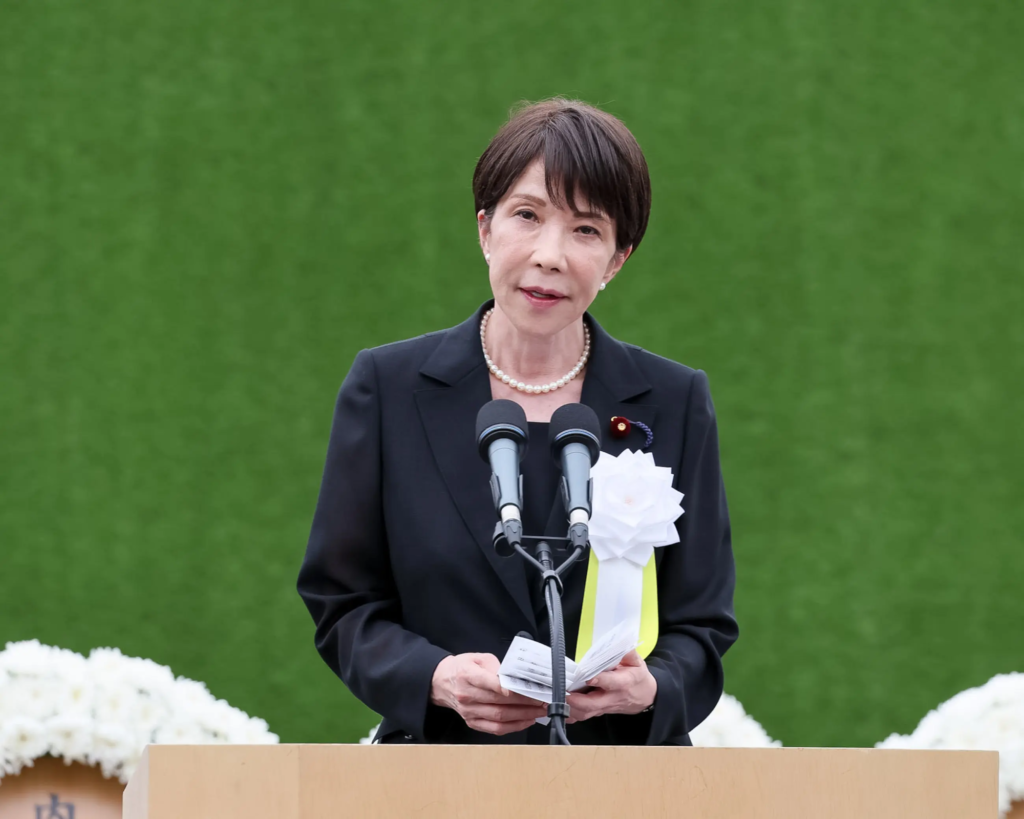
“Under the pledge to make Nagasaki the last place to suffer an atomic bombing, and as a nation that is the sole victim of wartime nuclear attacks, we will advance realistic and practical initiatives toward realising a world free of nuclear weapons,” she said.
She also pledged greater support for atomic bomb survivors, known as hibakusha, particularly in healthcare and welfare.
“Furthermore, we will promote comprehensive support measures encompassing health, medical care, and welfare for atomic bomb survivors,” Takaichi said.
She added that the government would work to speed up the recognition process for illnesses linked to exposure to the atomic bomb.
“In particular, we will conduct reviews for ‘recognition of atomic bomb disease’ as swiftly as possible,” she said.
‘Survivor Trees Symbolise Nagasaki’s Recovery’
Takaichi also noted trees that survived the bombing and have since regrown, describing them as symbols of the city’s resilience.
“In my address, I mentioned the presence in this city of trees that survived the bombing from that day 81 years ago,” she said.
She said the trees’ revival from the ruins reflected the transformation of Nagasaki and the resilience of its people.
“The form of these survivor trees, which have splendidly revived from the ruins, also overlaps with the image of the citizens of Nagasaki, who have built today’s visage as an ‘international cultural city,’” she said.
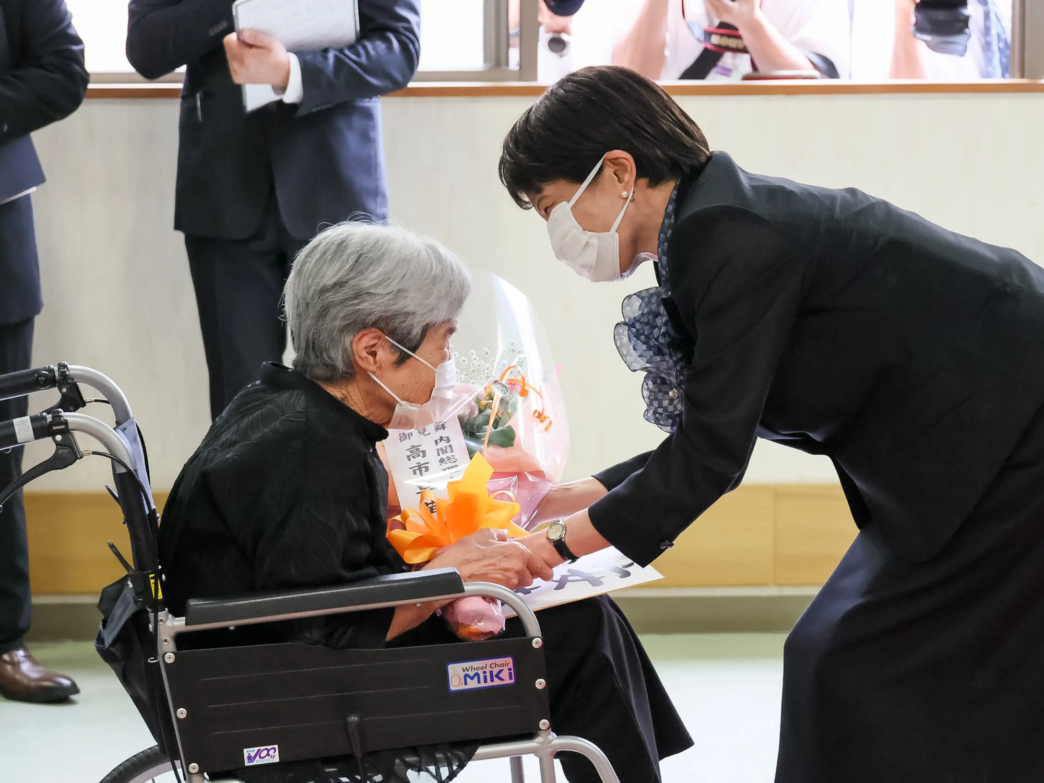
Following the ceremony, Takaichi visited the Nagasaki Atomic Bomb Museum, where she heard requests from representatives of atomic bomb survivor groups.
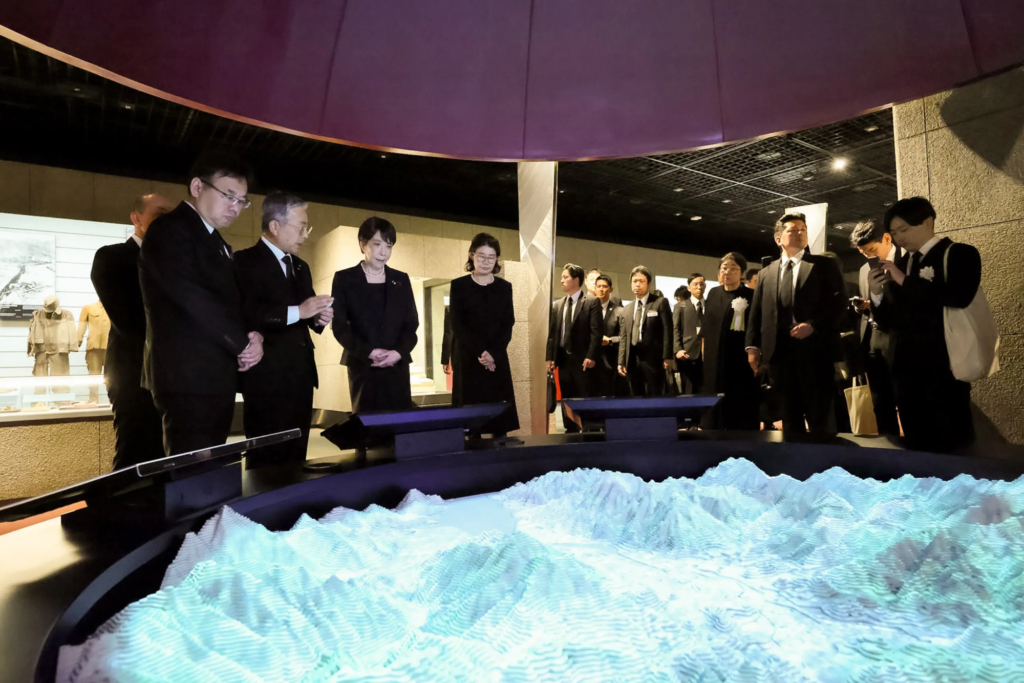
She also visited the Megumi-no-Oka Nagasaki Atomic Bomb Home, a facility for elderly atomic bomb survivors.
“I extend my prayers for everyone’s good health.”
Nagasaki was the second Japanese city hit by an atomic bomb during World War II, after Hiroshima on August 6, 1945.
The Nagasaki bombing killed an estimated 74,000 people by the end of 1945, according to commonly cited Japanese government figures, although estimates vary.
The annual peace ceremony in Nagasaki is held to commemorate the victims and reaffirm the city’s longstanding call for the abolition of nuclear weapons.
Japan’s nuclear disarmament policy is shaped by its unique status as the only country to have experienced atomic attacks during wartime.
Read More : Khamenei Vows US Will Exit Middle East
Japanese governments have repeatedly promoted nuclear disarmament while maintaining the country’s security alliance with the United States and its extended nuclear deterrence.
The Japanese government has also continued measures supporting hibakusha, whose average age is now well advanced, including medical and welfare assistance.
Official Japanese statements have emphasised the importance of passing survivors’ experiences to younger generations as the number of living hibakusha declines.