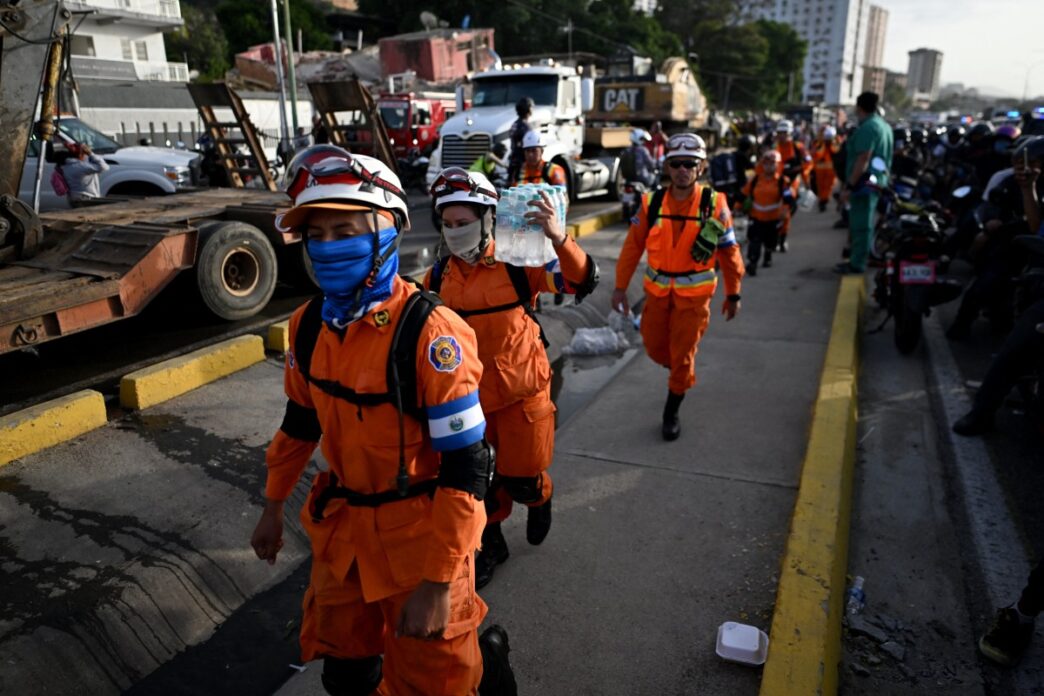
Rescuers from El Salvador arrive at the site of collapsed buildings following earthquakes in Caraballeda, La Guaira state, Venezuela, on June 26, 2026. The death toll from two powerful earthquakes that devastated Venezuela earlier this week rose to 920 on June 26, National Assembly President Jorge Rodriguez said. (Photo by Juan BARRETO / AFP)
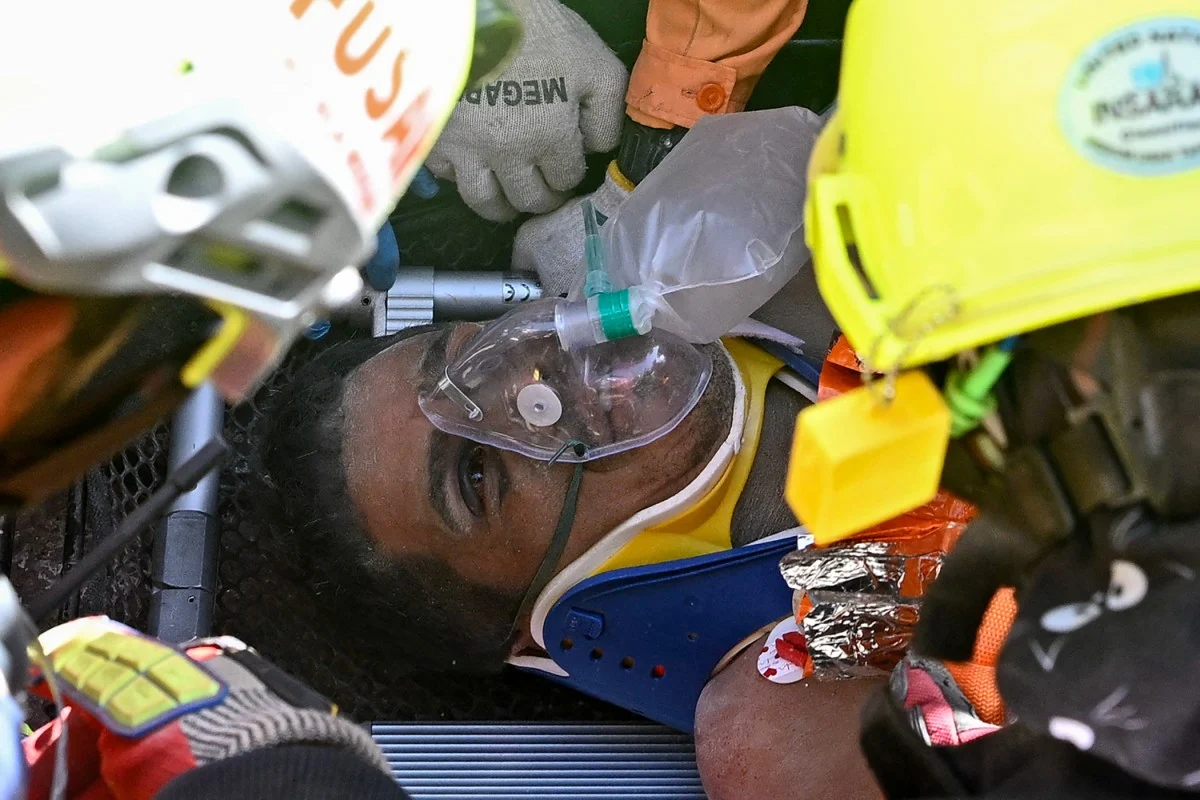
Rescuers in Venezuela have pulled a 43-year-old security guard alive from the rubble of a collapsed building eight days after twin earthquakes devastated parts of the country, killing nearly 2,300 people.
Hundreds of rescue workers cheered and embraced after Hernan Gil was brought out on a stretcher following a painstaking operation at the site of the collapsed seven-storey building in Catia La Mar, a coastal area that was almost completely destroyed by the 24 June disaster.
“This is truly a miracle,” Gil’s wife, Gusbimar Gonzalez, told AFP as rescuers worked to free him.
Man Rescued Alive Eight Days After Venezuela Quakes Credit: AFP
Rescue teams from Venezuela, Chile, the United States, Portugal, Costa Rica, El Salvador and Mexico spent three days reaching Gil, supplying him with more than 10 litres of water through a hose and providing oxygen through a tube while clearing debris.
During the final stage of the operation, about 30 rescuers worked to remove rubble as two others dug a three-metre tunnel to reach him.
“It wasn’t easy to reach the exact spot where the victim was located,” Chilean rescue team leader Cristian Vera said.
Gil’s rescue came after another survivor, a three-year-old boy, was found alive six days after the earthquake. However, rescue workers said hopes of finding more survivors have diminished.
The twin earthquakes, measuring 7.2 and 7.5 in magnitude, destroyed entire neighbourhoods in Venezuela, where years of economic hardship have weakened infrastructure and public services.
According to NASA data, nearly 60,000 buildings were likely damaged or destroyed.
National Assembly President Jorge Rodriguez said the death toll had risen to 2,295, with more than 11,000 people injured and almost 13,000 left homeless.
Many survivors are living in tents on streets, parks and open spaces as aid agencies warn of worsening shortages of food, water and medical care.
Toyibat is a highly motivated Mass Communication major and results-oriented professional with a robust foundation in media, education, and communication. Leveraging years of hands-on experience in journalism, she has honed her ability to craft compelling narratives, conduct thorough research, and deliver accurate and engaging content that resonates with diverse audiences.
Weekly roundups. Sharp analysis. Zero noise. The NewsCentral TV Newsletter delivers the headlines that matter—straight to your inbox, keeping you updated regularly.
 Trending