Trending

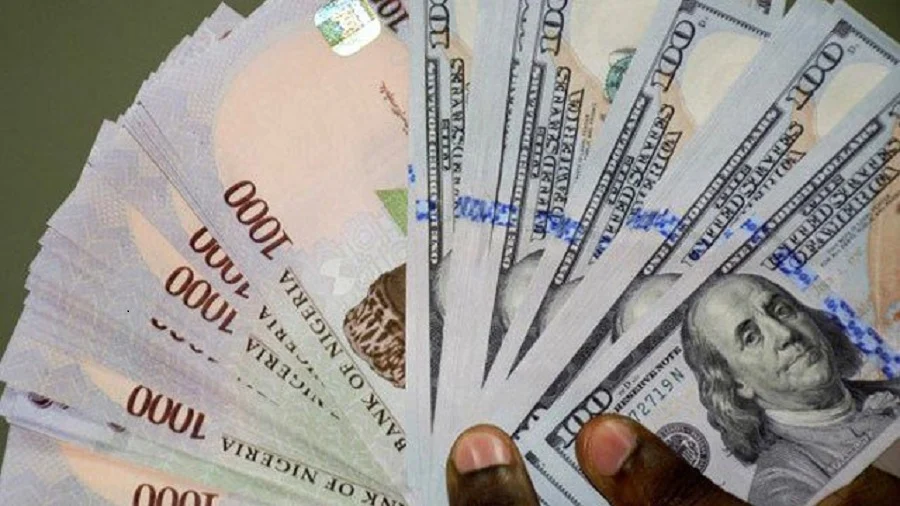
The Nigerian naira came under renewed pressure in the foreign exchange market on Tuesday as rising demand for the United States dollar led to a depreciation in both the official and parallel markets.
Data from the Nigerian Foreign Exchange Market (NFEM) showed the naira weakened by about 2.48 percent in early trading.
The dollar opened at an average of ₦1,388.38, a drop of ₦34.48 from the ₦1,353.90 recorded at the close of trading last week.
Intraday trading saw the exchange rate rise to as high as ₦1,395 before easing slightly.
Analysts attributed the increased demand for foreign currency to end-of-quarter corporate obligations and a temporary decline in autonomous foreign exchange inflows.
The parallel market also reflected the downward trend, with the naira losing value as demand for dollars increased.
Bureau de change operators in major cities, including Lagos, Kano and Abuja, quoted the dollar between ₦1,415 and ₦1,425 for selling, compared with around ₦1,400 earlier in the week.
Despite the depreciation in both markets, the gap between the official and parallel market rates narrowed to about ₦27.

Market observers say this reflects ongoing reforms by the Central Bank of Nigeria (CBN) aimed at unifying exchange rates, though convergence was largely driven by the official rate moving closer to the parallel market rate.
The movement in the currency market comes as Nigeria’s external reserves show a slight decline.
After reaching a 13-year high of $50.45 billion in February 2026, the reserves have fallen to $49.78 billion as of mid-March, according to data from the CBN.
The drop has been linked to sustained foreign exchange outflows and global financial pressures tied to geopolitical tensions in the Middle East.
While global oil prices remain strong, with Bonny Light crude trading above $100 per barrel, analysts say domestic production constraints and existing crude-backed obligations continue to limit the immediate impact of high oil prices on foreign exchange liquidity.