Trending


The National Economic Council (NEC) has approved adopting 112 as the national emergency number at all levels and across relevant agencies as part of measures to strengthen Nigeria’s emergency response system, the council announced on Thursday.
The approval was made during the 157th meeting of NEC, which was held virtually and chaired by Vice President Kashim Shettima.
Council also approved the establishment of a multi-agency implementation committee and programme coordination led by the Office of the Vice President and the National Communications Commission (NCC).
Shettima said the 112 emergency lifeline had become necessary to prevent delays caused by bureaucratic bottlenecks.
“This is not only a technical reform. It is a test of the state’s humanity. In moments of fire, accident, robbery, medical emergency, flood, violence, or panic, citizens do not need bureaucracy,” he said.
“They need response. They need to know one number to call, one system to trust, and one coordinated chain of action that moves quickly enough to save lives.”
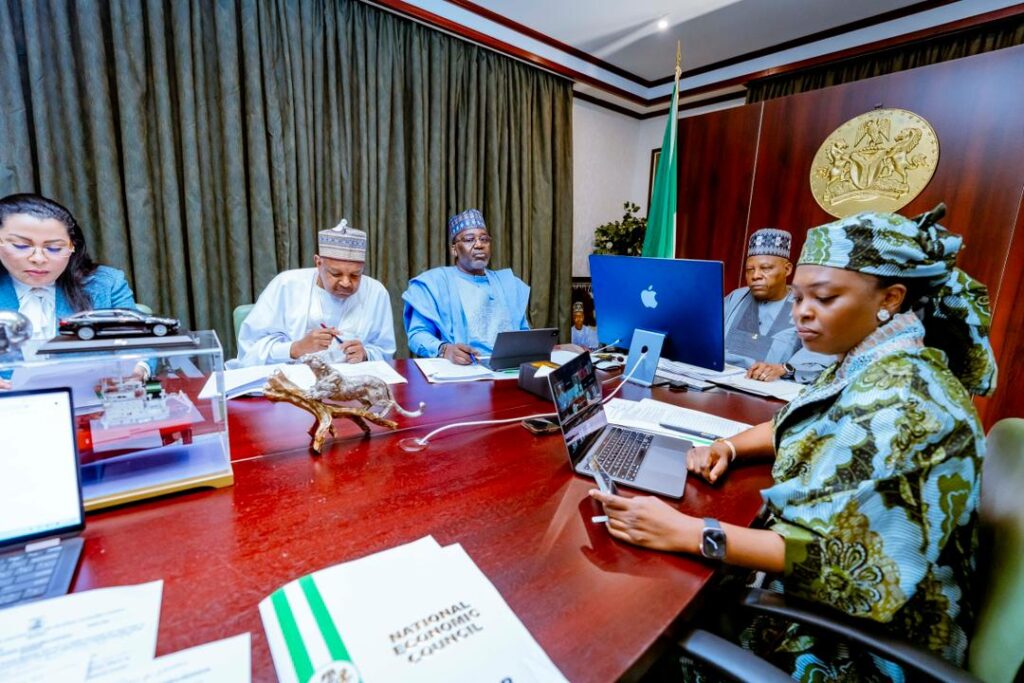
He explained that while Nigeria is not starting from zero, as the emergency number had been in existence, what is required “is coordination, adoption, standard operating procedures, public awareness, institutional ownership, and trust.”
Shettima described NEC as the nation’s economic engine room, where the federal government and states must convert President Bola Tinubu’s Renewed Hope Agenda into practical outcomes.
“We cannot build our way to a one-trillion-dollar economy by federal effort alone. We cannot create millions of jobs by speeches alone. We cannot expand exports, attract investment, secure communities, or unlock productivity unless every tier of government understands its role and performs it with urgency,” he said.
He urged council members to focus on decisions that would positively impact the lives of Nigerians.
“History will not ask how many meetings we held. It will ask what changed because we met,” Shettima said.
“It will ask whether our decisions reached the farmer, the manufacturer, the artist, the investor, the accident victim, the unemployed graduate, and the child waiting to inherit the country we are rebuilding.”
STATE HOUSE PRESS RELEASE
NEC Moves To Strengthen National Emergency Response, Okays 112 As Lifeline
Directs finance ministry to release approved funds for rehabilitation of police training institutions
Citizens need urgent response to national disaster, insecurity, not… pic.twitter.com/thwijnvKvp
— Stanley Nkwocha (@stanleynkwocha_) April 30, 2026