Trending
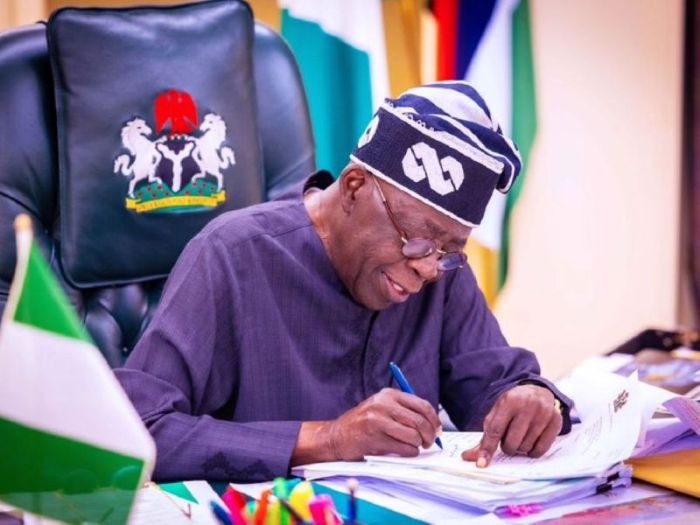
President Bola Tinubu has approved a payment plan to settle outstanding debts in the power sector under the Presidential Power Sector Financial Reforms Programme, the government said on Sunday.
Presidential spokesman Bayo Onanuga said the debt repayment plan follows a final review of legacy debts accumulated between February 2015 and March 2025.
The total debt has been verified at N3.3 trillion as a full and final settlement.
Read More : Tinubu To Inaugurate APC Campaign Council
“The long-standing debts accumulated between February 2015 and March 2025. Following verification, ₦3.3 trillion has been agreed as a full and final settlement, ensuring a fair and transparent resolution,” Onanuga wrote on X.
Implementation has begun, with 15 power plants signing settlement agreements totalling N2.3 trillion, he added.
“The Federal Government has already raised N501 billion to fund these payments. Out of the amount, N223 billion has been disbursed, with further payments underway,” Onanuga said.
Onanuga said the payments will support power generation and improve electricity reliability.
“With payments reaching the power value chain, generation will be more stable. With power plants supported, electricity reliability will improve. And as the sector stabilises, more investment, more jobs, and better service will follow,” he added.
The Special Adviser on Energy to President Tinubu, Olu Arowolo-Verheijen, said the programme is aimed at restoring confidence across the sector by ensuring gas suppliers are paid, power plants can operate reliably, and reforms, including better metering and service-based tariffs, are implemented.
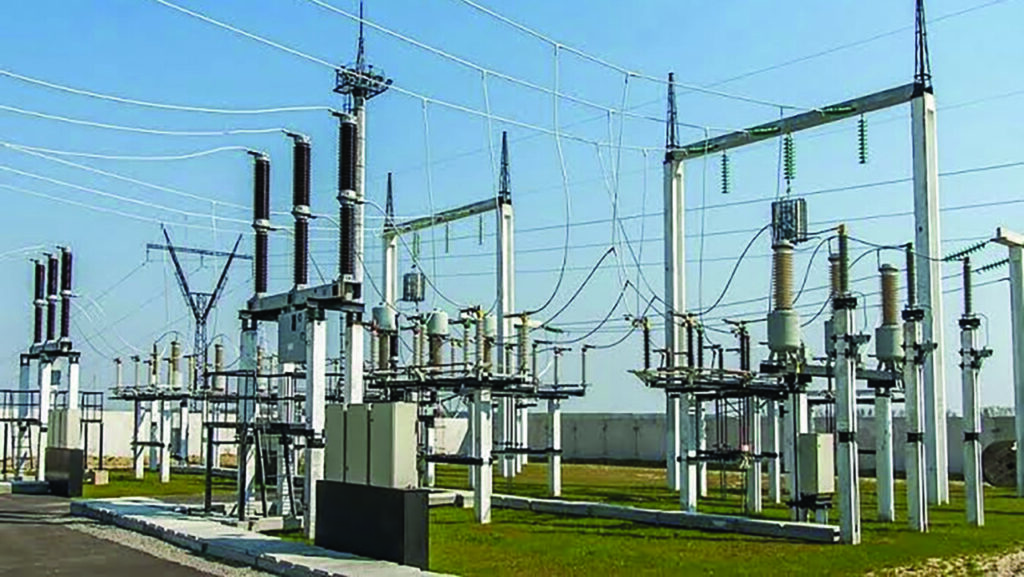
He added that the government is prioritising electricity supply to households, businesses, and industries to support jobs, livelihoods, and economic growth.
“This programme is not just about settling legacy debts. It is about restoring confidence across the power sector — ensuring gas suppliers are paid, power plants can keep running, and the system begins to work more reliably,” Arowolo-Verheijen was quoted as saying.
“It is part of a broader set of reforms already underway — including better metering and service-based tariffs that link what you pay to the quality of electricity you receive.
“The government is also prioritising power supply to businesses, industries, and small enterprises — because reliable electricity is critical to creating jobs, supporting livelihoods, and growing the economy.
“The goal is simple: more reliable power for homes, stronger support for businesses, and a system that works better for all Nigerians.”
Onanuga says that the President confirmed that the next part of the programme, Series II, will start this quarter.
STATEHOUSE PRESS RELEASE
PRESIDENT TINUBU APPROVES N3.3 TRILLION PAYMENT PLAN TO RESTORE RELIABLE ELECTRICITY
President Bola Tinubu has approved the payment plan to finally settle the outstanding debts under the Presidential Power Sector Financial Reforms Programme.
The debt… pic.twitter.com/QDcS5M7wIy
— Bayo Onanuga, OON, CON (@aonanuga1956) April 5, 2026
The programme comes after the Chief Executive Officer of the Association of Power Generation Companies, Joy Ogaji, said gas suppliers had halted supply to thermal power plants due to an estimated N3.3 trillion debt owed by generation companies, worsening nationwide power shortages.
Ogaji said the overall debt owed to generation companies currently stands at about N6.8 trillion, with thermal plants accounting for roughly 70% of the total.
Read More : INEC Clears Chinda for Rivers 2027 Governorship
She noted the debt grew from N4 trillion at the end of 2024 to N6.8 trillion by February 2026, and could reach N7 trillion by March if monthly shortfalls of N200 billion continue.
“From 2015 to December 2024, the debt profile grew to N4tn. In each month of 2025, there is a shortfall of N200bn, so if you calculate N200bn times 12, that is N2.4tn, making the whole debt N6.4tn after December 2025,” Ogaji said.
“We’re already in March 2026. The debt grew to N6.6tn in January and N6.8tn in February. At the end of March, you need to add N200bn again to make it N7tn.”