Trending
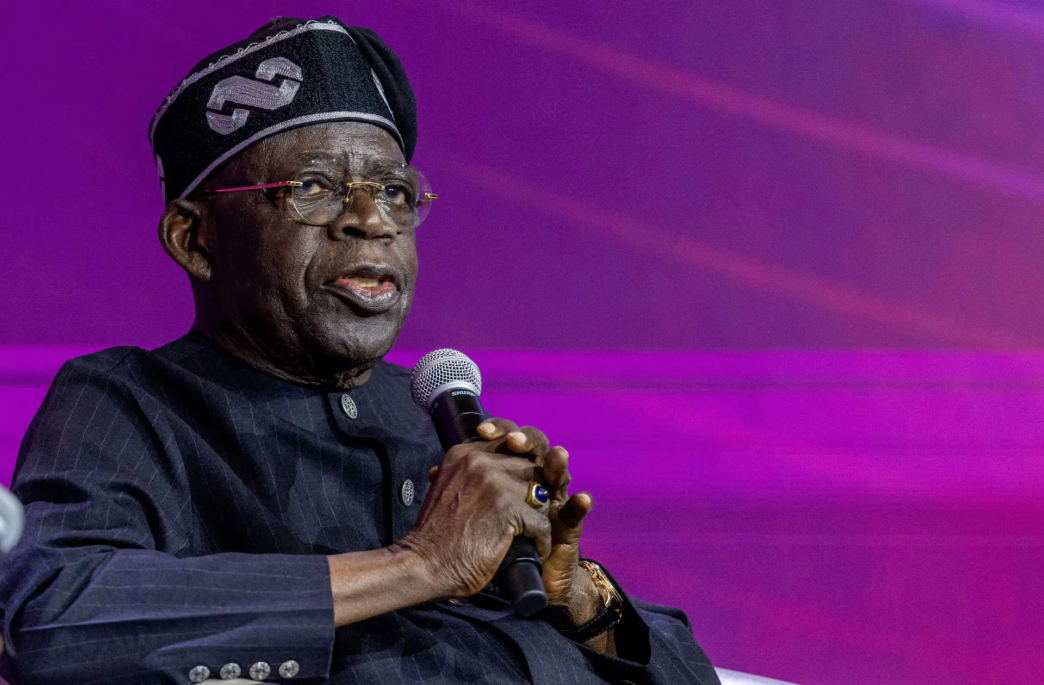
President Bola Tinubu has urged the management of Nigeria Liquefied Natural Gas Limited to reduce gas flaring and convert the country’s gas resources into greater economic benefits for Nigerians.
Tinubu made the call on Wednesday at the State House, Abuja, when he received members of the NLNG Board led by its Managing Director and Chief Executive Officer, Adeleye Falade.
The president said NLNG’s priorities should go beyond increasing revenue from international markets to ensuring greater domestic utilisation of Nigeria’s gas resources.
He urged the company to eliminate gas flaring and transform what could become an environmental liability into an economically beneficial resource for Nigerians.
“I am inspired to understand that you are not limiting yourself to the gradual objective of upgrading.
“My major concern is the domestic utilisation, where you must be able to take out the flaring and convert potential environmental liability to what could be strategically and economically beneficial to the consumers in the country,” Tinubu said.
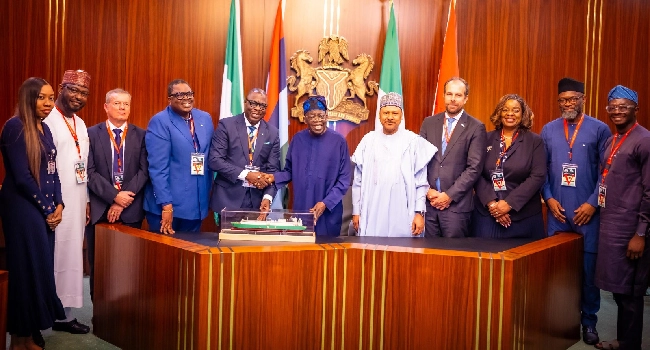
Credit: Channels TV
The president acknowledged NLNG’s contribution to Nigeria’s economy and commended its management for increasing the company’s capacity and delivering returns on investment.
He assured the board of his administration’s willingness to provide incentives that could support further expansion and enable the company to maximise its potential.
Tinubu also stressed the need to domesticate energy requirements and review pricing mechanisms to ensure ordinary Nigerians benefit from the country’s natural resources.
Earlier, Falade told the President that the NLNG Board was at the State House to brief him on the company’s operations since the current management assumed office in April.
He said NLNG had generated more than $150bn since its establishment, with shareholders, including the Nigerian government, receiving about $47bn in dividends.
Nigeria owns a 49 per cent stake in the company.
Falade said NLNG had previously operated at about 60 per cent capacity because inadequate crude oil production restricted operations to four of its six available trains.
However, he said increased oil production had enabled the company to raise its operating capacity to five trains, with further improvements expected.
He added that NLNG was working towards the inauguration of Train Seven, which would increase its capacity by 35 per cent. The company currently accounts for about five per cent of the global LNG market.
Read More : Thousands Protest Journalist Arrests in Turkey
Falade also disclosed that all NLNG-produced liquefied petroleum gas, commonly known as cooking gas, was being supplied to the domestic market.
He said shareholders had commended the stability of Nigeria’s fiscal environment, which he said was attracting further investment into the oil and gas sector.
The NLNG chief executive also disclosed that the Bonny-Bodo Road and Bridge project, financed by the company, had been completed and was awaiting official commissioning.