Trending
Global energy markets are on high alert as Brent crude oil climbed 9% to $100 per barrel on Thursday.
The surge followed aggressive rhetoric from Iran’s new Supreme Leader, Mojtaba Khamenei, who confirmed that the Strait of Hormuz—a vital passage for 20% of the world’s daily oil production—will remain closed as a “tool of pressure.”
Khamenei, who rose to power following the death of his father in an Israeli strike, also issued warnings of potential retaliatory attacks against United States military bases in the region.
The closure of the strait has effectively triggered the largest supply disruption in history, according to the International Energy Agency (IEA).
Currently, the blockade is choking off roughly 20 million barrels of oil and related products daily.
Despite a historic agreement by 32 major economies to release 400 million barrels of emergency oil stocks, analysts warn that this volume would be exhausted in less than a month if the blockade persists.

Consequently, market experts at Capital Economics caution that sustained prices in this range could fuel global inflation and stifle economic growth.
Security in the Persian Gulf has deteriorated further as Iran intensifies its maritime offensive.
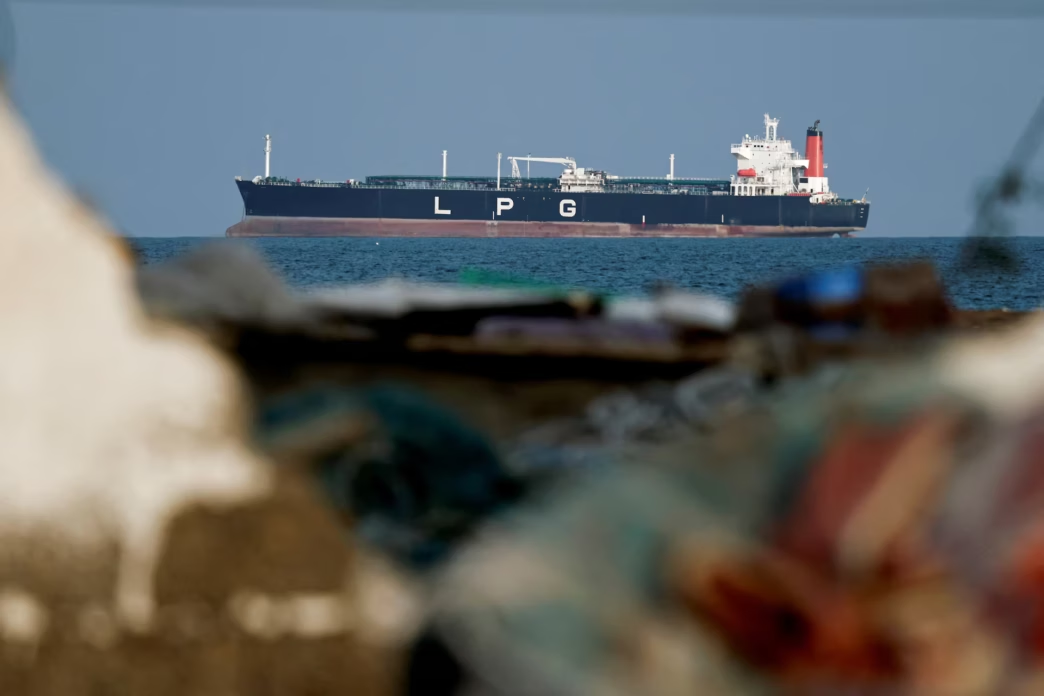
On Thursday alone, two foreign tankers were struck in Iraqi waters, and the UK’s maritime agency reported a third vessel was hit, bringing the total to six ships attacked in just 48 hours.
These hostilities have made shipping transit nearly impossible, forcing major producers like Saudi Arabia and the UAE to drastically cut production as their storage facilities reach capacity and export routes remain severed.
The economic fallout is being felt across global financial sectors, with stock markets in Asia, Europe, and the U.S. trading deep in the red.
Investors are increasingly concerned that the conflict will be protracted, causing extensive long-term damage to the global economy.
As Middle East producers reduce output by an estimated 10 million barrels per day, the IEA warns that supply losses will only escalate unless there is a rapid and secure resumption of shipping through the Gulf.