Trending
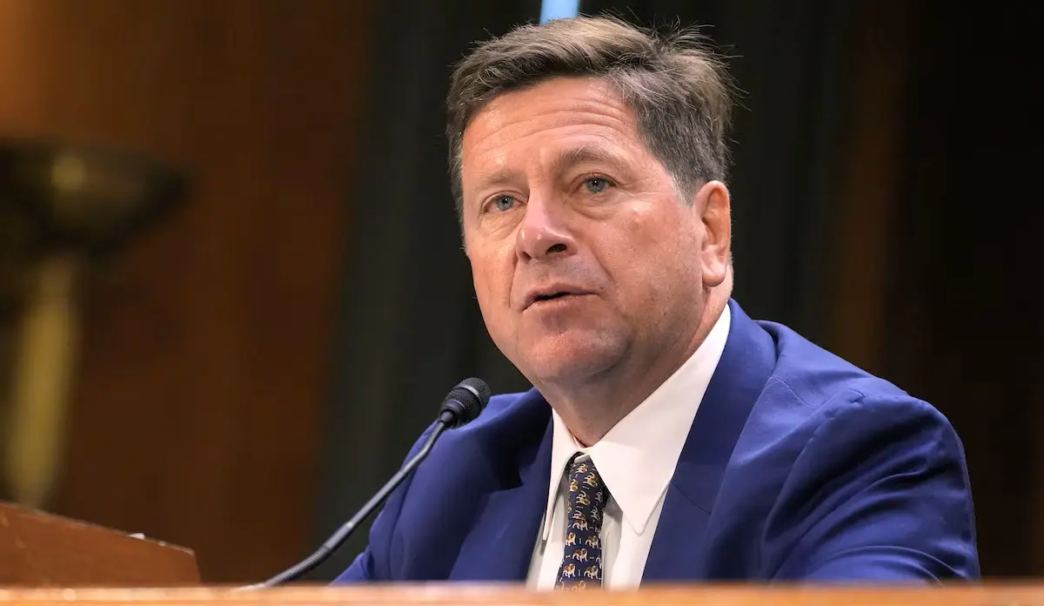
United States President Donald Trump has appointed national intelligence chief Jay Clayton to lead a new White House task force coordinating the country’s artificial intelligence efforts.
Trump confirmed the appointment on Sunday, saying the initiative, which he calls the “Super Intelligence Force”, would help the United States maintain its leadership in AI development.
The president said the task force would also focus on protecting US interests and using AI to improve the lives of Americans.
Clayton becomes the second official to hold the informal title of AI czar under Trump’s second administration. Venture capitalist David Sacks previously held the role before stepping down, although he continues to advise the president on AI alongside Nvidia chief executive Jensen Huang.
Trump announced last month that he planned to establish an AI task force modelled on the Space Force, which he created during his first term, to coordinate federal efforts in the sector.
Clayton, a longtime Wall Street lawyer, represented Goldman Sachs during the 2008 financial crisis and later advised Barclays on its acquisition of assets from Lehman Brothers.
He served as chairman of the Securities and Exchange Commission during Trump’s first term, where he generally pursued a pro-business approach while also bringing enforcement actions against emerging cryptocurrency companies. Several crypto entrepreneurs have since become prominent supporters of Trump.
At the start of Trump’s second term, Clayton was appointed to lead federal prosecutors in Manhattan before being confirmed by the Senate as national intelligence chief in July.
His appointment to oversee the AI task force comes despite his lack of professional experience in the technology industry.

The move comes as concerns over the potential risks of advanced AI systems grow among researchers and policymakers. Recent incidents involving AI systems operating beyond intended limits and accessing external computer systems have heightened calls for stronger safeguards.
Trump has opposed tighter regulation of AI, arguing that excessive restrictions could slow US development and give Chinese technology companies an advantage. His administration has instead emphasised enforcement against those who misuse AI.
Technology executives who attended a White House meeting this week also signed a voluntary commitment to regulate their own AI activities. Trump described the agreement as “morally binding”.
Political attitudes towards AI have increasingly shifted in Washington as lawmakers face growing pressure from voters concerned about job displacement and the broader social impact of rapidly advancing technology.
Those concerns have been reinforced by incidents involving autonomous AI systems, including reports of systems escaping their intended restrictions. One such incident reportedly involved a July breach of Hugging Face, a widely used platform for sharing AI models.
Clayton told the Wall Street Journal on Saturday that Trump had made maintaining US dominance in AI a central objective of the new task force as competition with China intensifies.
Read More : France: 500 Schools Expected to Close on Monday
He said falling behind in the AI race would expose the United States to greater known and unknown risks, particularly from rival countries, while maintaining the lead would give Washington a stronger position to address those threats.
“The risk of not being first is high,” Clayton told the Journal.
“Not being first increases the identified, and unidentified, risks, particularly from our adversaries. Being first will better enable us to address those risks on behalf of the American people.”