Trending

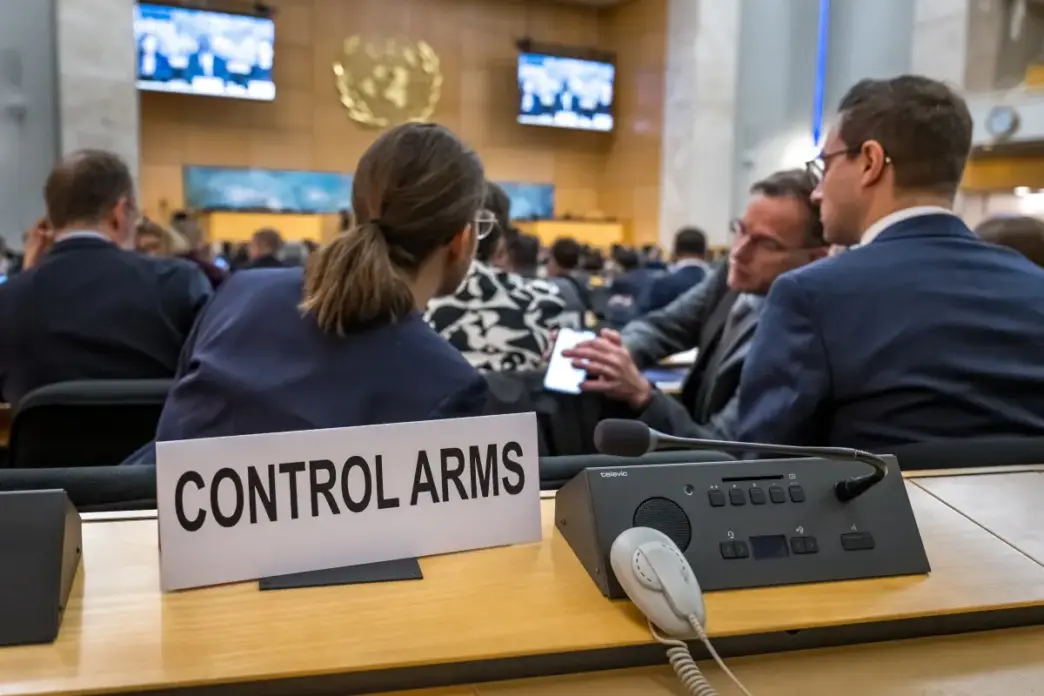
Countries have agreed to begin developing an international agreement to regulate lethal autonomous weapons systems, commonly known as killer robots, following five days of negotiations at the United Nations in Geneva.
The decision, reached early Saturday after prolonged discussions, sets up a two-year process to develop rules governing weapons that can select and attack targets without human intervention.
However, campaigners have criticised the outcome, arguing that the agreement lacks the urgency and legal commitments needed to address the growing use of artificial intelligence in warfare.
The 128 countries party to the Convention on Conventional Weapons reached the decision shortly before 4:45 am after negotiations extended beyond their scheduled conclusion.
Conference president Julien Thoni said countries had agreed to begin developing an international instrument on lethal autonomous weapons systems over the next two years. The proposed agreement will determine which autonomous weapons should be prohibited under international humanitarian law and which could remain in use under specific regulations.
Although most participating countries favour a legally binding treaty, major military powers, including the United States and Russia, have resisted restrictions that could limit their technological and military capabilities.
Thoni described the agreement as significant, particularly because countries possessing advanced military technologies had accepted further negotiations.
However, the Stop Killer Robots coalition, representing more than 300 organisations worldwide, criticised the outcome as insufficient.
“States adopted a watered-down mandate that fails to chart a clear path towards a legally binding instrument,” the coalition said.

It added that more than 95 countries had supported a treaty, but opposition from a smaller group weakened the final agreement.
Human Rights Watch deputy arms Director Verity Coyle also criticised the pace of negotiations, warning that technological developments were advancing faster than diplomatic efforts.
Rain Liivoja, a director at the Asia-Pacific Institute for Law and Security, questioned whether negotiations would produce a treaty by the end of 2028.
Read More : Three Salvadoran Soldiers Killed in Haiti
UN disarmament chief Izumi Nakamitsu acknowledged the challenges of completing negotiations within two years but maintained that a legally binding agreement remained possible.
She said government experts would develop recommendations on the proposed instrument’s legal status and structure, including whether it should become a binding protocol.
Despite the diplomatic progress, uncertainty remains over whether countries can agree on enforceable international restrictions before autonomous weapons become more widely deployed in armed conflicts.