


 Trending



The Nigerian Government has explained how it identifies households eligible for its ₦50,000 National Emergency Relief and Stabilisation Intervention, saying beneficiaries are selected through the National Social Register and verified national identity records.
The intervention, known as NERSI, targets poor and vulnerable households facing rising living costs.
The National Social Register is coordinated by the National Social Safety-Nets Coordinating Office. It contains information on households identified as poor or vulnerable and helps government agencies plan and deliver social intervention programmes.
Read More : Bakassi Seaport to Boost Trade – Tinubu
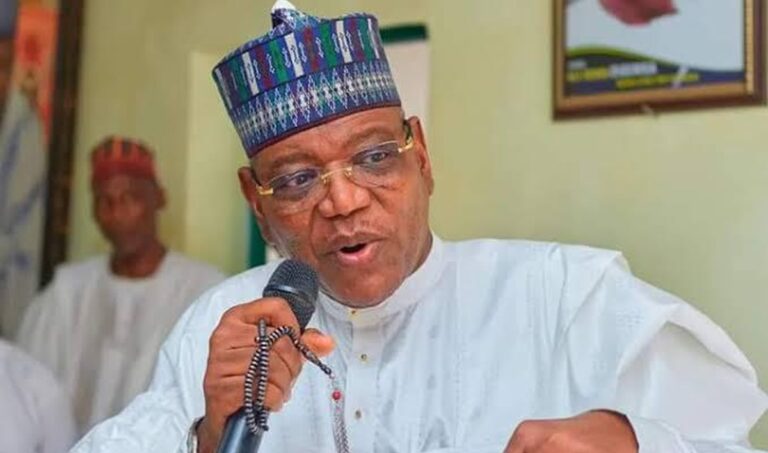
The register has come into focus following the announcement of NERSI on October 30, 2026, by the Minister of Humanitarian Affairs and Poverty Reduction, Dr Bernard Doro.
According to the minister, the initiative is designed to provide immediate financial support to vulnerable households and help them cope with the rising cost of essential goods.

Credit: NewsCentral TV
In a clarification issued on November 6, the ministry said beneficiaries would be selected from the National Social Register and verified national identity records, based on established poverty and vulnerability criteria.
It added that selection would cover all six geopolitical zones and that there was no public application or registration process.
How the National Social Register works
The National Social Register is a database of poor and vulnerable households across Nigeria. It provides information used to identify people who may qualify for government support.
The National Social Safety-Nets Coordinating Office coordinates the register and works with relevant agencies and stakeholders to collect and update household information.
The process uses four major approaches to identify vulnerable households.
They include geographic targeting, which identifies areas with high levels of poverty; community ranking, which allows communities to identify households in need; community-based targeting, which involves local structures in identifying vulnerable people; and Proxy Means Testing, which uses household information and indicators to estimate poverty levels.
The information collected is analysed to determine household eligibility for different social intervention programmes.
Households are ranked according to their level of poverty and vulnerability. Those within the first to sixth deciles may be considered for inclusion in the National Beneficiary Register for certain interventions.
However, being listed in the National Social Register does not automatically guarantee payment under every government programme. Each intervention may have its own eligibility requirements.
How many Nigerians are on the register?
An October 2026 update put the National Social Register at 21,114,531 households, representing 83,162,654 individuals.
The register covers 217,166 communities across Nigeria’s 36 states and the Federal Capital Territory.
The government has also been working to improve the accuracy of household records through the National Identification Number verification drive.
Figures from the exercise showed that 16,176,026 NIN records had been obtained, while 15,653,374 had been verified.
The update also showed that 11,347,989 households had at least one member with a NIN, while records for 13,330,387 households had been updated.
The exercise covered 771 local government areas, representing 63.13 per cent coverage.
Who qualifies for the ₦50,000 NERSI grant?
The NERSI programme targets poor and vulnerable households identified through the National Social Register and verified identity records.
The ministry said selection would be based on poverty and vulnerability criteria rather than applications submitted by individuals.
It also stressed that having a National Identification Number does not automatically qualify anyone for the grant.
Similarly, being listed in the National Social Register does not mean a household will automatically receive every form of government assistance.
The government uses the register for different social protection interventions, including cash transfers and programmes relating to health, education, agriculture and humanitarian support.
How will beneficiaries receive the ₦50,000?
The ministry said selected beneficiaries would receive an SMS notification from one of the authorised digital financial service providers.
The approved providers are ALAT by Wema Bank, MoMo PSB, NairaGram, OPay and Moniepoint.
Beneficiaries are expected to follow the instructions in the message to confirm their selection and accept the payment. Depending on the provider, this may involve replying “YES” or using a designated USSD code.
The ministry said the full ₦50,000 would be credited without deductions and that the money was a grant, not a loan.
Its October 30 announcement described the support as a monthly payment, subject to periodic review. However, the ministry’s November 6 frequently asked questions did not provide a clear payment schedule for beneficiaries.
No application fee or registration through agents
The Nigerian Government has warned Nigerians against paying individuals or agents who claim they can secure a place on the beneficiary list.
According to the ministry, the selection process is automated and based on established eligibility criteria. No government official, agent or third party can influence the selection or guarantee payment.
Beneficiaries are also not required to pay a fee, complete a separate application form or register through an agent.
The ministry warned Nigerians not to share their personal identification numbers, one-time passwords or bank verification numbers with anyone.
It also advised the public to ignore suspicious messages and links claiming to offer access to the grant.
For enquiries or complaints about NERSI, the ministry provided the official helpline, 0700-022-2222.
Further information is available on the ministry’s official website at https://fmhapr.gov.ng/nersi.
The National Social Register remains a key tool for identifying vulnerable households and supporting the Nigerian Government’s social intervention programmes. However, inclusion in the database does not guarantee automatic payment under NERSI or other schemes.