Trending

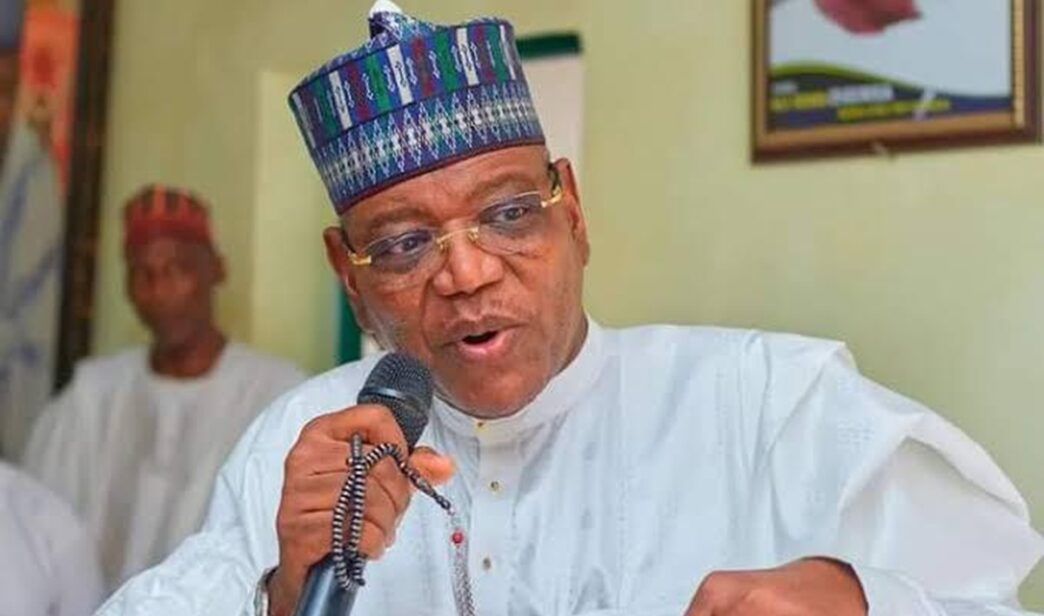
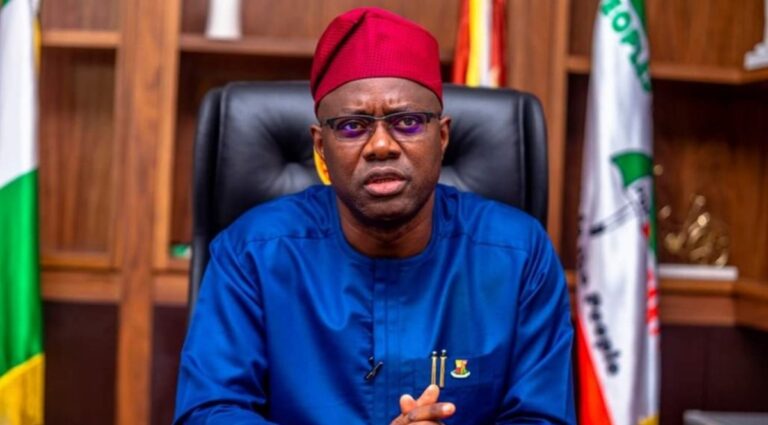
Former Jigawa State Governor, Sule Lamido, has criticised opposition leaders Atiku Abubakar and Peter Obi for failing to unite ahead of the 2027 presidential election, warning that their division could strengthen President Bola Tinubu’s chances of re-election.
Lamido, a chieftain of the Peoples Democratic Party (PDP), said a united opposition would have posed a stronger challenge to Tinubu, suggesting that Atiku could have emerged as its presidential candidate, with Obi as his running mate.
He spoke on Friday where he was asked whether the 2027 election could produce a similar outcome to the 2023 contest, which saw Tinubu defeat Atiku and Obi.
Read More : 2027 Polls: Tinubu Orders Crackdown on Thuggery
“I think the way things are, the propaganda and support warfare is too much. It’s too intense for even Nigeria to be able to really understand what’s happening,” he said.
Lamido blamed the opposition’s difficulties partly on the number of serving and former governors in the All Progressives Congress (APC), as well as the failure of Atiku and Obi to work together.
“Because of the number of governors, both serving and former governors of the APC, and because Atiku and Obi divided their own force, it gives Tinubu the advantage,” he said.
The former governor argued that the two opposition leaders were making Tinubu’s re-election bid easier by pursuing separate political ambitions.
“So both Peter Obi and Atiku are simply handing Tinubu, very easily. But if they come together, it would have been a high-level canvas, you know, Atiku for president and Obi running mate, and then after four years, one takes over,” he said.
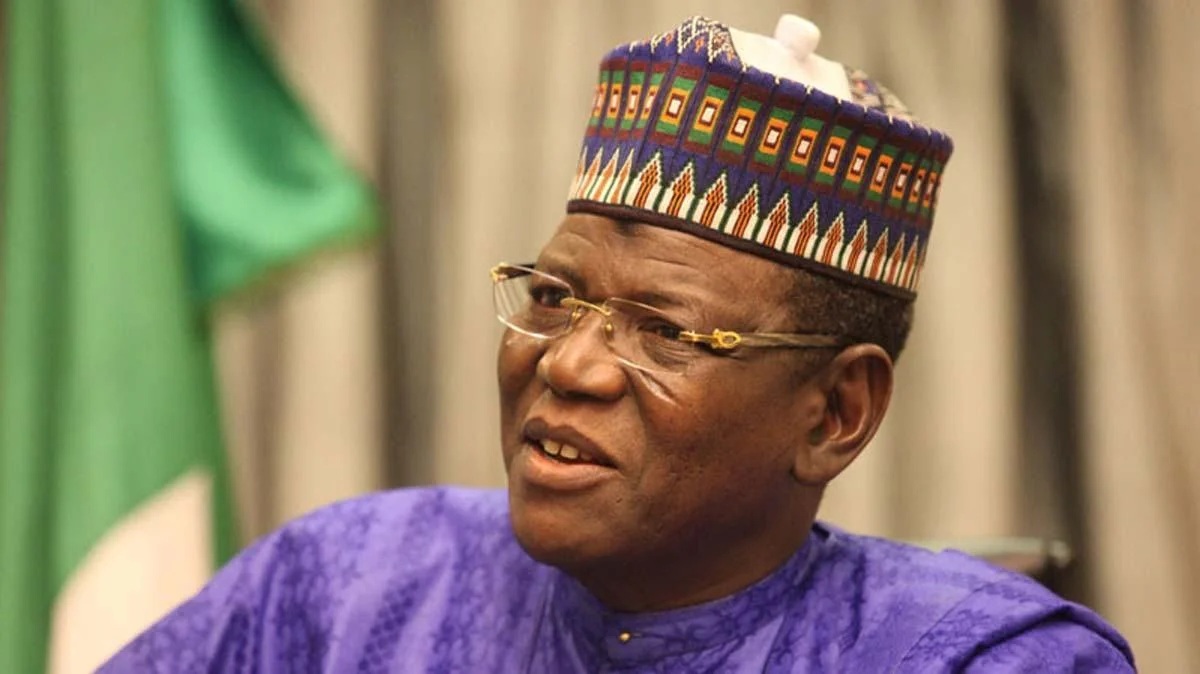
Credit:Cable
Opposition Coalition Crisis
Atiku and Obi left the PDP and Labour Party, respectively, after the 2023 presidential election to pursue a united opposition platform ahead of the 2027 polls.
In July 2025, opposition leaders adopted the African Democratic Congress (ADC) as a common platform to challenge Tinubu.
However, disagreements over party leadership, structure and presidential ambitions weakened the coalition.
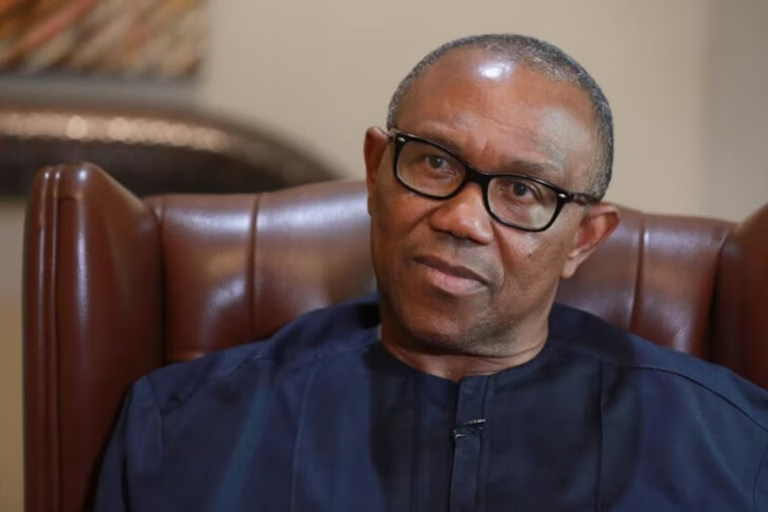
The crisis eventually led Obi to leave the ADC alongside former Kano State Governor, Rabiu Kwankwaso, for the Nigeria Democratic Congress (NDC) in May 2026. Obi was subsequently adopted as the party’s presidential candidate for the 2027 election.
Atiku, on the other hand, remained in the ADC and won its presidential primary.
Despite their separate political platforms, both opposition leaders have continued their campaigns ahead of the election.
Obi has maintained that any alliance with Atiku must be based on a formal agreement between their parties rather than a personal arrangement.
Speaking further, Lamido said the political ambitions of the major contenders appeared to have taken priority over national unity, warning that Nigerians would suffer regardless of who won the election.
“I’ve been saying, look, whoever wins, Nigeria will lose. That’s my problem.
“Whoever, whether Peter Obi, Atiku, whoever wins, in terms of our unity, our economy, our love as a country of brothers and sisters, it’s all gone down. It’s more about their personalities. They are abusing each other. Those things become very, very personal,” he said.
The former governor stressed that his concern was not necessarily about who emerged victorious but the damage the political contest was causing to national cohesion.
He also expressed concern about growing political tension, particularly in northern Nigeria, citing what he described as propaganda, hate campaigns and incitement.
According to him, political campaigns have shifted away from discussions about national development, unity and what candidates can offer Nigerians.
“We’ve abandoned the traditional campaign on issues, about love, about empathy, about unity, about Nigeria, and then what can you offer? What can you offer? So it’s not there anymore,” he said.
2027 Presidential Election
The 2027 presidential election is expected to feature several prominent political figures, including Tinubu of the APC, Atiku of the ADC, Obi of the NDC and Omoyele Sowore of the African Action Congress (AAC).
Tinubu, who is seeking a second four-year term, will fly the APC flag in the election.
In the 2023 presidential election, Tinubu secured 8,794,726 votes to emerge as the winner, while Atiku came second with 6,984,520 votes. Obi finished third with 6,101,533 votes.
The Independent National Electoral Commission (INEC) has scheduled the presidential and National Assembly elections for January 16, 2027, while governorship and State Houses of Assembly elections will hold on February 6.
The commission announced that Nigeria’s National Register of Voters had risen to 103,428,715 after the three-phase Continuous Voter Registration exercise, which recorded 10,772,421 new registrations.
However, INEC said on Tuesday, November 10, that more than 1.6 million invalid and duplicate records had been removed following a technical audit.
The commission also disclosed that Permanent Voter Card (PVC) collection for newly registered voters was ongoing, with an estimated 14 million cards yet to be collected nationwide as of November 2026.
INEC said the remaining Phase Three PVCs were arriving for distribution, adding that collection would resume at Registration Area (ward) levels nationwide from December 1, 2026.
For the 2023 general elections, INEC recorded 93,469,008 registered voters, out of which 87,209,007 collected their PVCs, representing 93.3 per cent.