Trending


Sri Lankan forces raced to rescue hundreds stranded by rising floodwaters on Friday, as the death toll from extreme weather rose to 69, with 34 more people reported missing.
Helicopters and navy boats carried out multiple operations, plucking residents from rooftops, treetops, and villages cut off by the floods.
The Disaster Management Centre (DMC) said more bodies had been recovered in the central region, the worst affected, where mudslides buried many victims alive.
Read More : Bolsonaro Defies Exit Ban, Flees to US
Heavy rain continued across the island, with some areas receiving up to 360 millimetres in the past 24 hours. The Kelani River, near Colombo, overflowed its banks.
V. S. A. Ratnayake, 56, told AFP he had to leave his home in Kaduwela. “I think this could be the worst flood here in three decades,” he said.
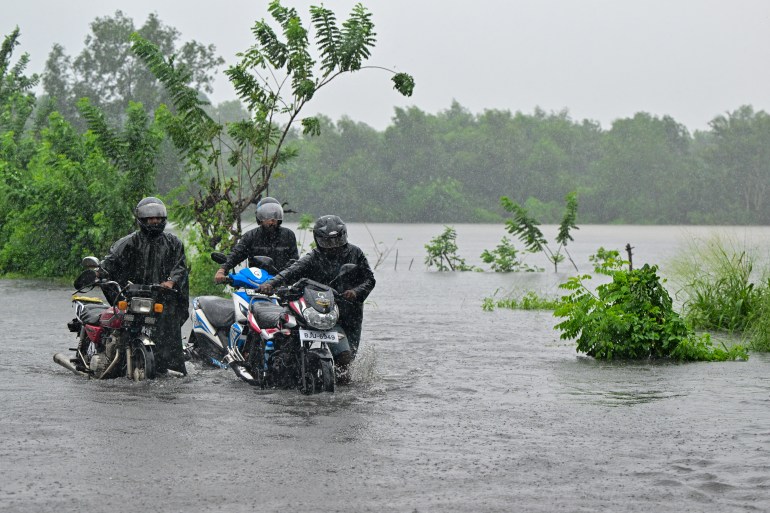
Another resident, Kalyani, 48, said she was sheltering two families whose homes were submerged.
At least 3,000 houses were damaged, and over 18,000 people were moved to temporary shelters. In Anuradhapura, an Air Force helicopter rescued a man who had climbed a coconut tree to escape the rising waters.
The DMC forecast further rainfall as Cyclone Ditwah moves towards the south Indian state of Tamil Nadu.
Indian Prime Minister Narendra Modi expressed condolences and said New Delhi was sending urgent aid. “We stand ready to provide more assistance as the situation evolves,” he said.
Dozens of stranded tourists were evacuated from central Sri Lanka to Colombo.
Read More : Mauritania Students Protest Transport Fare Hike
A woman, speaking on Sirasa TV, appealed for help, saying her family, including a toddler, faced rising waters with nowhere to go.
Sri Lanka relies on monsoon rains for irrigation and hydroelectricity, but climate change has made severe flooding more frequent.
This week’s disaster is the country’s deadliest since June last year, when 26 people died in floods. The worst flooding since 2000 occurred in June 2003, claiming 254 lives.