Trending
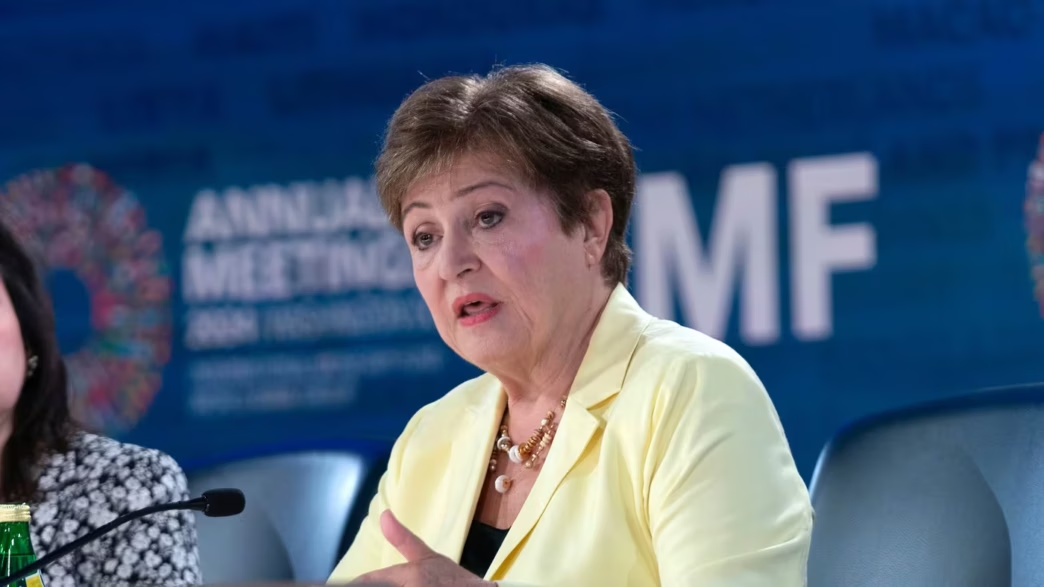
The International Monetary Fund (IMF) has announced that it expects to provide between $20 billion and $50 billion in emergency financial assistance to nations reeling from the economic spillovers of the Middle East war.
Managing Director Kristalina Georgieva noted on Thursday that the final amount depends heavily on whether the current fragile ceasefire holds.
Beyond immediate balance-of-payments support, the IMF warned that approximately 45 million people face acute food insecurity due to severe disruptions in global supply chains and transport networks.
Read More : China Agrees to ‘Moderate’ Car Exports to Europe
The conflict has caused significant “scarring effects” on the global economy, including infrastructure damage and a sharp loss of market confidence.
Consequently, the IMF plans to downgrade its global growth forecasts for 2026 and revise upward its inflation projections, driven by surging energy and fertiliser costs.
Georgieva highlighted that the impact is “asymmetric,” disproportionately hitting low-income energy importers and isolated nations, such as Pacific Island states, which struggle with the high costs of long, disrupted supply routes.
Read More : Sims-Inspired Lagos Life Valued at $10 Million
Regionally, the economic toll is even more severe. The World Bank estimates that economic growth in the Middle East, excluding Iran, will plummet to just 1.8% in 2026, a sharp decline from the 4% growth seen before the conflict.
As the IMF and World Bank convene their spring meetings in Washington, leaders are focusing on the long-term debt risks facing governments that must navigate these repeated economic shocks.
Even in the most optimistic scenarios, officials stress that the global economy will not return to its pre-war state anytime soon.