Trending
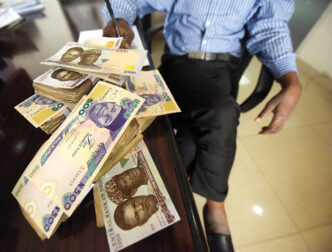
The World Bank has warned Nigeria that increased spending prior to the 2027 elections could weaken recent fiscal reforms and reduce the benefits of higher oil revenues.
The warning was contained in its latest Nigeria Development Update, where the bank advised the government to maintain discipline and protect recent economic gains while preparing for external shocks.
The report noted that Nigeria’s economy showed signs of improvement in early 2026, supported by stabilisation reforms and stronger oil earnings.
However, it said poverty levels remain high with little visible reduction.
The World Bank urged the government to treat rising oil revenues as a temporary boost rather than a permanent source of income, warning against increased spending during the election period.
It added that maintaining stability would require disciplined fiscal and monetary policies, especially amid global uncertainty and rising geopolitical tensions.
“Preserving recent stabilisation gains will require a disciplined and well-calibrated policy response to manage the effects of the Middle East conflict.
“Fiscal policy should treat higher oil revenues as a temporary windfall, prioritising the rebuilding of buffers over permanent spending increases, particularly in the run-up to elections.
“As stabilisation gains are consolidated, continued policy discipline will be critical amid pre-election pressures and heightened global uncertainty,” the bank stated.

The bank also advised that, if inflation worsens, part of the revenue gains could be used to provide targeted support to vulnerable households through temporary cash transfers, rather than broad subsidies or price controls.
It recommended tight monetary policy, stable exchange rates, and limited market intervention to manage inflation pressures.
“If inflationary pressures intensify, part of the revenue gains could be used to support vulnerable households through targeted, time-bound cash transfers, while avoiding inefficient price controls or generalised subsidies.
“Monetary policy needs to remain tight to contain inflation, and exchange rate flexibility should be maintained to absorb external shocks, with interventions limited to smoothing excessive volatility,” the World Bank said.
On borrowing costs, the World Bank urged the Central Bank of Nigeria (CBN) to gradually ease lending conditions as inflation slows, noting that this could improve access to credit and support growth.
Read More : Zamfara Police Arrest Youth Over Video Threat
“Lower inflation also creates scope to improve the effectiveness of monetary policy, including by gradually reducing banks’ cash reserve requirements, narrowing the gap between the Central Bank of Nigeria’s lending and deposit facilities’ rates, and focusing open market operations on managing naira liquidity through short-term CBN bills.
“Reduced exchange rate volatility and positive real yields further create room to gradually allow banks to hold long net open FX positions and clarify the intervention framework, which would foster more organic exchange rate stability and reduce reliance on FPI and CBN FX flows.”
It also called for reforms to strengthen the business environment and improve investment in infrastructure and human capital to ensure long-term, inclusive growth.