Trending
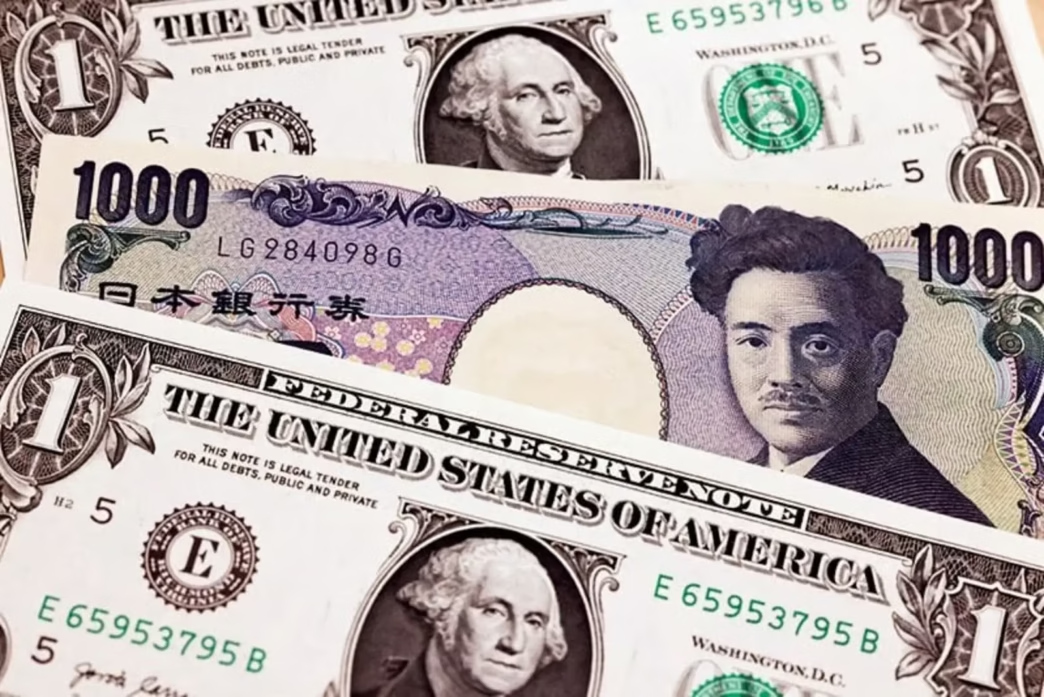
Japan has reportedly spent at least 5.0 trillion yen (about $32 billion) in the foreign exchange market to support its weakening currency, marking its first such intervention since 2024.
The Japanese yen has been trading close to 160 per dollar, near levels last seen in mid-2024, when authorities stepped in with large-scale interventions.
Estimates from market participants, based on deposit data released by the Bank of Japan, suggest the intervention ranged between 5.0 trillion and 6.0 trillion yen ($32–$38 billion), according to reports by Jiji Press, Nikkei, and Yomiuri Shimbun.
The currency has come under pressure in recent months due to rising oil prices linked to geopolitical tensions, including the Iran conflict, as well as the widening interest rate gap between Japan and the United States.
Japanese officials had signalled in recent days that intervention was likely, with the finance minister indicating that authorities were prepared to act after the yen slipped to its weakest level against the dollar since 2024.
Such interventions are typically aimed at stabilising currency volatility and preventing excessive depreciation that could worsen import costs and inflation within the country.