Trending
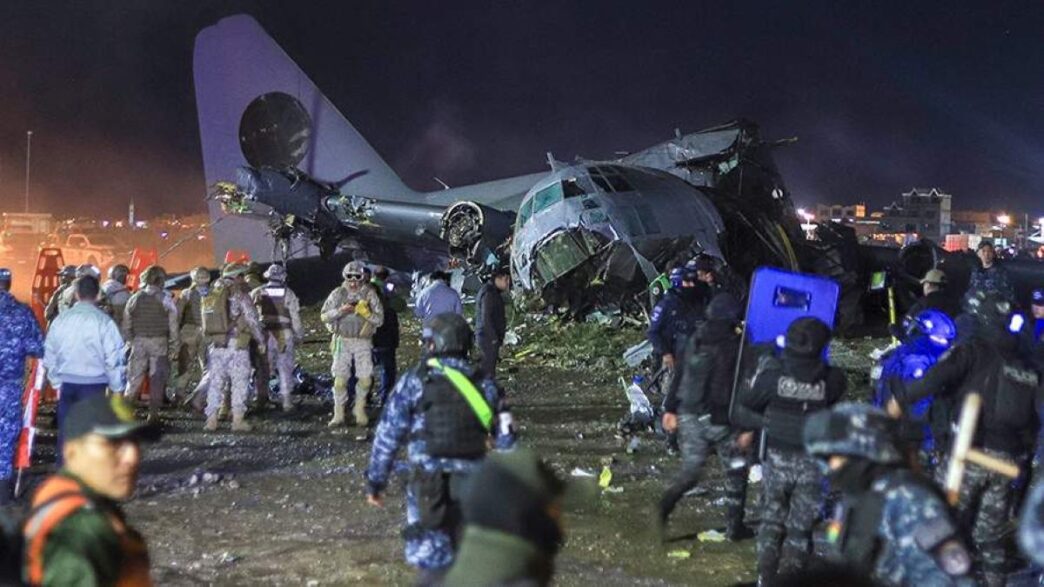
Authorities in Bolivia have arrested the pilot and co-pilot of a military cargo aircraft that crashed earlier this year, killing 22 people, as investigations continue into one of the country’s most severe aviation incidents in recent times.
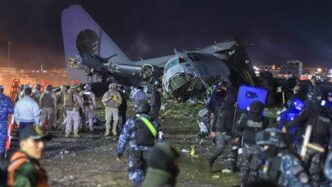
The aircraft, a Lockheed C-130 Hercules operated by the Bolivian Air Force, went down on February 27 after veering off the runway at El Alto International Airport, located just outside the capital, La Paz.
During the crash, part of the plane’s fuselage broke apart and landed in a densely populated urban area roughly 15 kilometres from the airport, contributing to the high casualty count.
Read More : 7.7 Quake Hits Panama, Triggers Tsunami Warning
The situation was further complicated by the aircraft’s cargo. The plane had been transporting the equivalent of $60 million in Bolivian currency on behalf of the Central Bank.
Following the crash, thousands of banknotes were scattered across the crash site, drawing hundreds of local residents who rushed to collect the money. Police were forced to intervene, deploying tear gas to disperse the crowd. Authorities later declared the recovered currency invalid.
Prosecutor Favio Maldonado confirmed that arrest warrants were issued on Thursday, with both pilots detained after interrogation and placed in pre-trial custody on charges of involuntary manslaughter. He said the legal action follows preliminary findings from an official probe into the crash.
Read More : Trump Secures Russian Diesel for US Market
According to the investigative board led by Colonel Richard Alarcon, the aircraft encountered multiple operational failures. The report indicates that the crew did not receive timely communication from air traffic control and attempted to adjust their course due to adverse weather conditions.
During landing, the pilot reportedly touched down on the nose gear, significantly limiting braking capability, while sections of the runway were wet, reducing traction.
Alarcon concluded that “this accident could have been avoided,” pointing to a combination of human and environmental factors that ultimately led to the disaster. Investigations remain ongoing.