Trending
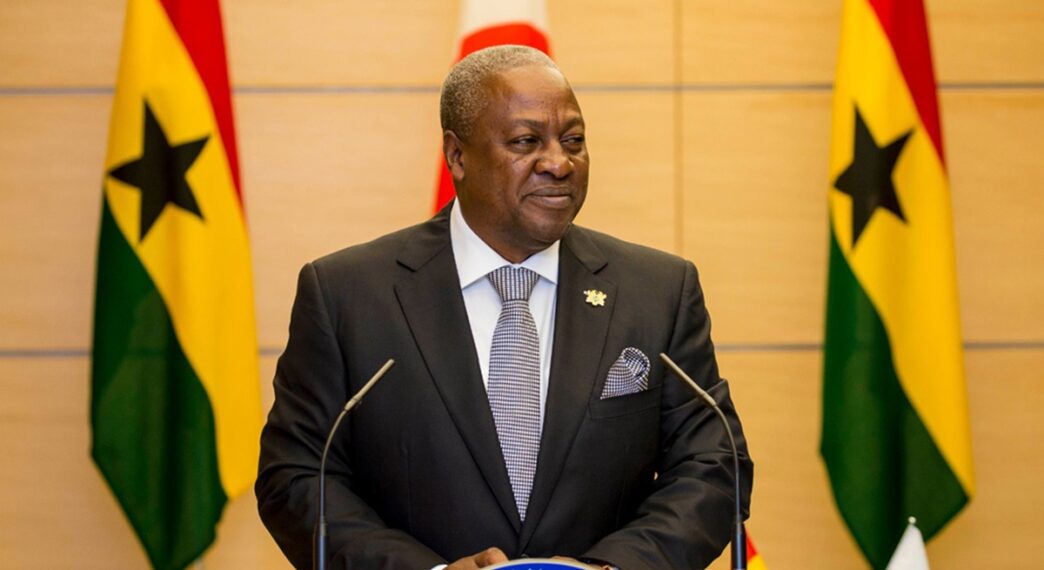
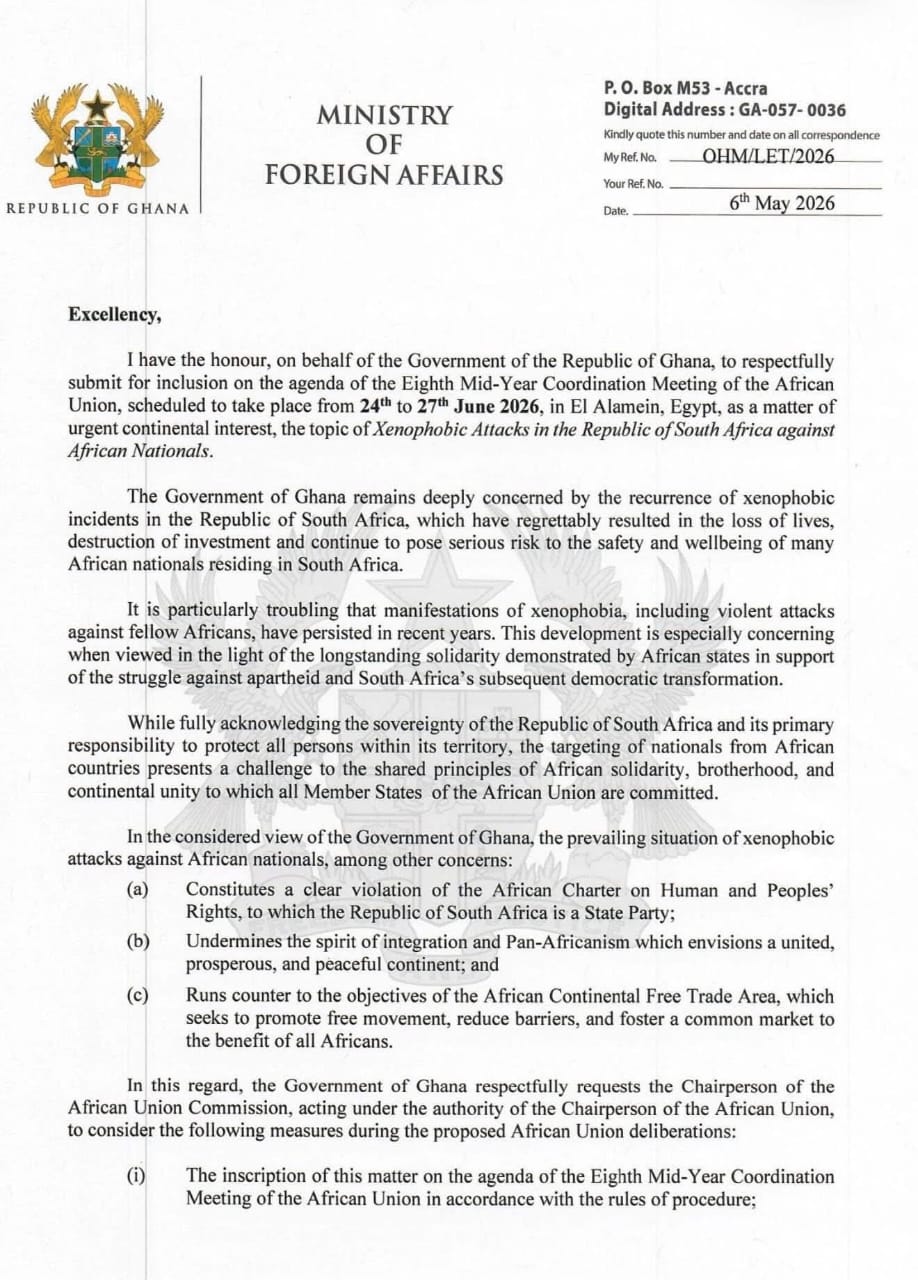
Ghana has formally asked the African Union to put xenophobic attacks against African nationals in South Africa on the agenda of its mid-year coordination meeting in El Alamein next month, a diplomatic move that pulls a recurring continental grievance into the AU’s most senior decision-making forum.
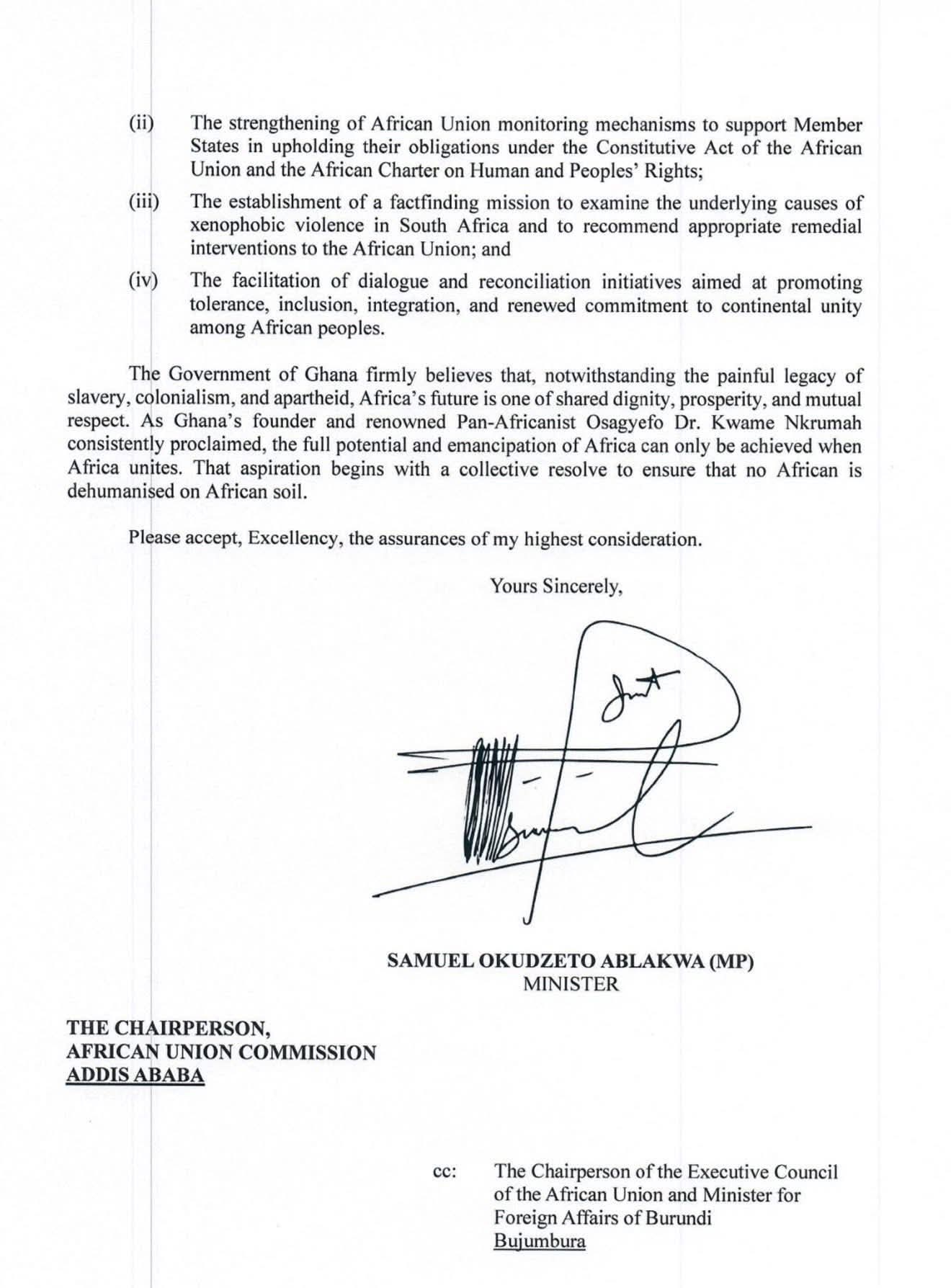
In a letter dated 6 May 2026 and addressed to the AU Commission Chairperson, Ghana’s Foreign Minister Samuel Okudzeto Ablakwa requested four specific measures: the inscription of the matter on the agenda, strengthened AU monitoring of member-state obligations, a fact-finding mission into the underlying causes of xenophobic violence in South Africa, and AU-led dialogue and reconciliation initiatives.
The framing of the letter is deliberate. Accra invokes the African Charter on Human and Peoples’ Rights, to which South Africa is a state party, and argues that recurring attacks on African nationals undermine both the spirit of Pan-Africanism and the operational logic of the African Continental Free Trade Area (AfCFTA), which depends on free movement and a shared market.
Read More : News Central Makes African TV History at UNGA 81
By tying the issue to the AfCFTA, Ghana has moved the conversation from moral appeal to structural risk: xenophobic violence, in this telling, is not just a human rights failure but a threat to the continent’s flagship economic project.
Ghana’s letter is careful to acknowledge South African sovereignty and Pretoria’s primary responsibility to protect persons within its territory. But the closing signals the weight Accra wants the matter to carry, citing Kwame Nkrumah and the unfinished project of African unity, and arguing that Africa’s future of “shared dignity” begins with the resolve “that no African is dehumanised on African soil.” The cc line to Burundi, which holds a senior AU coordinating role, suggests the diplomatic groundwork has already been laid.
This is not Ghana’s first turn as a continental moral entrepreneur at a multilateral table. Accra has built a reputation over the past two years for converting historical and rights-based grievances into formal international processes, most notably its successful push at the United Nations for substantive engagement on reparations and the legacy of the transatlantic slave trade, a campaign in which Ablakwa has been a prominent voice. That track record matters here: Ghana arrives in El Alamein not as a peripheral complainant but as a state with recent experience moving difficult conversations from the margins into binding multilateral fora.
We are immensely and eternally grateful to the UN, all 123 Member States who voted emphatically for Ghana’s Resolution and express limitless appreciation to our broad coalition of people of good conscience across the world.
The humanity, dignity and respect of our ancestors and… pic.twitter.com/G3Yvl2QXdW
— Sam Okudzeto Ablakwa (@S_OkudzetoAblak) March 26, 2026
For South Africa, the request lands at a politically sensitive moment. Pretoria has consistently rejected the “xenophobia” label for the violence, preferring to characterise incidents as criminality, and has resisted external framings that place the problem at the door of state policy or social tolerance.
Read More : From Ojuelegba Bridge to the Ballot Box
An AU fact-finding mission, if approved, would be the most intrusive continental scrutiny South Africa has faced on this issue, and would test the AU’s willingness to hold its largest economy to the same accountability standards it applies elsewhere.
The broader test, though, is for the AU itself. The bloc has long spoken in the register of solidarity and integration but has rarely deployed its monitoring mechanisms against the conduct of powerful member states toward each other’s citizens. Ghana’s letter is, in effect, an invitation to close that gap.
Whether the inscription survives the agenda-setting process at El Alamein will say as much about the AU’s institutional appetite as it does about the merits of Accra’s case, and will signal whether the language of African brotherhood, invoked so often at summits, can be operationalised when the friction is between Africans themselves.