Trending

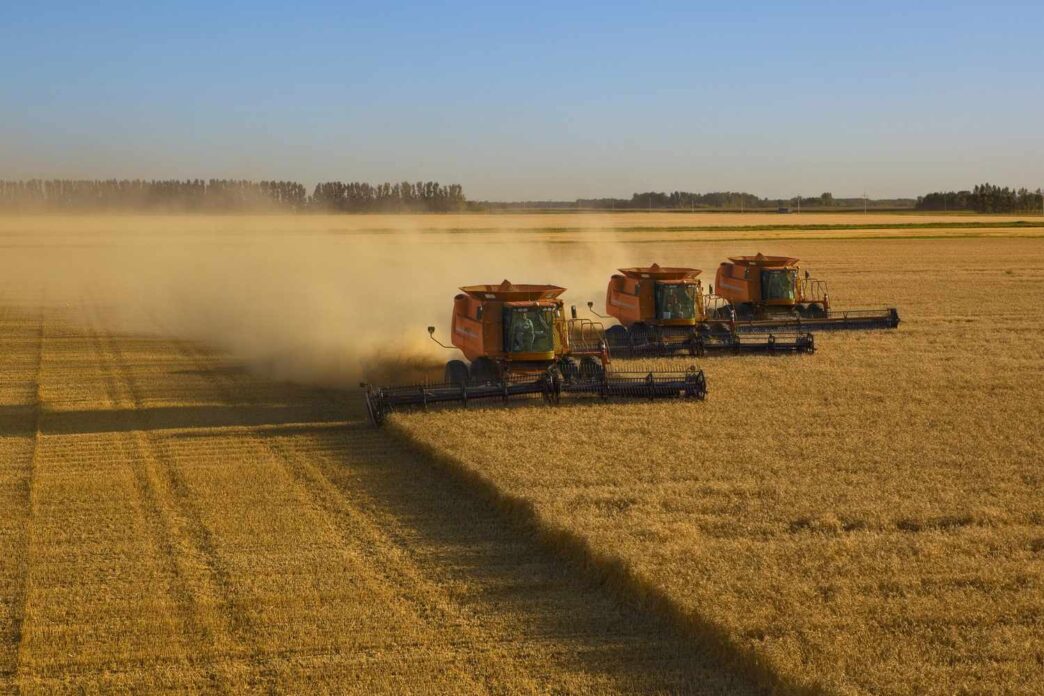
A new financial experiment in Kenya is testing whether money lent to smallholder farmers can be packaged and sold to big investors, a shift that could open up agriculture to institutional funding across Africa.
To make it easier to finance agricultural cash flows at scale, governments, fintech companies, and development financiers are building new financial infrastructure for farming across Africa, including digital commodity registries and warehouse receipt systems.
According to analysts, these new structures are important because they try to standardise and price agricultural risk in a way that institutional investors can comprehend.
Read More : Surging Ebola Outbreak Overwhelms Congo
Due to fragmented, informal farm lending that is highly vulnerable to weather volatility, inadequate collateral systems, and a lack of borrower data, African agriculture has struggled for decades to draw in large-scale commercial capital.
“This first-of-its-kind securitisation in Kenya demonstrates how structured credit markets can channel institutional capital toward smallholder finance,” FSD Africa said in a statement announcing the transaction. The organisation added that the deal shows how structured finance could make sectors traditionally viewed as high-risk more investable, according to the statement.
The overarching goal, according to Sucharita Mukherjee, co-founder and CEO of Kaleidofin, is to create “scalable market infrastructure” that uses data-driven risk analysis and customised structuring to direct institutional capital towards industries such as smallholder agriculture.
According to a joint company statement, fintech platforms Apollo Agriculture, Kaleidofin, and the IDH Farmfit Fund closed Kenya’s first private-sector local-currency securitisation this week, targeting smallholder agriculture, raising KES 276 million (US$2.1 million) through the sale of farm-loan receivables.
The transaction securitised a KES 370 million portfolio covering 23,839 farmers, according to the companies, with women accounting for 51% of borrowers and about 22% of borrowers first-time. The issuance received a BBB- investment-grade rating from Agusto, one of Africa’s credit rating agencies.
The structure allows Apollo Agriculture to convert expected farmer repayments into immediate working capital, rather than waiting for loans to mature before lending again.
“This transaction demonstrates how innovative financial structures can unlock capital for smallholder farmers at scale,” said Roel Messie, chief executive of IDH Investment Management, manager of the IDH Farmfit Fund.
The significance of the deal lies in what it represents for African agricultural finance.
For decades, smallholder agriculture across much of Africa has remained trapped between donor-backed projects, state subsidy systems, and bank lending models that often considered farmers too risky, too fragmented, or too informal to finance sustainably.
Now, a growing number of governments and financial institutions are attempting to redesign the financial architecture around farming itself.
Researchers and development finance institutions have increasingly argued that warehouse receipt systems, digital registries, and commodity exchanges can reduce information asymmetry in agricultural markets while creating collateral structures that commercial lenders can finance more efficiently.
A growing body of research around warehouse receipt systems in Africa has found that such systems can improve access to trade finance, reduce market inefficiencies, and strengthen liquidity across agricultural value chains.
Kaleidofin said the securitisation was built using its “ki” platform, which combines loan transaction data, credit bureau information, and alternative datasets to help investors assess the risk of rural lending portfolios.
Apollo Agriculture separately uses satellite imagery, machine-learning models, and mobile-based data collection to underwrite farmers without conventional collateral or formal banking histories, according to the company.
The broader ambition is to convert previously informal agricultural cash flows into investable financial products.
Analysts say that the shift could eventually allow pension funds, insurers, and other long-term institutional investors to gain exposure to agriculture through structured products rather than direct farm lending.
“We designed the Kaleidofin platform to function as scalable market infrastructure for traditionally excluded customer segments such as smallholder farmers,” Mukherjee said, adding that the company was attempting to create “the foundations for institutional capital to flow into sectors such as smallholder agriculture sustainably.”
“This is a meaningful step in building efficient, scalable funding for smallholder agriculture,” Apollo Agriculture chief executive Eli Pollak said in a statement.
The push comes as African policymakers increasingly look for ways to mobilise domestic and institutional capital into agriculture without relying entirely on sovereign borrowing or development aid.
Analysts say local-currency structures are increasingly viewed as critical for African agricultural finance because many agri-lenders historically borrowed in dollars while lending to farmers in local currencies, exposing both lenders and borrowers to exchange-rate shocks.
The Kenyan transaction was denominated entirely in shillings, a structure that aligns investor funding with farmer repayment flows while potentially making the asset class more accessible to domestic institutional investors.
According to the African Development Bank, agriculture accounts for roughly 35% of Africa’s GDP and employs more than half of the continent’s workforce, yet financing gaps remain severe, especially for smallholders.
Much of the challenge stems from weak collateral systems, fragmented markets, and limited financial records among rural borrowers.
That is beginning to change through digital infrastructure.
In February, Kenya launched its Electronic Warehouse Receipt System Central Registry, a digital platform designed to allow farmers and traders to deposit commodities in certified warehouses and receive electronic receipts that can be used as collateral for loans or traded within structured markets, according to Kenya’s Ministry of Investments, Trade, and Industry.
The Kenyan government said the system aims to modernise agricultural trade, reduce post-harvest losses, and strengthen access to financing across commodity value chains.
“The launch of the E-WRS and CR is a critical step toward unlocking financing,” Warehouse Receipt System Council chairman Patrick Mbogo said during the launch in Nairobi.
The warehouse receipt model has increasingly emerged as one of the continent’s preferred tools for formalising agricultural trade and creating financeable collateral around stored commodities.
According to the World Bank’s 2025 annual report, the institution supported warehouse receipt systems in Malawi and Zambia as part of efforts to expand access to trade finance for agricultural producers.
In Ethiopia, the government’s Digital Agriculture Roadmap for 2025–2032 includes electronic agricultural finance systems and interoperable farmer data architecture as part of a wider push to digitise the country’s agricultural economy, according to the Agricultural Transformation Institute.
Those systems are still far from mature capital-market structures, but they point toward the same underlying shift, the financial formalisation of African agriculture.
The International Finance Corporation has previously described crop-receipt finance and warehouse receipt systems as mechanisms capable of helping farmers access pre-harvest financing while improving liquidity across agricultural supply chains.
Yet the institution also noted that Africa’s agricultural securitisation ecosystem remains relatively underdeveloped compared to markets such as Brazil, where farm receivables and commodity-backed financing have become mainstream capital-market instruments.
In Brazil, agricultural receivables, warehouse-backed financing, and rural credit securities have evolved into mainstream instruments connecting farming directly to domestic capital markets.
Analysts say Africa remains at a much earlier stage, with weak secondary markets, fragmented agricultural data, and limited credit histories continuing to constrain scale.
That makes Kenya’s securitisation experiment particularly significant.
Unlike many previous agricultural finance initiatives built around donor grants or concessional lending, the Apollo-Kaleidofin transaction attempts to place smallholder lending directly into the logic of institutional capital markets.
The transaction was supported by FSD Africa, MOBILIST, the Gates Foundation, and British International Investment through technical assistance and market development support, according to the companies.
FSD Africa said the transaction demonstrates how structured finance can mobilise institutional capital into sectors traditionally viewed as high risk.
“We see this as a blueprint for how structured finance can unlock sustainable, large-scale funding for inclusive growth across Africa,” said Evans Osano, chief financial markets officer at FSD Africa.
The companies behind the transaction expect the program to expand over several years, targeting approximately KES 2.37 billion in financing and potentially reaching more than 130,000 farmers.