Trending

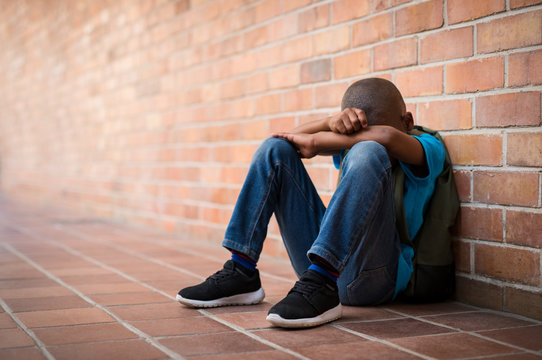
Childhood is supposed to be a kingdom of small permissions. Permission to cry when a knee is scraped. Permission to be afraid of the dark. Permission to want to be held. Permission to be soft. But for millions of boys around the world, that kingdom is revoked before they learn to speak.
In its place, they are handed a script written long before they were born, one that tells them exactly what they are allowed to feel and exactly what they must never show. The International Day of the Boy Child, observed each year on May 16th, exists because that script is doing damage that will take generations to undo.
There is a particular kind of loneliness that follows boys who have been told too early that they must be strong. It is not the loneliness of isolation. It is the loneliness of being surrounded by people who expect you to be fine and never think to check.
The boy who has learned to swallow his tears does not stop crying. He just learns to cry in places no one can see. Behind locked bathroom doors. Under blankets after everyone has fallen asleep. Into pillows that muffle every sound. By the time he is an adult, he may not even remember what it felt like to cry openly. The skill of hiding has become his default setting, automatic as breathing.
Psychologists who work with adolescent boys describe a phenomenon they call emotional compression. Imagine a boy’s heart as a room. Every time he is told that his sadness is an inconvenience, the walls move inward. Every time he is mocked for showing fear, the ceiling lowers. Every time he reaches for comfort and is met with a demand to toughen up, the floor rises.
Eventually, the room becomes so small that there is no space left for anything but the most basic functions. Eat. Sleep. Survive. The boy does not stop feeling. He simply runs out of room to hold his feelings. And so they leak out sideways, as rage, as withdrawal, or as self-destruction.
The data on what happens when boys run out of room is not ambiguous. Across every region where mental health statistics are reliably collected, boys and young men die by suicide at rates that far exceed their female peers.
In the Caribbean, where the International Day of the Boy Child was launched in 2018 by Dr Jerome Teelucksingh, the ratio is roughly four males for every female.
In Nigeria, where mental health infrastructure remains sparse, the available data from hospital coroners and emergency rooms tells the same story. Boys are dying not because they are weak, but because they were never taught that asking for help is an act of courage rather than an admission of failure.
The physical health of boys tells a parallel story. Boys are more likely to engage in risky behaviours than girls. They are more likely to ride motorcycles without helmets, to swim in dangerous currents, to handle tools or weapons without supervision, and to consume substances at younger ages.
These are not mysteries that require complex explanation. Boys take more risks because risk-taking is coded into their understanding of masculinity. A boy who hesitates is a coward. A boy who calculates danger is soft. A boy who walks away is not a real man. These messages are rarely spoken aloud in formal lessons. They are absorbed from the atmosphere, from older boys, from uncles and fathers who mean well but never question the script they themselves were handed.
The classroom is where the script begins to harden. From the first day of primary school, boys are expected to sit still longer than their bodies want to. They are expected to process language differently than their brains are wired to. They are expected to perform reading fluency at the same pace as girls, despite neurological research suggesting that language acquisition develops on slightly different timetables between sexes.
When they fail to meet these expectations, they are not given the extra support that struggling girls often are. They are labelled as disruptive. They are sent to the principal. They are medicated. They are left behind.
By the time he reaches secondary school, the boy who could not keep up has often stopped trying entirely. His hands are no longer raised to answer questions. His eyes no longer follow the teacher across the room. He is present in body only, and even that presence is provisional.
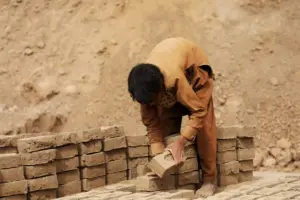
Outside the school gates, the boy child faces a different but equally invisible crisis. In countless households across West Africa and the Caribbean, boys are assigned physical labour that girls are spared. They fetch water from distant sources. They haul goods to market. They work alongside fathers in fields, workshops, and construction sites. This is often framed as character building, as preparation for the responsibilities of manhood. But the line between character building and exploitation is thinner than most adults want to admit.
A boy who spends his afternoons carrying heavy loads instead of doing homework is not learning resilience. He is being robbed of a childhood. And because his labour keeps the family afloat, no one dares to name the transaction for what it is.
The International Day of the Boy Child asks hard questions that many societies would prefer to leave unasked. Why is a boy’s education considered more expendable than a girl’s? Why is a boy’s safety considered less precious? Why is a boy’s emotional life considered a luxury rather than a necessity?
These questions are not accusations. They are invitations to examine assumptions that have gone unexamined for generations. The boy who is beaten and told it is discipline grows into the man who believes that violence is love. The boy who is never held grows into the man who cannot hold others. The boy who is never asked how he feels grows into the man who does not know what he feels until it is too late.
There are places where this understanding is beginning to take root, though slowly and unevenly.
In a handful of schools in Lagos, teachers are being trained to ask boys open-ended questions about their emotional states, not as an intervention but as a routine part of the school day.
In Port of Spain, community groups have organised father-son circles where men are encouraged to model vulnerability by sharing their own struggles aloud.
In Kingston, a small non-profit has started a reading programme specifically for boys who have fallen behind, using stories where male characters express fear and sadness without shame.
These efforts are tiny relative to the scale of the problem. But they represent something important. They represent the recognition that the script can be rewritten.
The International Day of the Boy Child does not ask for parades or monuments or declarations from heads of state. It asks for something far more difficult and far more profound. It asks adults to look at the boys in their lives and see them fully, not as future men who must be hardened for the world, but as children who need what all children need.
Safety. Tenderness. Permission to be afraid. Permission to fail. Permission to cry. These are not special requests. They are the birthright of every child, regardless of gender. But for boys, that birthright has been revoked by custom and tradition and the casual cruelty of phrases like boys will be boys.
Today, on May 16, the invitation is simple yet devastatingly hard: look at the boy in your life. Your son. Your nephew. Your student. Your neighbor. Look past his posture of toughness. Look past his refusal to talk.
Look past the wall he has built around himself, then ask him not what he did today but how he felt today. Ask him if anything scared him. Ask him if anything made him sad. Ask him if he needs to be held. And when he hesitates, because he will hesitate, wait.
Do not fill the silence with a demand that he man up. Let the silence stretch. Let him find his way to the words. Let him remember, slowly and tentatively, that there is still a small kingdom inside him where softness is allowed.
It may be the first time anyone has ever given him permission to enter.