Trending


A Nigerian adult now needs at least N1,513 per day to afford a healthy diet, even as the United Nations warns that 35 million people across the country could face acute food insecurity by August.
The National Bureau of Statistics revealed the 3.76 percent increase in the Cost of Healthy Diet (CoHD) from January’s N1,458 in its February 2026 report released in Abuja.
NBS defined CoHD as “the least expensive combination of locally available items that met globally consistent food-based dietary guidelines.”
The bureau said it was used as a measure of physical and economic access to healthy diets.
“This is a lower bound (or floor) of the cost per adult per day excluding the cost of transportation and meal preparation,” the NBS said.
35 million at risk of hunger
The UN Humanitarian Country Team said Friday that Nigeria was facing a deepening hunger crisis as the lean season approaches.
“Nearly one in seven people, that is 35 million people nationwide in Nigeria, are likely to face acute food insecurity during this year’s lean season, which runs from June to August,” the UN said.
UN said the latest report makes Nigeria one of the world’s largest hunger crises, with the burden falling overwhelmingly in the northern part of the country.
“If assistance is further delayed, millions of families will be forced to reduce meals further, sell assets, or withdraw their children from school with the long-term impact that we know it has,” the UN said.
Across northwestern and northeastern Nigeria, the UN estimated that 6.4 million children are likely to be acutely malnourished this year.
“Our partners and we are appealing for urgent funding to scale up life-saving assistance,” the global multilateral body said.
Regional disparities remain stark
NBS reported that in February, the average CoHD was highest in the South-East at N1,889 per adult per day, followed by the South-West at N1,786 per day.
The lowest average CoHD was recorded in the North-East at N1,160 per adult per day, the bureau said.
At the state level, Ekiti, Imo and Abia recorded the highest CoHD at N2,075, N2,051, and N1,924, respectively.
Adamawa, Borno, and Taraba recorded the lowest CoHD at N979, N1,040 and N1,102, respectively.
The NBS said CoHD had steadily increased over the past year.
As of February 2026, the CoHD was 12.4 per cent higher than what was recorded in February 2025, increasing from N1,346 to N1,513.
“The food groups that have driven the increases in CoHD on a year-on-year basis are animal source foods followed by fruits, then oil and fats and lastly vegetables.”
“However, the price of starchy staples decreased on a year-on-year basis,” the report said.
Animal-source foods most expensive
The report added that animal-source foods were the most expensive food group recommendation to meet in February, accounting for 39 per cent of the total CoHD to provide 13 per cent of the total calories.
It noted that fruits and vegetables were the most expensive food groups in terms of price per calorie.
“Animal Source Foods were the most expensive food group recommendations to meet in February, accounting for 39% of the total CoHD to provide 13% of the total calories,” the report said.
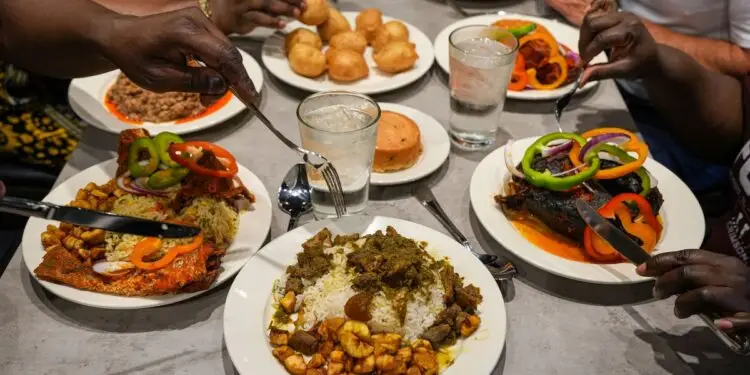
“Fruits and vegetables were the most expensive food groups in terms of price per calorie; they accounted for 16% and 14% respectively, of total CoHD while providing only 7% and 5% of total calories in the Healthy Diet Basket.”
“Legumes, Nuts, and Seeds were the least-expensive food group on average, at 7% of the total cost,” the NBS added.
CoHD rising faster than inflation
The report also said that the CoHD had risen faster than general inflation and food inflation.
“However, the CoHD and the food Consumer Price Index (CPI) are not directly comparable.”
“The CoHD includes fewer items and is measured in Naira per day, while the food CPI is a weighted index,” the NBS added.
The UN said its $516 million Humanitarian Needs and Response Plan for 2026 is just over 40 per cent funded.
According to the latest humanitarian response plan report, only 215 million out of the 516 million had been received as of May 2026.
NBS said the policy implications of these results would foster collaboration among a wide range of stakeholders, such as policymakers, researchers and civil society actors that focus on food security.
“These stakeholders will devise strategies that tackle access, availability, and affordability of healthy diet effectively.”
“Also, future research incorporating income can also be used to determine the proportion and number of the population that are unable to afford a healthy diet,” the report said.