Trending
Something is quietly reshaping the architecture of Nigeria’s tech boom: the country’s most celebrated startups, the ones splashed across funding announcements, celebrated at Lagos tech summits, and held up as proof that African innovation has arrived, are increasingly American companies on paper.
Not in spirit or in operations or in the founders who built them or the millions of Nigerians who use them every day, but in the legal and corporate structure that matters most to global capital: the country of incorporation.
From Flutterwave and MoniePoint to Shuttlers, BuyPower, and Shekel Mobility, a growing cohort of Nigeria’s fastest-scaling startups has chosen to incorporate in the United States, most of them in Delaware, while keeping their true centre of gravity firmly in Lagos.
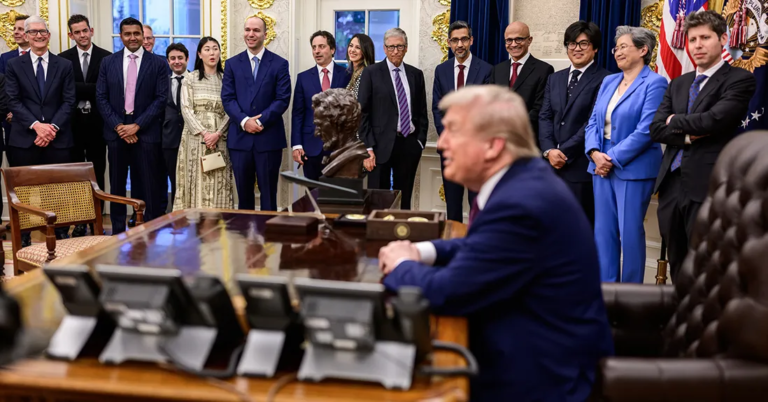
Read More : White House Hosts AI Leaders on Regulation
It is a strategic decision, not an identity one. And understanding why they do it reveals as much about the global venture capital system as it does about Nigeria’s own financial landscape.
The Capital Logic
The simplest explanation is also the most honest one: that is where the money is. The U.S. venture capital market dwarfs any available African capital pool, and most U.S. venture capital firms operate under internal policies or limited partner agreements restricting investments to companies incorporated in familiar jurisdictions, primarily the United States, and occasionally the United Kingdom or Singapore.
For a Nigerian founder trying to close a Series A or Series B round with American institutional backers, a Delaware C-corporation is not just convenient; it is often a prerequisite.
The numbers bear this out. Approximately 70 per cent of Nigerian startups that raise significant venture capital still incorporate their parent companies in Delaware, with Nigeria hosting only subsidiary operations. A 2021 survey confirmed similar findings, with seven in ten startups choosing Delaware to establish their corporate presence, followed by Mauritius and Dubai.
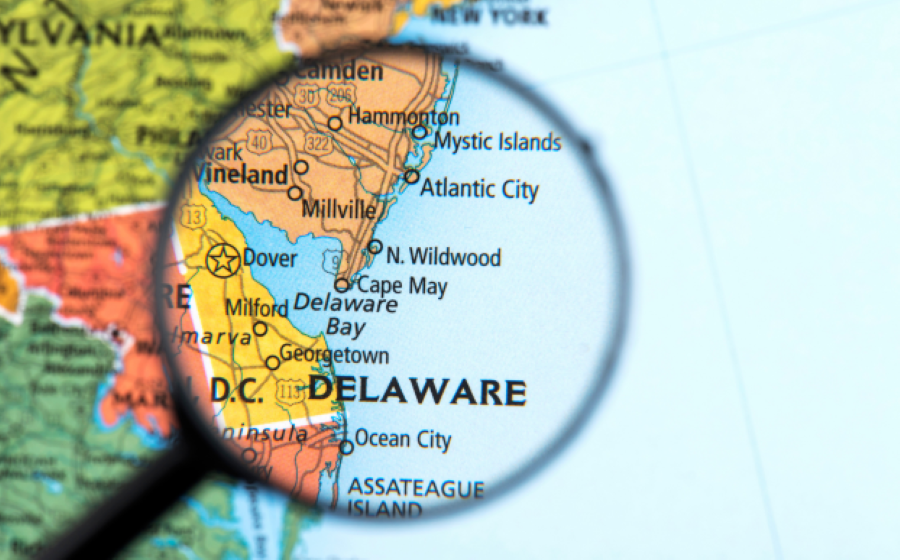
The appeal of Delaware specifically is not arbitrary. The state is home to over 2.1 million registered business entities despite a population of roughly one million residents. More than two-thirds of Fortune 500 companies are incorporated there, and in 2024, approximately 81 per cent of U.S.-based IPOs chose Delaware.
Its specialised Court of Chancery, which resolves corporate disputes through experienced business judges rather than juries, gives investors the legal predictability they demand before writing large cheques.
Meanwhile, the broader U.S. capital market provides a backdrop that no other country can yet replicate. With a capital market valued at over $120 trillion, the United States remains the largest, most liquid, and among the most efficient in the world in providing, as the U.S. Mission in Nigeria notes, “unmatched opportunities for ambitious startups ready to compete globally.”

The Startups Making the Move
The companies doing this are not obscure; they are, by many measures, the most consequential Nigerian startups of the past decade.
Flutterwave, Africa’s most valuable fintech company at a $3 billion valuation, was founded in Nigeria in 2016 and provides payment infrastructure for global merchants and service providers across the continent. Though its headquarters are in San Francisco, the company maintains significant operations in Nigeria and dozens of other African countries, and holds operating licenses in more than 30 U.S. states.
Flutterwave CEO Olugbenga “GB” Agboola has consistently positioned the company as a bet on Africa’s next phase of fintech growth, a bet that has been placed, strategically, from an American legal address.
MoniePoint joined the unicorn club in October 2024, raising $110 million in a Series C round from investors including DPI, Google’s Africa Investment Fund, Verod, and others. At the time of the raise, MoniePoint reported processing over one billion transactions worth more than $22 billion monthly, with annualised revenue above $100 million and profitability. TeamApt, MoniePoint’s former name, raised $50 million in Series B funding in August 2022 as a Delaware corporation.
The pattern extends to mobility and logistics. Shuttlers, Nigeria’s corporate transportation platform, introduced 20 CNG-powered vehicles in early 2025 and completed nearly 1,500 trips in a single period, demonstrating the demand for scalable, eco-friendly urban transport.
BuyPower, which operates in Nigeria’s electricity sector, and Shekel Mobility, which focuses on vehicle financing, have followed similar incorporation paths to position themselves credibly with international investors.
The pattern is unmistakable: Nigerian startups serving Nigerian and African markets, founded by Nigerian entrepreneurs, operating primarily from Nigerian offices, incorporate their legal entities in Delaware because that is where the capital is.
The Delaware Flip
For founders who did not start out with U.S. incorporation, there is a well-trodden workaround: the “Delaware Flip.” This is a mechanism by which founders transfer their incorporation to Delaware at a later stage, typically before a significant fundraising round. It involves restructuring the company so that a new Delaware entity becomes the parent, with the original Nigerian entity becoming a wholly owned subsidiary. It is legal, increasingly common, and viewed by many in the ecosystem as simply the cost of doing business globally.
The irony is not lost on observers. Nigeria’s National Startup Act of 2022, signed into law to build a more supportive domestic environment for tech companies, was in part a direct response to this exodus of corporate structures. The legislation seeks, among other things, to offer funding support to Nigerian startups.
A $618 million blended public-private fund has also been established to accelerate the ecosystem. Yet for startups targeting serious venture scale, the domestic policy environment has not yet closed the gap with what U.S. incorporation unlocks.
A Thriving Ecosystem, Wherever It’s Incorporated
None of this diminishes what Nigeria is building. According to the Dealroom Global Tech Ecosystem Index 2025, Lagos has officially been recognised as the fastest-growing emerging tech ecosystem in the world, surpassing cities like Istanbul and Mumbai, and ranked first among 288 global tech hubs, citing rapid growth in startup value, funding volume, talent pipeline, and innovation output. The Lagos tech ecosystem is now valued at $15.3 billion, reflecting an 11.6-fold increase in the value of startup enterprises since 2017.
In 2024, Nigerian startups raised $218 million, accounting for about 13 per cent of all funding secured by startups across Africa. The talent is homegrown, the problems being solved are real and local, and the users are Nigerian. What U.S. incorporation provides is not a replacement for any of that; it is a key that unlocks the global capital needed to scale it faster.
For Nigerian founders, the calculation is increasingly straightforward: build here, incorporate there, and use the resulting access to venture capital to compete at a level that the domestic funding market cannot yet support on its own. The U.S. market offers better opportunities to grow, sell, or take a business public, along with more efficient tax and corporate structures that are familiar to potential investors, strategic partners, employees, and acquirers.
What This Means Going Forward
The deeper story is one of mutual interest, not one-sided dependence. Nigerian founders who incorporate in the U.S. are not abandoning their home market; they are using American corporate infrastructure to serve it better, at scale. U.S. investors, in turn, gain exposure to one of the world’s youngest, fastest-urbanising, and most digitally active populations.
Read More : Egypt to Host Africa Business Summit
The U.S. Mission in Nigeria has framed this dynamic explicitly: American capital markets provide unmatched opportunities for “ambitious startups ready to compete globally and advance mutually beneficial prosperity.”
That language of mutual benefit is worth taking seriously. Every Flutterwave transaction, every MoniePoint POS in a Lagos market stall, every Shuttlers bus running on CNG through the morning commute is a product of capital that crossed borders because a founder was strategic enough to make that possible.
Nigeria’s startup founders are not choosing America over Nigeria. They are choosing America for Nigeria — and, increasingly, the results speak for themselves.