Trending


When you help businesses move money across borders every day, you quickly realise they are rarely interested in the technology behind a payment. They care about whether their supplier receives the money on time. Whether the exchange rate will still be the same by the time settlement happens. Whether they can reconcile the transaction without chasing banks across different jurisdictions. Those questions may sound operational, but together they reveal something much bigger. Businesses do not compete on payment technology. They compete on certainty, and certainty is ultimately a function of financial infrastructure.
That is why I believe much of the conversation around stablecoins misses the point.
The debate is often framed as a choice between traditional banking and digital assets, with one side predicting disruption and the other defending the status quo. Yet businesses operating across international supply chains are having a very different conversation. They are looking for payment systems that reduce uncertainty, improve transparency and make cross-border trade more predictable. In that context, stablecoins are becoming important not because businesses suddenly want to own digital assets, but because they represent another evolution in how money moves across the global financial system.
The most useful conversation in global payments today should be less about stablecoins and more about settlement infrastructure.
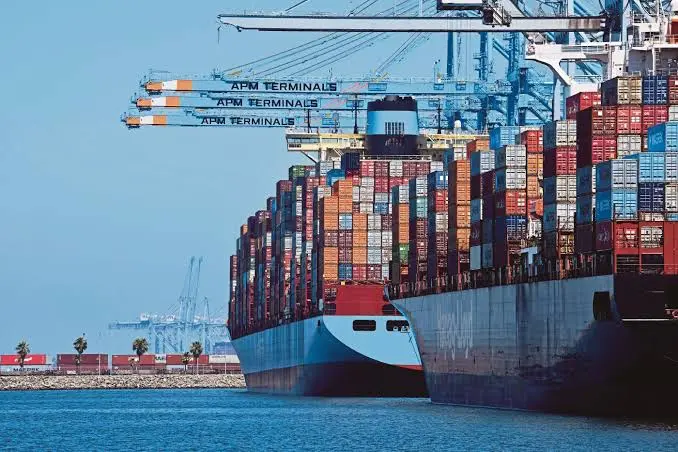
International commerce has depended on correspondent banking for decades. It remains one of the foundations of global finance, allowing institutions across different countries to settle transactions through trusted banking relationships. But global trade has changed dramatically while much of the underlying settlement infrastructure has evolved more slowly. Payments can still pass through several intermediary institutions before reaching their destination, introducing delays, additional compliance checks and higher costs along the way. Businesses experience those layers as uncertainty. A supplier waits longer to release goods. An importer absorbs additional foreign exchange risk while settlement is pending. Working capital remains trapped instead of funding the next order. What appears to be a payment delay often becomes a commercial problem.
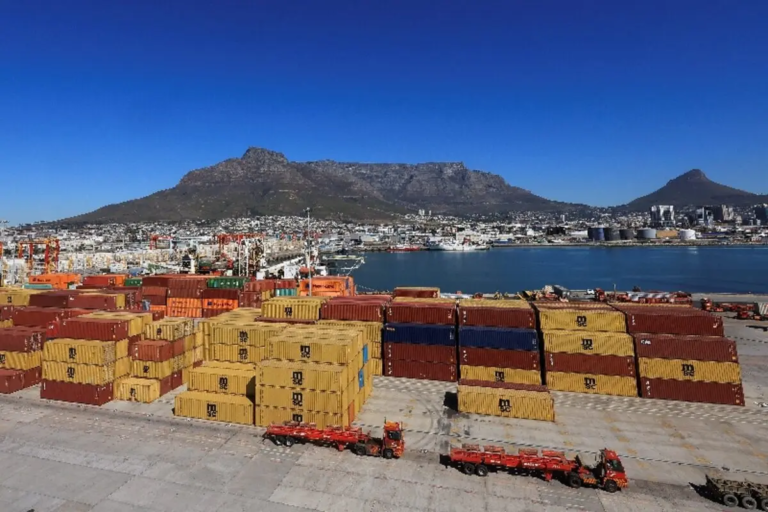
That challenge is becoming increasingly significant because international trade continues to expand while expectations around payments continue to change. African businesses import around $720 billion worth of goods in 2024, yet many still navigate fragmented payment systems, inconsistent access to foreign currency and settlement processes that were never designed for the speed of modern commerce. At the same time, stablecoins have quietly evolved from a niche cryptocurrency product into institutional payment infrastructure. Visa estimates that adjusted stablecoin transaction activity exceeded $10 trillion in 2025, while banks, payment networks and regulated financial institutions are increasingly exploring stablecoin settlement for treasury management and cross-border payments. The market is no longer asking whether this infrastructure has practical value. It is asking where that value is most effectively applied.

Too often, the answer is misunderstood. Stablecoins are presented as competitors to banks when, in reality, they strengthen one of banking’s most important functions. Banks remain indispensable because they safeguard deposits, provide credit, manage customer relationships and uphold the regulatory frameworks that make financial systems trustworthy. Settlement is different. It is the process that allows value to move efficiently between institutions. Improving settlement does not weaken banking any more than faster internet weakened commerce. It creates stronger foundations upon which banks and businesses can operate. History shows that financial infrastructure evolves through layers rather than replacement. Telegraph transfers gave way to electronic payments. Paper cheques gave way to cards. Internet banking transformed customer access without eliminating financial institutions. Stablecoin settlement belongs within that same continuum.
I have seen that shift firsthand through our work at Clea. Businesses rarely ask us about blockchain or stablecoins. They ask whether they can pay suppliers without relying on informal intermediaries, whether payments can be tracked from initiation to settlement and whether compliance has been built into the process from the beginning. Before working with us, supplier payments often took between three and five days to settle. Today, those same payments are typically completed within the same day. That difference is not simply measured in hours. It means businesses regain working capital sooner, strengthen supplier relationships and operate with greater confidence in international markets. The technology enabling that outcome is important, but the commercial certainty it creates is what customers ultimately value.
Africa’s opportunity is not simply to adopt the next generation of payment technology. It is to help shape the financial infrastructure that global commerce increasingly depends on. As supply chains become more digital and businesses trade across more markets, settlement will become just as important as payments themselves. The countries and companies that reduce friction, improve transparency and build trusted financial infrastructure will create advantages that extend far beyond fintech. They will strengthen trade itself.
I remain optimistic because the most successful infrastructure eventually becomes invisible. Few businesses think about card networks when accepting payments or correspondent banking when transferring money internationally. They simply expect those systems to work. Stablecoins should ultimately be judged by exactly the same standard. Their success will not be measured by how many people know they are using them, but by how many businesses stop worrying about the complexity of moving money across borders. The future of banking will not belong to those trying to replace institutions that already underpin global finance. It will belong to those building infrastructure that allows those institutions, and the businesses they serve, to work better together.