Trending
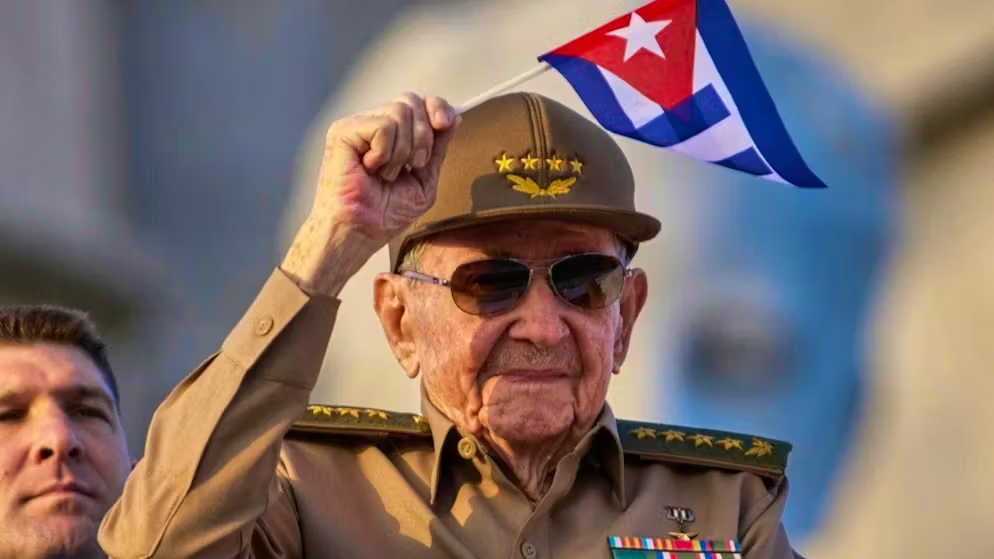
Raúl Castro, Cuba’s influential former president, has publicly endorsed a sweeping set of economic reforms aimed at stabilising the country’s deteriorating economy, offering rare high-level political backing for liberalisation measures promoted by President Miguel Díaz-Canel.
The reforms, described by the government as the most significant in years, are designed to expand private sector participation, attract foreign and diaspora investment, and reduce the size of the state apparatus. The proposals are expected to be reviewed by Cuba’s National Assembly on Thursday, just days after they were formally introduced.
According to officials, the Communist Party’s Politburo convened an extraordinary plenary session on Wednesday to deliberate on the measures. During the meeting, Raúl Castro’s support was conveyed through a letter describing the proposals as “the most beneficial to the revolution at this time.” The endorsement is politically significant given Castro’s enduring influence within the ruling establishment despite stepping down from formal leadership roles.
Read More : UNGA: Lavrov Offers Help in Gulf, Slams Europe
Castro, who governed Cuba for 15 years after succeeding his brother Fidel in 2006, remains a central figure in the island’s political structure. His backing signals continuity from the revolutionary leadership while acknowledging the urgency of economic restructuring.
The government has framed the reforms as part of a broader strategy to revive an economy strained by long-standing US sanctions and worsening domestic shortages. Cuba has experienced severe disruptions in recent months, including prolonged power outages and acute shortages of food, fuel, clean water, and essential medicines.

Prime Minister Manuel Marrero, speaking via official government channels, stressed that the reforms “in no way imply relinquishing the social responsibility of the state,” signalling that Cuba intends to maintain its socialist framework while introducing market-oriented adjustments.
Read More : Trump Rejects Iran Proposal To Reopen Hormuz
Key elements of the plan include expanding access for private enterprises, which have been permitted to operate since 2021 with up to 100 employees, and offering Cubans abroad investment terms comparable to those for foreign investors. The government is also considering downsizing the public sector by reducing the number of ministries and state payrolls.
Some proposals revive earlier reform efforts, particularly plans to grant greater autonomy to state-owned enterprises, which still account for an estimated 80 per cent of economic activity.
However, it remains unclear whether the reforms will satisfy external pressure, including from US President Donald Trump, who continues to advocate bigger systemic economic change in Cuba.