Trending
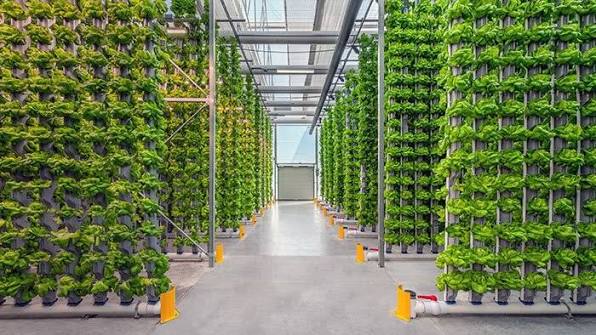
United States agricultural technology, particularly hydroponic farming, could help address rising food prices in Lagos and other densely populated Nigerian cities where land for traditional farming is shrinking.
News Central TV correspondent, Sagir Ibrahim, who is currently attending 2026 World Business Chicago, the official economic development organisation for the City of Chicago, said on Monday that he recently visited research facilities in Chicago and San Francisco to explore trade and investment opportunities for Nigerian small and medium enterprises.
“The US, of course, has had a very great relationship, friendly relationship between Nigeria and itself. But then when it comes to issues or conversations around trade, the issue is not usually what to trade or how to trade. The issue usually focuses on the infrastructure that’s available to facilitate that two-way trade,” Ibrahim said.
During the visit, the team toured a University of Illinois agricultural research facility that uses hydroponic technology to grow vegetables and other crops without soil.
“We visited a University of Illinois agricultural research facility that is leveraging hydroponic technology to improve yield and improve access to rich agricultural produce with an inclusion of vegetables and other crops, which, to a large extent, can reduce the amount of or the prices of foodstuff or the prices of food in places like Lagos that are suffering access to agrarian land due to the large infrastructural development, real estate development that’s going on in places such as that,” Ibrahim said.
Engagements with agricultural researchers and businesses in Chicago have pointed to hydroponic technology as a possible way to boost food production in Nigeria’s cities with limited farmland. @sagirmohh reports. pic.twitter.com/ToDWinMRom
— News Central TV (@NewsCentralTV) July 27, 2026
“Now, if you put into consideration that there is no land and put into consideration the large infrastructural development that’s going on, what happens in the middle is a rise in food prices. And this is where technologies such as hydroponic, soilless agriculture comes into play.”
Ibrahim said the technology could be deployed in abandoned warehouses in cities like Lagos and Kano, where land is scarce due to rapid real estate development.
“Nigerians stand a lot of benefits to come over to this side of the world to learn how these systems have improved over the course of time and, of course, deploy these strategies to ensure massive growth, infrastructural growth, but then massive populated areas like Lagos state, like Kano state, which would usually not have this land access, can cultivate in maybe small, abandoned warehouses and would yield very high harvest,” he said.
“The area that we looked at covered just around 2,300 to 3,000 square feet. But then the output that was coming out of there was somewhere around what you would get from an acre of land,” he added.
Food prices in Nigeria have surged in recent months, driven by insecurity in farming communities and rising transport costs.