Trending

Nigeria has extended its condolences to Japan following the devastating magnitude 7.1 earthquake that struck Kumamoto Prefecture in the country’s southern Kyushu region.
In a statement issued on Thursday by the Ministry of Foreign Affairs, the Nigerian Government said it received “with deep concern” news of the powerful earthquake that hit Kumamoto on July 28, causing fatalities, injuries and widespread destruction.
The statement, signed by the ministry’s spokesperson, Kimiebi Imomotimi Ebienfa, conveyed President Bola Tinubu’s sympathies through the Minister of Foreign Affairs, Ambassador Bianca Odumegwu-Ojukwu.
“The Government and people of the Federal Republic of Nigeria have received with deep concern the news of the powerful magnitude 7.1 earthquake that struck Kumamoto Prefecture in southern Japan on 28 July 2026,” the statement read.
“On behalf of His Excellency President Bola Ahmed Tinubu, GCFR, the Government and people of Nigeria, the Honourable Minister of Foreign Affairs, Ambassador Bianca Odumegwu-Ojukwu, extends heartfelt condolences to the Government and people of Japan, and particularly to the families of those who lost their lives, the injured, and all those affected by this natural disaster.”
Nigeria also pledged its support for Japan during the crisis and praised the country’s emergency response.
Reaffirming bilateral ties between both nations, Ebienfa added: “The Government of Nigeria reaffirms the strong bonds of friendship and cooperation that exist between our two countries and prays for the swift recovery of the injured, the safety of those still unaccounted for, and the resilience of the people of Kumamoto and the wider Kyushu region as they rebuild.”

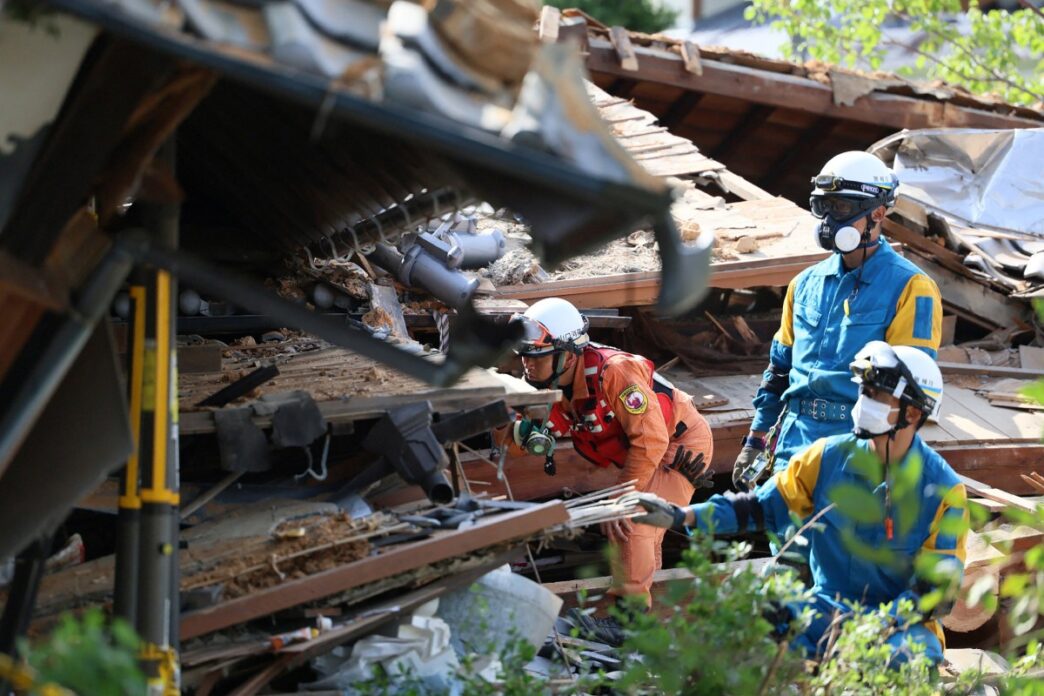
The Nigerian message comes as Japanese authorities continue search-and-rescue operations following the powerful earthquake, which triggered building collapses, fires, widespread power outages and disruptions to transport across Kyushu.
Rescue teams have been battling aftershocks and extreme heat while searching for survivors trapped beneath collapsed structures.
The death toll has continued to rise as recovery efforts progress.
The magnitude 7.1 earthquake struck Kumamoto Prefecture on Japan’s southern island of Kyushu on July 28, prompting tsunami advisories, knocking out electricity to tens of thousands of homes and suspending rail services, including sections of the Kyushu Shinkansen.
Authorities also warned residents to prepare for strong aftershocks.
Kumamoto is no stranger to devastating seismic disasters.
In 2016, the prefecture was struck by a series of powerful earthquakes, including a magnitude 7.3 tremor, that killed more than 270 people and caused extensive damage to homes, roads and public infrastructure.
The latest disaster has revived memories of that tragedy as Japan once again confronts a major earthquake in one of the world’s most seismically active regions.
Japan lies along the Pacific “Ring of Fire,” making it one of the most earthquake-prone countries in the world.
The country has some of the world’s strictest seismic building standards, but powerful earthquakes continue to pose significant risks because of secondary hazards such as landslides, fires, gas leaks and building collapses.
Read More : AAC Sues Tinubu Over Prolonged Absence
— Ministry of Foreign Affairs, Nigeria 🇳🇬 (@NigeriaMFA) July 30, 2026