Trending
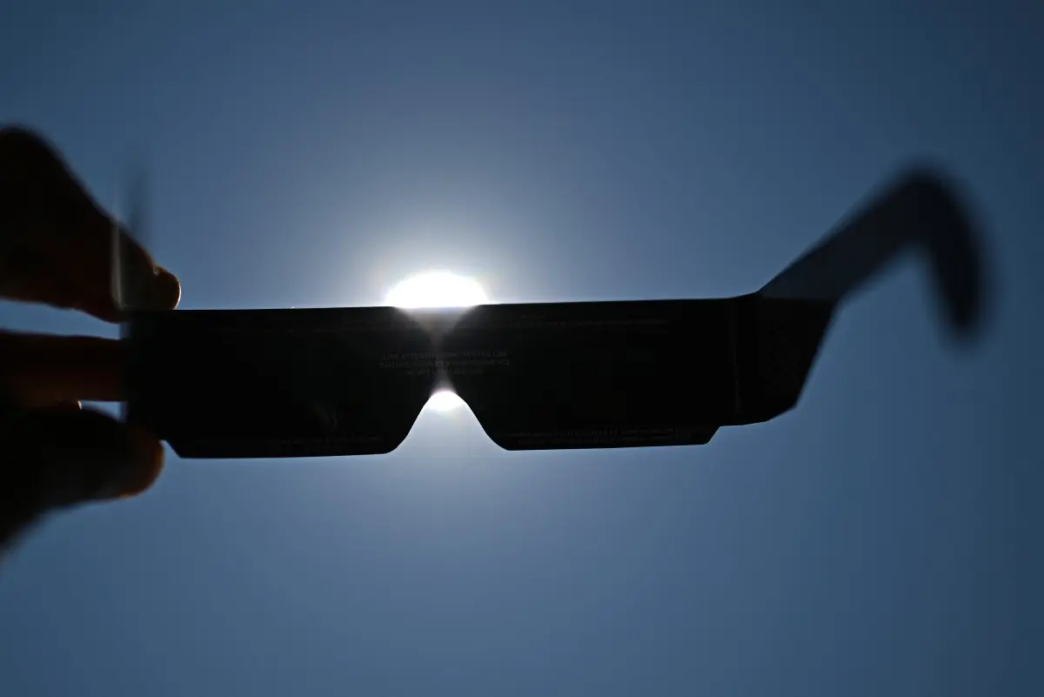
Millions of people across Europe are preparing to witness a rare total solar eclipse on Wednesday, as the Moon moves directly between the Earth and the Sun, casting parts of the continent into temporary darkness.
The eclipse will begin over Russia’s remote Arctic region at around 1700 GMT before sweeping across Greenland and Iceland. It will then move into Spain, where the total eclipse will be most visible, crossing the country diagonally from the northern Atlantic coast to the Mediterranean Sea before disappearing around 1830 GMT.
While only certain areas will experience a total eclipse, a partial eclipse will be visible across much of Europe, Canada, the northern United States and northwest Africa. The event will mark mainland Europe’s first total solar eclipse since 2006.
Read More : UNGA: Lavrov Offers Help in Gulf, Slams Europe
Throughout history, solar eclipses have fascinated and unsettled societies, often viewed as extraordinary moments when the natural order appears to pause. As the Moon blocks the Sun, temperatures fall, shadows shift, and some animals respond to the sudden change by becoming less active.
For viewers in Spain, however, the moment of complete darkness will be brief, lasting less than two minutes shortly before sunset. In parts of Russia and Greenland, totality will last slightly longer but remain under two-and-a-half minutes. The partial eclipse phase will continue for about one hour and 45 minutes.
Scientists are also preparing to use the event as an opportunity to study the Sun’s outer atmosphere, known as the corona. Researchers hope the observations will provide more insight into solar winds and the magnetic forces that shape the behaviour of the Sun.
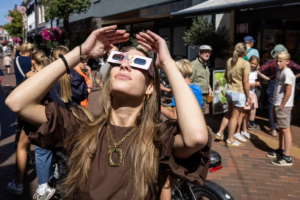
The scramble for protective glasses has reached fever pitch across Europe ahead of August 12, 2026, rare total solar eclipse, as pharmacies, opticians and other shops struggled to keep them in stock.
The eclipse has sparked a wave of excitement in Spain, where thousands of visitors are travelling to rural areas with clear views of the sky. The country expects eclipse-related tourism to contribute about 347 million euros ($400 million) to the economy, with more than 446,000 additional visitors expected in affected regions.
Small towns have become major gathering points for eclipse watchers. In Benavente, a northwestern Spanish town expected to offer a clear view, accommodation has reportedly sold out. Laura del Teso of the local tourism office told AFP that the town was receiving about 50 calls daily from visitors asking about accommodation, viewing locations and parking.
Read More : Trump Rejects Iran Proposal To Reopen Hormuz
Authorities, however, are warning visitors to remain cautious. Spain is facing high temperatures, with some areas expected to exceed 40C, while dry conditions have increased wildfire risks. Officials estimate up to 1.5 million additional road journeys could take place as people travel towards areas experiencing total darkness.
Emergency services and local authorities have prepared special observation areas and increased transport and security measures to manage the expected crowds.
Another total solar eclipse is expected to cross southern Spain and northern Africa in August 2027.