Trending
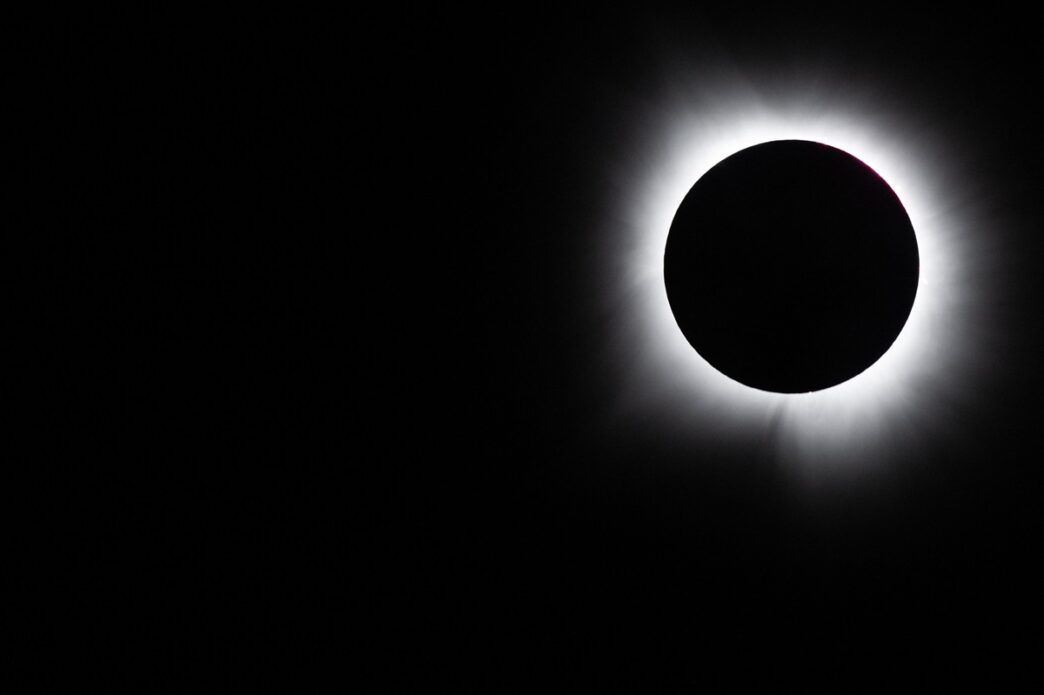
On August 12, daylight will briefly turn to dusk across a large part of northern Spain as the Moon moves directly in front of the Sun, creating a total solar eclipse—the first visible from mainland Europe since 2006.
Here’s everything you need to know about this celestial event.
What causes a solar eclipse?
Read More : UNGA: Lavrov Offers Help in Gulf, Slams Europe
A solar eclipse occurs when the Moon passes precisely between Earth and the Sun, casting a narrow shadow—known as the path of totality—across the planet’s surface.
During those fleeting moments, the sky dims to an eerie twilight, temperatures drop, shadows take on strange shapes, and some animals may even become confused and settle down to sleep.
Such unsettling effects once led ancient civilisations to interpret eclipses as omens of doom or divine messages.
In reality, NASA explains, it’s a “cosmic coincidence”: although the Sun is roughly 400 times larger than the Moon, it’s also about 400 times farther away.
From the right vantage point, this perfect alignment allows the Moon to completely obscure the Sun, revealing the Sun’s outer atmosphere—the glowing corona—in a breathtaking sight.
Where will the eclipse be visible?
The total eclipse will first be seen on August 12 in a remote part of northern Russia. From there, the shadow will sweep across Greenland, Iceland, Spain, and the northeastern tip of Portugal.
In Spain, the path of totality will trace a diagonal route from the northern city of Oviedo down toward the island of Mallorca. Notably, the eclipse will pass over regions that have recently suffered devastating wildfires—blazes that scientists have linked to human-driven climate change.
How long will darkness last?
For viewers in Spain, totality will last less than two minutes, occurring just before sunset. In the northern city of Burgos, for instance, the Sun will be completely hidden for exactly 1 minute and 48 seconds.
The duration will be slightly longer—though still under 2.5 minutes—in parts of Russia and Greenland.
However, the partial phases of the eclipse, as the Moon slowly moves across the Sun’s disk, will stretch for about 1 hour and 45 minutes. A partial eclipse will also be visible across most of Europe, Canada, the northern United States, and northwestern Africa.
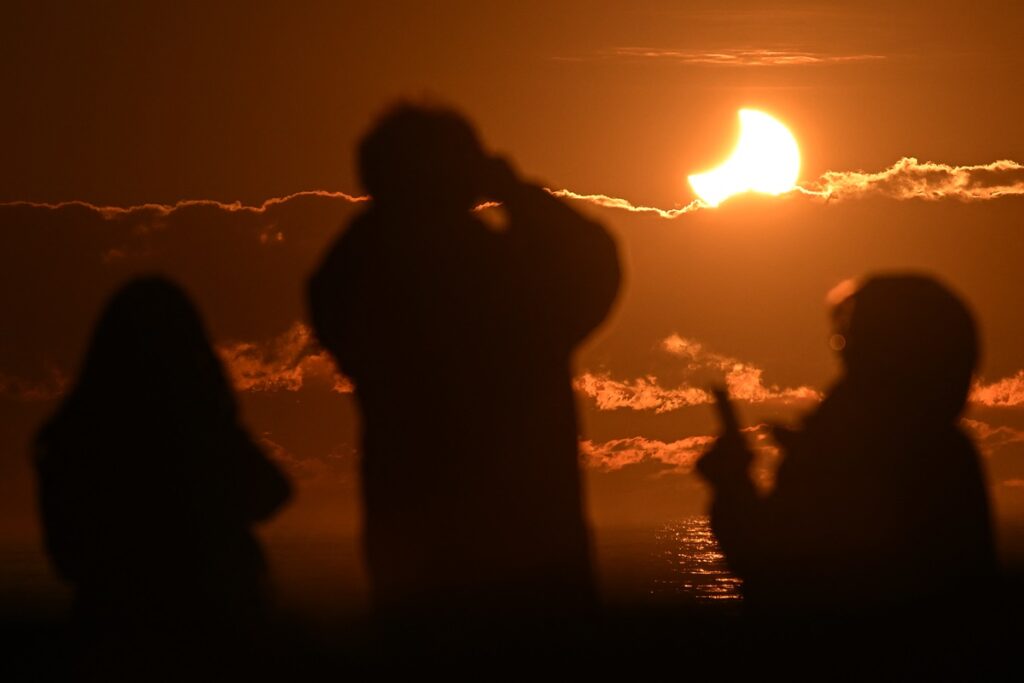
Here is what you need to know about the total eclipse, which is the first visible in mainland Europe since 2006. (Photo by Sanka Vidanagama / AFP)
How rare is this event?
Total solar eclipses happen once or twice a year on average, but because the path of totality is so narrow, any given location may have to wait up to 400 years to experience one again.
The next total solar eclipse will occur on August 2, 2027, crossing southern Spain, northern Africa, and the Arabian Peninsula. That event will feature an impressive totality of 6 minutes and 23 seconds—a duration that won’t be surpassed until 2114.
Spain won’t have to wait long for another spectacle, though: on January 26, 2028, an annular eclipse—often called a “ring of fire”—will be visible across the country’s southern regions.
Do you need eye protection?
Read More : Trump Rejects Iran Proposal To Reopen Hormuz
Absolutely. Looking directly at the Sun during an eclipse can cause permanent eye damage, as the retina has no pain receptors to alert you to harm. Symptoms often appear only hours or days later.
Experts strongly recommend using certified eclipse glasses that filter out harmful UV rays and meet the international safety standard ISO 12312-2:2015. Regular sunglasses, no matter how dark, are not safe.
After the 2024 total eclipse in the United States, online searches for “my eyes hurt” spiked significantly—a reminder that the risks are very real.