Trending
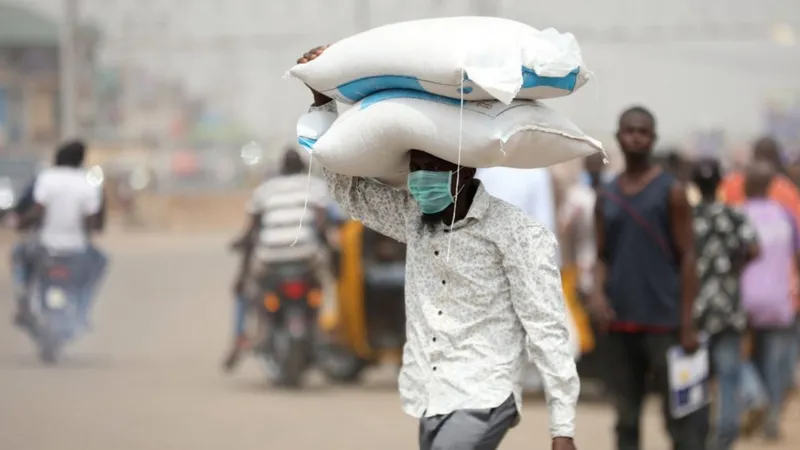
There is a particular kind of theft that no policeman can investigate, no court will ever prosecute, and no CCTV will ever capture, because the thief left no fingerprints. It walked into the homes of millions of Nigerians while they were asleep, and by morning, without breaking a single lock, it had emptied their pockets.
That thief is called inflation, and its accomplice is a government that keeps mistaking the symptom for the disease.
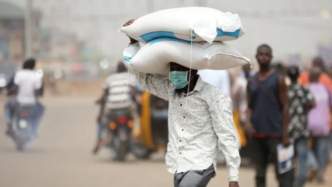
Let’s be honest about what has actually happened in this country. A tailor did not wake up one day and decide to sew fewer clothes, nor an okada rider lose his sense of direction. These and many others did everything right; they showed up, sweated, sacrificed, prayed, sent their children to school, paid their tithes and their levies, and yet, year after year, the same effort buys them less and less of the same life. The economy happened to them.
Read More : Flamingos Win 2026 WAFU U-17 Girls’ Cup
Somewhere between one year and the next, the same amount taken to the market stopped being enough for a week’s worth of soup ingredients and became a sum you now stretch, ration, and pray over before you even enter the market.
Most people have lost their standard of living, and make no mistake, that is poverty too. It is poverty with a payslip, hunger with a job title. It is the particular cruelty of watching your labour lose its worth, while everyone tells you to be grateful you are “still working.”
This is the story we are not telling honestly enough in this country, not in the glossy economic briefings, in the barbershops or in the palliative distribution photo-ops.
Rice is Not the Answer
When people are hungry, feed them; that much is not in dispute. Nobody with a conscience argues against emergency relief for a starving nation, but somewhere along the line, palliatives stopped being an emergency bridge and started being presented as a policy achievement, and that is where the lie begins.
The uncomfortable question that no press release wants to ask is why did millions of working Nigerians, people with jobs and skills, who show up every single day, suddenly need government handouts to eat?
If a man could once buy a bag of rice comfortably from his own salary, and today needs a truck of subsidised rice from government to eat the same meal, giving him that bag of rice solves his hunger for one week; it does not solve his problem, nor does it restore what was taken from him. It is a bandage on a wound that keeps reopening, while nobody addresses the knife still lodged in the body.
The real problem was never that Nigerians can’t be fed; the problem is that Nigerian labour has been quietly stripped of its value, and no amount of rice bags will fix that. You cannot palliative your way out of a currency that keeps dying, a market where inflation outruns income, and a system where hard work no longer compounds into a better life.
So here is the question that should keep every economic policymaker in this country awake at night: not “how many bags of rice can we share before the next election,” but how can people live comfortably within their means?
How do we produce enough food locally that prices fall instead of climbing every single Ramadan and Christmas? How do we bring down the cost of energy and transportation so that the price of moving goods stops strangling the price of everything else? How do we build an economy sturdy enough that when a worker gets a raise, it actually means something, instead of being quietly cancelled out by the naira’s next devaluation?
Because here is a truth too many in power seem determined to avoid: the greatest thing a government can do for its people is not to keep giving them money; it is to build an economy where the money they already earn has value.
That is the whole assignment. Everything else is decoration.
The Dignity We Keep Forgetting to Defend
There is a dignity that Nigeria is quietly bleeding out, and it deserves to be named. There is dignity in a tailor being able to pay her apprentice’s stipend from the clothes she sews, not from a loan she’s still repaying from last Christmas. There is dignity in a driver being able to service his own car from the fares he earns, instead of watching it slowly fall apart because spare parts now cost what the whole engine used to. There is dignity in a young graduate taking an honest job and watching, year after year, life actually get better, not worse, dressed up as “resilience.”
People are not asking this country to make them millionaires. Nigerians are not asking for miracles; they are asking for something far more modest and far more damning of the current state of affairs: they just want hard work to make sense again. They want to look back after five years of grinding and be able to say, “My life has improved.” Not, “I earn more naira now, but somehow I can afford less than I did five years ago.”
That gap between rising income and falling ability to live is the single most honest report card this country has, and it is failing.
The Only Metric That Should Matter
Forget the GDP growth charts nobody in the market can eat. Forget the exchange-rate victory laps that mean nothing to a father calculating whether he can afford both fuel for the week and his daughter’s school fees. There is one question, and only one question, that should determine whether an economic policy in this country is working:
Is the ordinary Nigerian who wakes up early and works hard becoming progressively better off or progressively poorer?
Read More : Atiku Demands Immediate Minimum Wage Hike
If the honest answer is “poorer,” then no amount of press statements, palliative photo-ops, or macroeconomic jargon should be allowed to distract from that failure because a country where labour has no value is not an economy, it is a treadmill and Nigerians have been running on it for far too long, sweating in place, being told they are making progress while the ground keeps moving backward beneath their feet.
It is time the people who govern this country felt, in their bones, what millions of Nigerians feel every time they check the price of a bag of cement, a bag of rice, or a term’s school fees against a salary that hasn’t moved in two years. Not sympathy, not another palliative announcement. Action that restores the value of an honest day’s work.
That is not too much to ask. It is, in fact, the very least a nation owes its people.