Trending
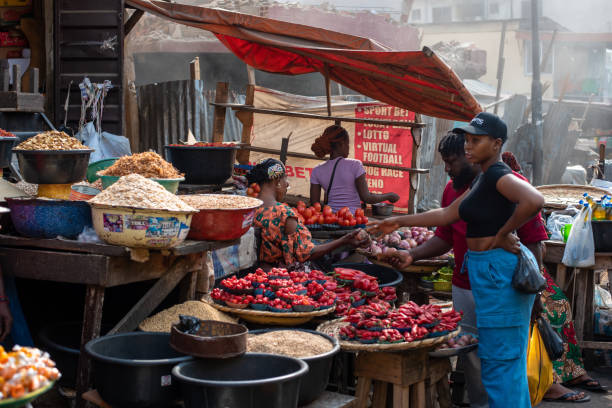
For many Nigerian families, preparing a pot of jollof rice is no longer as straightforward as it once was. What used to be a regular household meal has become increasingly expensive, forcing many people to rethink what they buy, what they cook and, in some cases, how often they eat.
The latest SBM Intelligence Jollof Index (Q2 2026) shows that the country’s food inflation crisis extends far beyond figures released by government agencies. By tracking the cost of preparing a standard pot of jollof rice using ingredients bought in local markets, the report provides a clearer picture of how rising prices are affecting everyday life.
Food Prices Have Climbed Dramatically
The report, which marks a decade of the Jollof Index, reveals just how much food costs have risen in recent years.
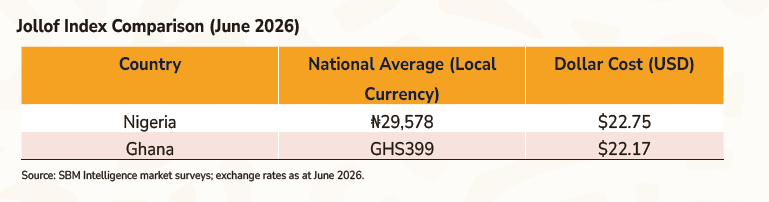
According to SBM Intelligence, the cost of cooking a pot of jollof rice in Nigeria has increased by 624% over the past 10 years. Within just one year—from July 2025 to June 2026—the average national cost rose by 14.6%, reaching ₦29,578.
Researchers attribute the surge to a combination of economic and structural challenges, including the depreciation of the naira, the removal of fuel subsidies, persistent insecurity in farming communities and global energy shocks. Together, these factors have made food significantly more expensive for millions of Nigerians.
Not Every Market Is Feeling the Same Pressure
While food prices are rising across the country, the impact varies from one location to another.
The report found that Bauchi experienced some relief due to improved food supply. However, prices climbed sharply in several other cities. Trade Fair Market in Lagos recorded the biggest jump, with the cost of a pot of jollof increasing by 49.6%. Calabar followed with a 36.3% increase, while Port Harcourt posted an 18.2% rise.
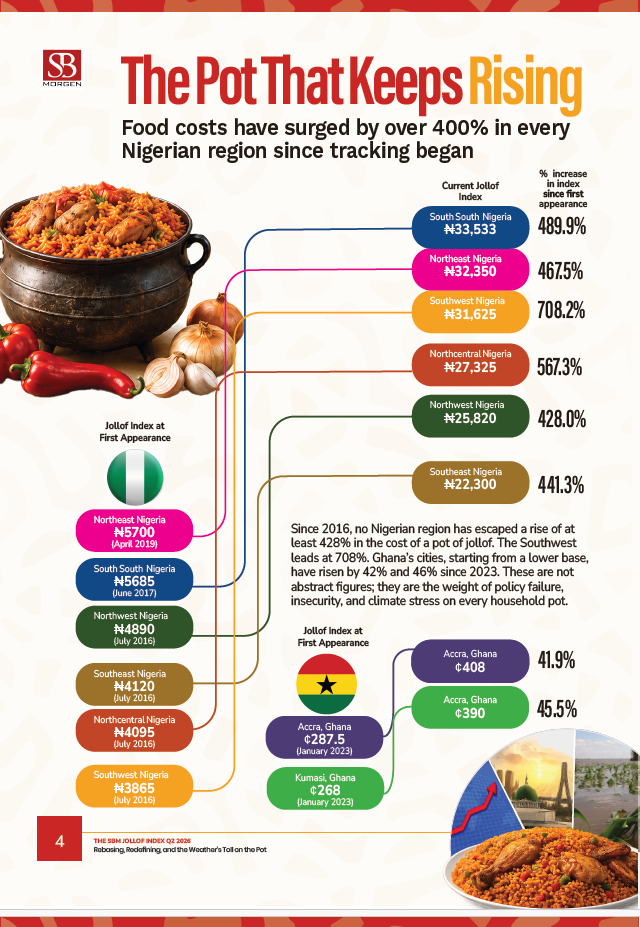
These regional differences reflect how supply shortages, transportation costs and local market conditions continue to shape food prices across Nigeria.
Families Are Adjusting to Survive
Behind the statistics are households making difficult decisions every day.
The report found that many families have stopped buying food items in bulk because they can no longer afford to. Instead, they purchase ingredients in small quantities, often enough for just one meal. Expensive proteins like meat are increasingly being replaced with more affordable options such as crayfish, eggs or cow skin (ponmo), while portion sizes continue to shrink.
According to SBM Intelligence, the Jollof Index has become more than a price tracker—it reflects the everyday compromises households make to keep food on the table.
Women on the Frontline of the Cost-of-Living Crisis
One of the most powerful sections of the report highlights conversations with women who manage household food budgets.
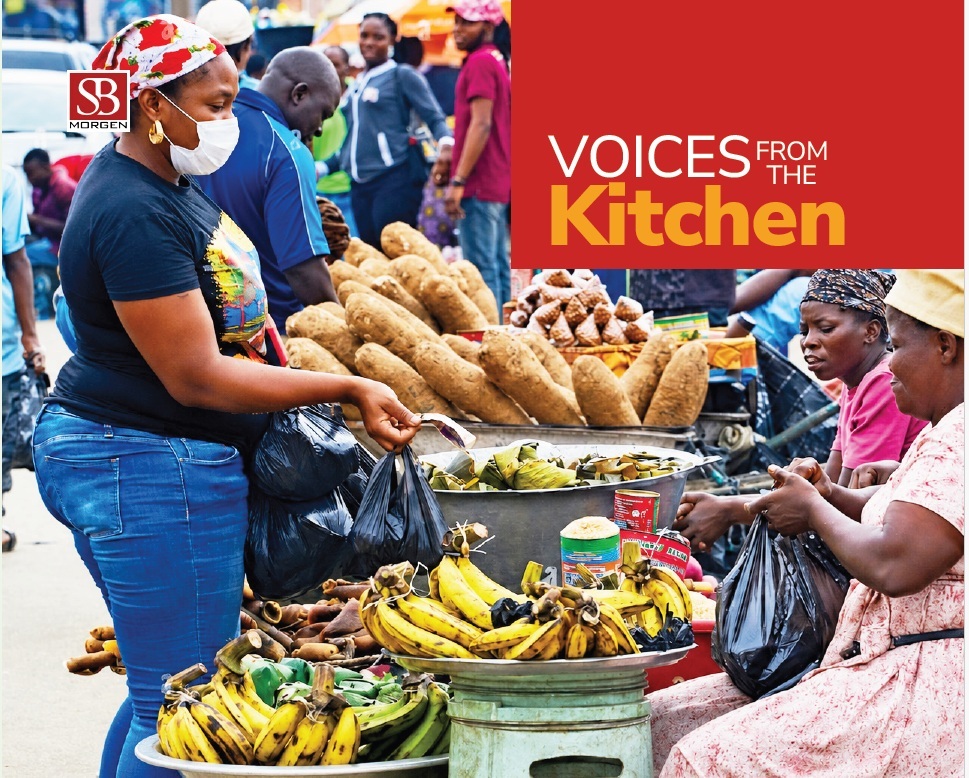
Rather than blaming market traders, many said they understood why prices had increased, pointing instead to insecurity, rising transport costs and broader government failures.
Patience Ekere said:
“They always say it has gotten expensive to purchase from their suppliers, and I believe them because a lot is happening in the country now.”
Mama Angel shared a similar view.
“They say fuel prices and transportation costs have increased. I believe them because the government has made things bad for the citizens.”
When asked what they would change if given the opportunity, the women focused on making food more affordable.
Mrs Okoro said:
“Change the price of pepper and vegetables. I like pepper very much, and it is essential in every meal to make it enjoyable, and it is now very expensive.”
Patience Ekere called for stronger oversight of food pricing and improved security for farmers.
“There should be a regulatory body guiding the pricing of things, and the government should be strict about it because the traders now are doing what they feel like. Secondly, the issue of insecurity has affected most farmers, thereby reducing the quantity of farm produce in the market. If that is tackled, there will be enough food for everyone.”
For Mama Angel, the solution was simple.
“I will reduce the price to the extent that even the poor can afford at least two square meals per day. It will save us from a lot—like stopping theft, and youth will be able to have jobs again, and other things will be better.”
Their experiences echo one of the report’s strongest observations:
“Inflation is not a number. It is the end of bulk buying. It is the switch from meat to crayfish. It is the steady reduction in what goes into the pot.”
Climate Change Is Driving Up Food Prices
The report also points to extreme weather as a growing contributor to rising food costs.
Heavy rainfall is disrupting harvests, damaging crops and making it harder to transport food to markets. Flooded roads, weak storage facilities and poor infrastructure have left Nigeria’s food supply chain increasingly vulnerable, resulting in reduced supplies and higher prices.
Interest Rates Alone Cannot Fix Food Inflation
Although Nigeria’s headline inflation stood at about 15.91%, while food inflation reached 17.52%, the report argues that monetary policy cannot solve the country’s food crisis on its own.
Despite the Central Bank maintaining a Monetary Policy Rate of 27%, the report says the real drivers of food inflation remain insecurity, poor infrastructure, inconsistent policies and climate-related disruptions. These structural issues continue to push prices higher despite efforts to control inflation.
Lessons From Ghana
The report notes that Ghana has experienced relatively more stable food prices in recent months.
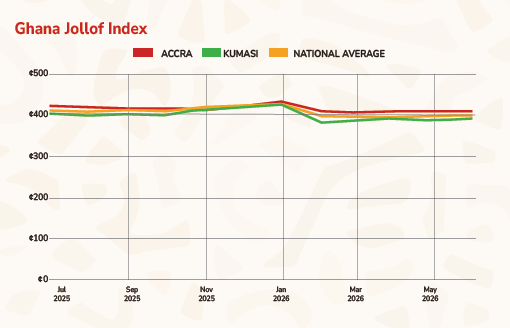
Markets in Accra and Kumasi have benefited from a more stable cedi and easing global grain prices, helping to keep the Jollof Index around GHS400. However, researchers warn that this stability could be short-lived without sustained investment in infrastructure and continued favourable global conditions.
What Needs to Change?
The findings suggest that reducing food prices will require more than monetary interventions.
The report points to several practical steps that could help improve food affordability:
- Strengthen security in farming communities to enable farmers to return safely to their fields.
- Invest in better roads, transportation networks and storage facilities to reduce food losses and lower distribution costs.
- Improve climate resilience by supporting farmers with irrigation, insurance and better agricultural infrastructure.
- Ensure consistent agricultural and economic policies that encourage food production and stabilise markets.
- Expand access to financing and other forms of support for farmers.
- Encourage businesses to strengthen supply chains through diversified sourcing, improved storage and flexible pricing strategies.
More Than Just a Pot of Rice
The SBM Jollof Index makes one point abundantly clear: food inflation is no longer an abstract economic concept—it is a daily reality for millions of Nigerians.
Every smaller portion, every substitute ingredient and every abandoned shopping list tells the story of families adapting to circumstances beyond their control. The cost of a pot of jollof rice has become a powerful measure of household resilience, reflecting the difficult choices many Nigerians make simply to put food on the table.
In conclusion, the real challenge is no longer whether prices will continue to rise, but whether governments can build a more resilient food system capable of protecting vulnerable households. For now, that answer remains uncertain.