Trending
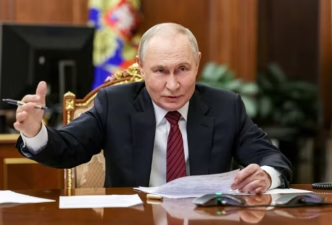
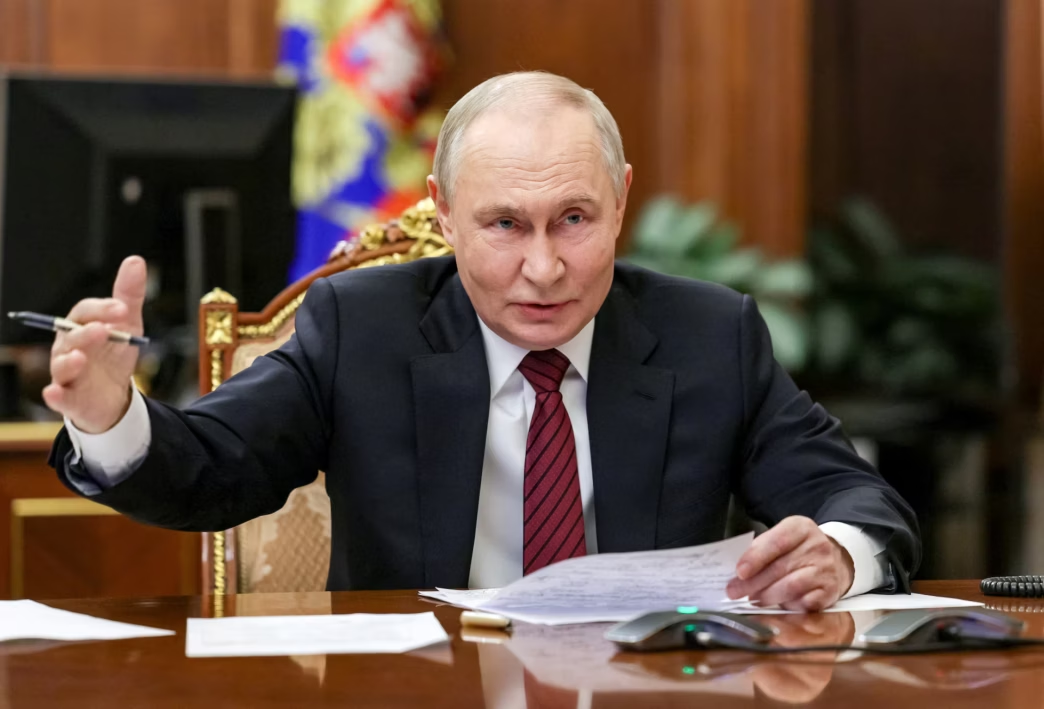
Japanese Prime Minister Sanae Takaichi has protested Russian President Vladimir Putin‘s visit to Iturup Island, one of four islands Japan claims as its territory.
Takaichi said on Thursday that the trip could further damage already strained relations between Tokyo and Moscow.
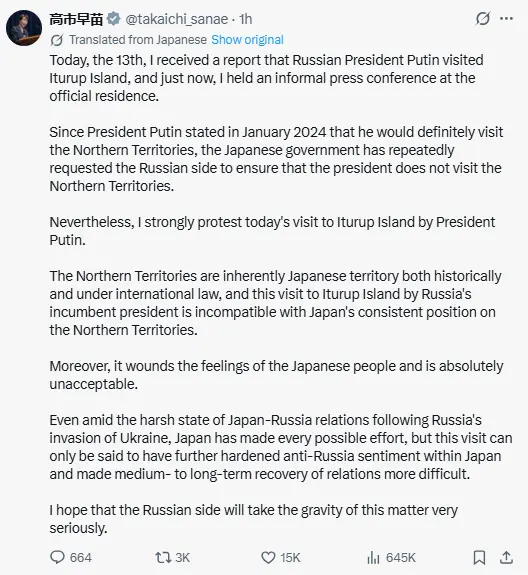
“Since President Putin stated in January 2024 that he would definitely visit the Northern Territories, the Japanese government has repeatedly requested the Russian side to ensure that the president does not visit the Northern Territories,” she said.
Read More : Khamenei Vows US Will Exit Middle East
“Nevertheless, I strongly protest today’s visit to Iturup Island by President Putin.”
Putin’s visit marks his first in-person trip to the disputed Kuril Islands.
During his visit to Iturup, known as Etorofu in Japan, he toured a fish-processing plant and other facilities, according to Russian and international reports.
Takaichi said the visit was incompatible with Japan’s longstanding position on the territorial dispute.
“The Northern Territories are inherently Japanese territory both historically and under international law,” she said.
“Moreover, it wounds the feelings of the Japanese people and is absolutely unacceptable,” she said.
Long-running Territorial Dispute
The Northern Territories comprise Iturup, Kunashir, Shikotan and the Habomai Islands, which Japan claims as its own.
Russia controls the islands and considers them part of its territory.
The dispute dates to the final stages of World War II, when Soviet forces occupied the islands following Japan’s surrender in August 1945.
Japan maintains that the four islands are inherently Japanese territory and says the Soviet occupation was unlawful.
Japan points to the 1855 Treaty of Commerce, Navigation and Delimitation, which established the border between the two countries between Iturup and Urup, as part of the historical basis for its claim.
The territorial dispute has also prevented Japan and Russia from concluding a formal peace treaty to fully end the World War II state of hostilities.
Ties have deteriorated sharply since Russia’s 2022 invasion of Ukraine, with Japan joining Western sanctions against Moscow.
Tokyo has nevertheless maintained that it wants to resolve the territorial dispute and eventually conclude a peace treaty with Russia.
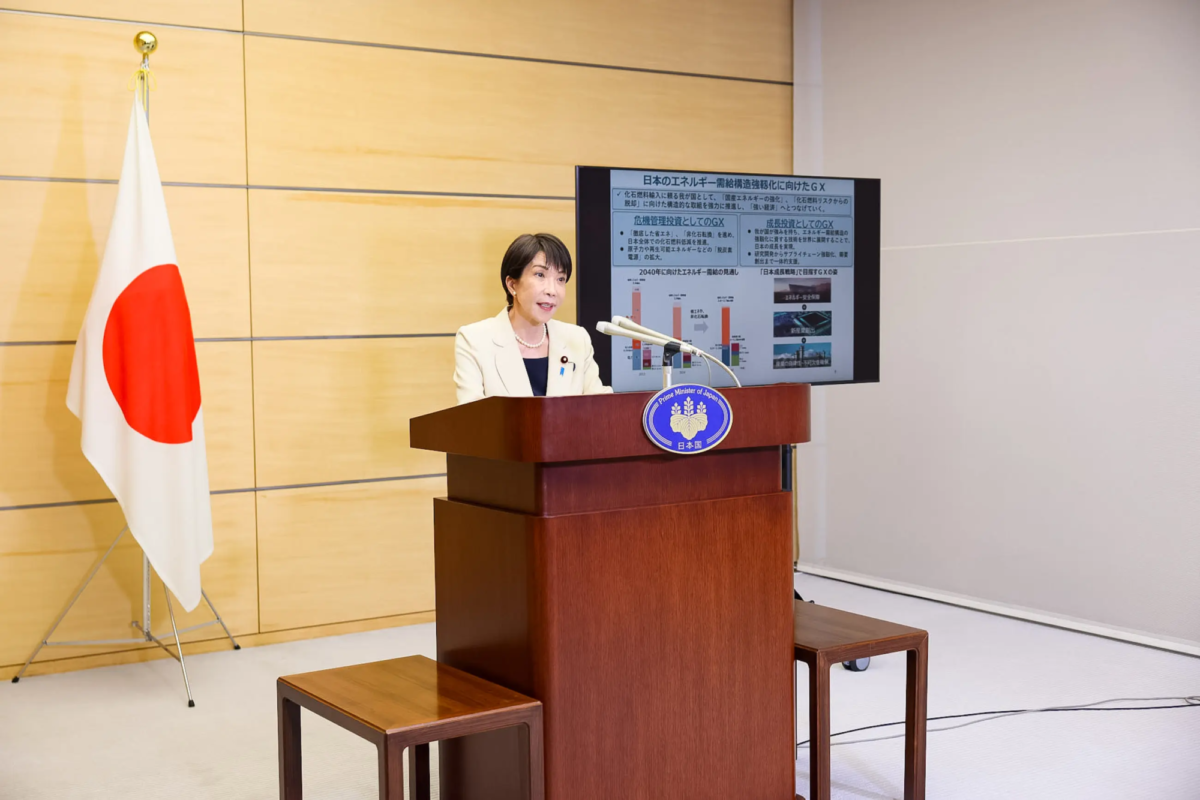
Takaichi said Putin’s latest visit could make that objective even harder.
“Even amid the harsh state of Japan-Russia relations following Russia’s invasion of Ukraine, Japan has made every possible effort,” she said.
“But this visit can only be said to have further hardened anti-Russia sentiment within Japan and made medium- to long-term recovery of relations more difficult.”
She urged Moscow to recognise the seriousness of the dispute.
“I hope that the Russian side will take the gravity of this matter very seriously,” Takaichi said.
Putin’s trip comes against a backdrop of heightened military activity in the region. His visit followed Russian naval exercises in the Far East and came shortly after North Korea, a close Russian partner, conducted a ballistic missile launch.
Japan has previously protested visits by senior Russian officials to the disputed islands, including a 2021 trip by then-Prime Minister Mikhail Mishustin.
Putin’s physical presence on Iturup, however, gives the latest visit particular significance.