Trending
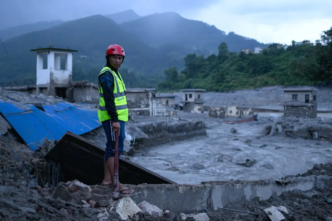
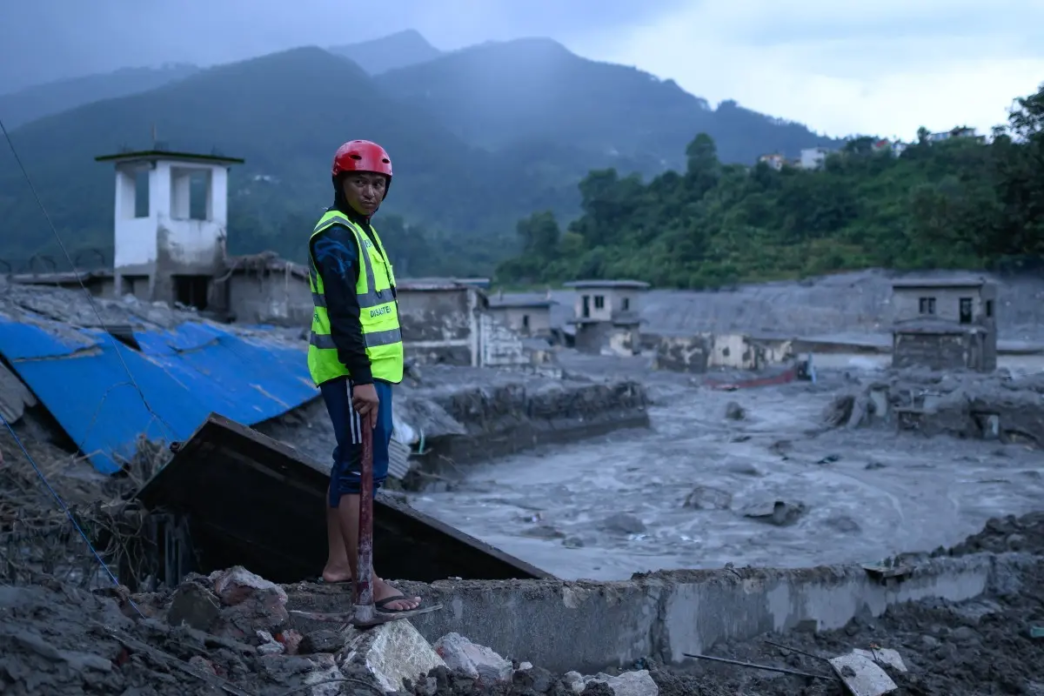
Nepal has warned of rising floodwaters and urged rescue teams and residents in affected areas to exercise caution as search and recovery operations entered a fifth day after a deadly torrent of icy debris and water near the China-Nepal border.
The National Disaster Risk Reduction and Management Authority (NDRRMA) issued the warning early Sunday after receiving reports that water levels in the Bhotekoshi River in Rasuwa had risen further.
“We have received information that the flood flow in the Bhotekoshi River in Rasuwa has increased further,” the authority said in a warning issued at 7:20 am local time.
The NDRRMA called on personnel involved in search, rescue and relief operations to remain vigilant, particularly those working close to rivers and other potentially dangerous areas.
“Therefore, all personnel engaged in search, rescue, and relief operations, those in riverside areas, and everyone else in affected areas including Rasuwa, Nuwakot, Dhading, and Chitwan are requested to exercise caution,” it said.
The warning comes as emergency teams continue efforts to locate people missing after Wednesday’s disaster, which sent a powerful surge of water, ice and debris downstream.
The United States Geological Survey said a glacial collapse in the mountainous region along the China-Nepal border caused the disaster. The collapse released a large volume of water and debris, sweeping through areas downstream and leaving widespread destruction in its wake.
The scale of the disaster has made search and recovery operations particularly challenging, with unstable conditions and rising river levels posing additional risks to rescuers.
Figures released by authorities in Nepal and China indicate that nearly 3,000 people remain missing following the disaster, while 691 bodies have so far been recovered.
The rising flow of the Bhotekoshi River has added another layer of uncertainty for rescue teams working to locate survivors and recover victims. Authorities have therefore urged those operating in affected districts to remain alert to further changes in river conditions.
With rescue and relief efforts continuing, officials are expected to closely monitor waterways and surrounding areas as teams work through the devastation caused by the glacial collapse.