Trending
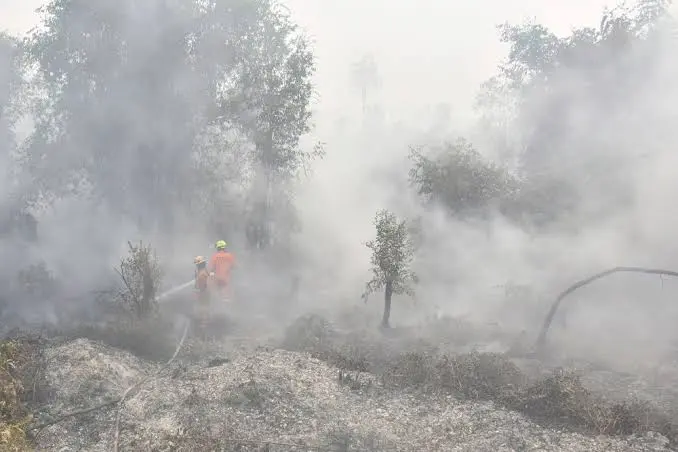
Indonesia’s haze-hit regions have recorded more than 170,000 respiratory infection cases since August.
Health Ministry official Then Suyanti disclosed the figure at a news conference on Tuesday. She said the cases were recorded between August and September 21 in areas affected by forest and land fires.
“There were 174,694 cases of acute respiratory infections between August and September 21 in areas affected by forest and land fires,” she said.
More than 40,000 of the cases involved toddlers, she added.
The figure covers seven provinces affected by the toxic haze. It has risen sharply from more than 113,000 cases recorded as of September 9. The fires have spread across Borneo, Sumatra and Papua.
The resulting smoke has also affected neighbouring Malaysia and Singapore. The haze contains PM2.5, a fine pollutant that can enter deep into the lungs.

Health officials have warned that exposure can increase the risk of respiratory infections and other health problems.
The government has sent aid to affected regions.
This includes oxygen concentrators, face masks and oxygen canisters.
Meanwhile, she urged residents to take precautions when air quality worsens.
“We advise (the public) to reduce outdoor activities when air quality worsens, use masks and maintain hydration,” she said.
Indonesia regularly battles wildfires during the dry season, which usually runs from July to October.
However, the fires have been more intense this year.
Read More : Russia Demands End To EU Sanctions
Experts have linked the worsening fires to what is expected to be the strongest El Niño climate phenomenon since comparable records began four decades ago.
They have also blamed climate change, forest degradation and slash-and-burn land clearing.
These practices have damaged Indonesia’s naturally fire-resistant landscape and increased the risk of severe fires.