Trending
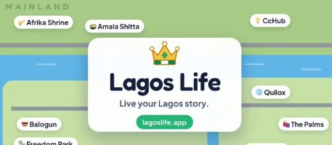
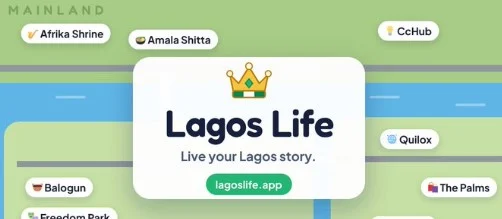
Lagos Life, a free browser-based game inspired by The Sims, has reportedly reached a $10 million valuation just eight days after its launch, following a $500,000 pre-seed funding round.
The game, which recreates life in a virtual Lagos, was launched on October 1 by Nigerian software developer Shalom Rayhamen. Vatar, Inc., the company behind the game, raised the funding.
According to Techpoint Africa, Rayhamen incorporated Vatar in Delaware on October 5, four days after the launch. She said the funding round closed in just one day and was completed three days after the company was registered.
Read More : J.P. Morgan to Open Merchant Bank in Nigeria
Investors include Flutterwave Chief Executive Officer Olugbenga “GB” Agboola, through his fund Resilience17, alongside Oo Nwoye, Terra Industries CEO Nathan Nwachuku, and Mono CEO Abdulhamid Hassan. The $500,000 investment gives the investors an estimated 5% stake in the company, based on the reported $10 million valuation.
By October 8, Lagos Life had attracted 4.3 million players, up from about 2.5 million earlier in the week, Rayhamen told TechCabal. The game’s rapid growth has also raised questions about its operating costs and ability to make a profit.
In an October 6 interview with The African Engineer, Rayhamen said she was spending about $2,000 monthly on Amazon Web Services (AWS), which hosts the game, and $4,000 on Cloudflare, which helps protect it from bots and cyberattacks. She put her running costs at about $6,500 at the time and said she had received $10,000 in AWS credits.
However, the game’s infrastructure had to change twice during its first week. Rayhamen initially used Cloudflare’s database service but described it as “not scalable” under the growing demand. She then moved the database to DigitalOcean before transferring the entire application to AWS and enabling autoscaling.
As the number of players increased, the costs could also change. Rayhamen has not publicly confirmed the game’s current operating expenses or whether it is profitable. Lagos Life earns revenue by selling advertising space and promotional opportunities within its virtual world.
Businesses can rent billboards and plots along the game’s lagoon. Techpoint Africa reported that weekly billboard prices rose from ₦5,000 to ₦50,000 on October 5. Rayhamen also said the game generated about $46,900 in its first four days.

Vatar has since reported more than $170,000 in earnings and contracted deals. The figure includes both money received and agreements signed, so it does not represent confirmed cash revenue alone. The company has five main revenue streams: advertising, music promotion, brand deals, football streaming and in-game purchases.
Players can spend real money to increase their virtual cash balance. However, this has created challenges for the game’s internal economy. Rayhamen has acknowledged that too much virtual money is in circulation.
“We have too much money in the game. So much money,” she told The African Engineer.
A loophole allowed some players to generate more virtual cash than intended. The money then spread through transfers between players. To address the problem, the team flagged accounts that had only received transfers. Some players subsequently saw their balances drop to zero.
Some players have asked to withdraw money from the game. However, Lagos Life’s terms state that its in-game naira cannot be redeemed for real money. Rayhamen told The African Engineer that player demand alone would not determine whether withdrawals would be allowed.
In an interview with Fosudo published on October 7, Rayhamen dismissed a reported $100,000 offer for Lagos Life.
“$100,000 is small. Lagos Life is valued at $1 billion,” she said.
Read More : Naira Trades At ₦1,385 on Parallel Market
She also outlined two goals for the next 30 to 90 days: closing a pre-seed funding round and releasing a second game.
Vatar has since secured the $500,000 round at a reported $10 million valuation, which is 1% of the $1 billion figure Rayhamen mentioned. The company plans to use the funding for product development, marketing and hiring.
Rayhamen also told Fosudo that Android and iOS versions of Lagos Life could launch by the end of October. The game’s rapid growth has attracted millions of players and early investors. However, its long-term prospects will depend partly on whether Vatar can manage its rising costs, balance its virtual economy and turn its growing audience into sustainable revenue.