Trending
From spectrum auctions to shared infrastructure, African markets are looking for ways to make 5G investment commercially viable.
African telecom operators are committing more capital to spectrum, fibre and network upgrades as data demand rises. Regulators are meanwhile testing new ways to make network investment commercially viable across increasingly data-intensive markets.
Ghana has become a new test case for how African telecom markets can attract capital for the next generation of connectivity, after MTN Ghana secured US$202 million of spectrum as the country moves away from an exclusive wholesale 5G model.
Read More : Navi Pillay’s Nobel Win Spotlights Press Freedom
The move comes as operators face a much larger investment requirement across the continent. According to the GSMA, mobile operators in Africa are expected to invest more than US$76 billion in network infrastructure between 2024 and 2030.
The scale of that investment reflects a market moving beyond basic coverage toward capacity, quality, and usage.
According to the GSMA, about 63% of Africans live within mobile broadband coverage but do not use mobile internet, while 5G is expected to account for 21% of mobile connections by 2030.
Nigeria offers a recent illustration of how quickly demand is pressuring existing networks. According to the Nigerian Communications Commission, data consumption rose nearly 47% to 1.66 million terabytes in July 2026 from 1.13 million terabytes a year earlier. NCC chief executive Aminu Maida said, “The investment challenge before us is not merely one of expanding coverage.”
Ghana is now changing the structure of its 5G market as it tries to accelerate that investment. According to the National Communications Authority, it removed Next Gen Infraco’s exclusive rights to operate as Ghana’s sole wholesale 5G infrastructure provider in July, saying a competitive wholesale market should promote investment, innovation, network resilience and wider access.
The decision followed concerns about the pace and distribution of 5G deployment. According to the NCA, NGIC had 49 5G sites when the regulator proposed removing the exclusivity clause in March, with 43 of those sites located in Greater Accra. The regulator subsequently opened spectrum applications in the 700 MHz, 2.3 GHz and 3 GHz bands for mobile broadband and 5G services.
According to the NCA, the process included rollout obligations designed to support timely nationwide deployment and improve connectivity.
MTN Ghana has now committed US$202 million to additional spectrum, securing two 700 MHz lots for US$100.9 million and 150 MHz in the 3 GHz band for US$101.1 million. According to MTN Ghana’s announcement, the 15-year licences will be used alongside its existing spectrum to expand 5G, strengthen network capacity and improve service quality.
The Ghana model puts infrastructure ownership at the centre of the investment debate. Instead of relying exclusively on a wholesale network, Ghana is allowing mobile operators to make more direct spectrum and network investment decisions while retaining a wholesale 5G infrastructure player.
Nigeria is taking a different route while confronting the same pressure on network investment. According to the Nigerian Communications Commission, the country is preparing another auction of 2 x 100 MHz in the 3.5 GHz band to support 5G deployment and new digital services.
The spectrum process comes as Nigeria tries to attract more capital into the infrastructure behind connectivity. According to the NCC, its September Digital Connectivity Investment Forum brought together regulators, investors, infrastructure providers and development partners to examine investment requirements and barriers to deployment.
The discussion is increasingly moving beyond spectrum itself. According to the NCC, Nigeria’s investment priorities include network expansion and modernisation, while right-of-way issues, energy, affordability, and supporting infrastructure remain important parts of the connectivity equation.
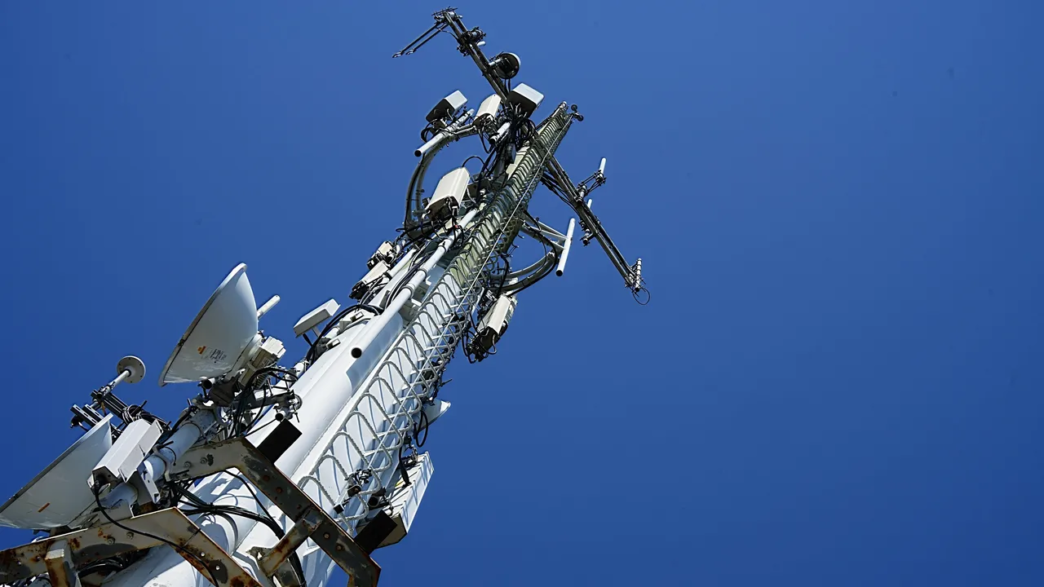
That changes the economics of a telecom investment. An operator can spend hundreds of millions of dollars acquiring spectrum, but still has to finance towers, fibre, power, transmission equipment and network upgrades before that spectrum becomes usable capacity.
South Africa provides a recent example of that second layer of spending. According to Vodacom, its Western Cape business will invest more than R500 million, about US$30 million, in network infrastructure during the current financial year, including R380 million for radio access network modernisation and upgrades to more than 50 sites.

The spending will support 5G capabilities, network capacity, energy efficiency and resilience. That shows why the economics of 5G cannot be measured through spectrum auctions alone. Operators must continue investing after licences are awarded, often in markets where consumers remain highly price-sensitive.
The scale of that spending is visible in the balance sheets of Africa’s largest operators. According to Airtel Africa, capital expenditure rose 31.9% to US$884 million in the year to March 2026, while the company deployed more than 3,250 new network sites and expanded its fibre network by about 3,200 kilometres to 81,900 kilometres.
Airtel Africa expects to increase that investment to about US$1.1 billion in 2026/27, excluding licence renewals and spectrum acquisitions. According to the company, the additional spending will support network coverage and capacity as well as home broadband and data centre businesses. That investment is increasingly being driven by data rather than voice.
Airtel Africa reported that data revenue was its largest mobile services revenue component in the year to March 2026, while data customers increased 14.8% and data traffic continued to grow. This strengthens the case for infrastructure sharing across the continent.
MTN Group senior vice-president Ebenezer Asante has argued that Africa cannot afford to have operators repeatedly build separate infrastructure for the same markets. “That layer of digital infrastructure is not one that requires competition. It’s one that requires shared ownership,” he told Semafor.
Read More : UN: Four Million Displaced in Central Sahel
The argument is gaining relevance as operators prepare for demand from 5G, cloud computing and artificial intelligence.
According to Semafor, MTN is leading an industry push to share critical digital infrastructure more widely, arguing that the traditional model of building separate networks is becoming harder to sustain.
Bonface Orucho, bird story agency