Trending
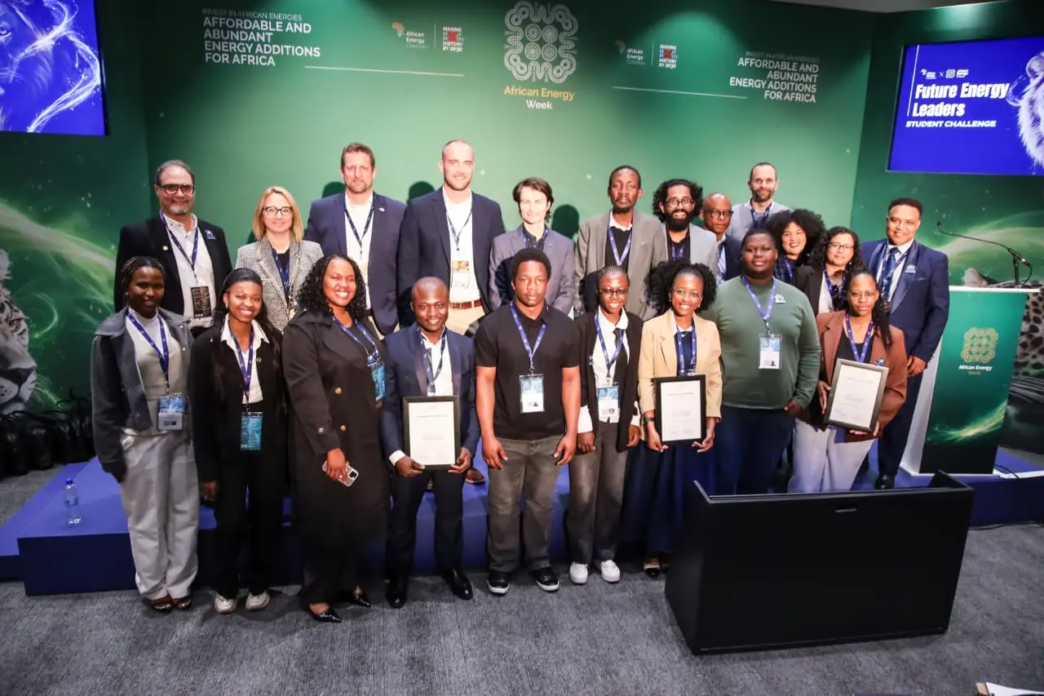
University students in South Africa have proposed new ways to fund free electricity for poor households, improve water supply for farmers and manage the retirement of ageing power stations, as part of a competition placing reliable and affordable electricity at the centre of the region’s energy transition.
The winning entry in the African Energy Week Future Leaders Student Challenge was Team Cobalt, which proposed using the country’s electricity carbon tax to fund free electricity for the poorest homes and introduce new power supply without imposing a new tax.
The team proposed that the government set aside a fund of R6.2 billion a year, capped in law, with first transfers from April 2028.
Read More : Egypt’s Sisi Says Departure in 2030 Is Settled
Under the plan, R1.86 billion, or 30 percent, would be directed toward households, while R4.34 billion, or 70 percent, would go toward new power supply.
This represents about 1.75 percent of Eskom’s revenue.
Second place went to Team Rubidium, which introduced Kgalagadi Axua Intelligence, an initiative to roll out solar technology and improve smart water management, particularly across farms.

The team addressed a challenge in the Northern Cape, where water access has been affected by fuel shortages and anticipated El Niño disruptions.
Through the initiative, farmers would have access to financing options and solar infrastructure to ensure stable water supply.
Third place was awarded to Team Chromium, which proposed a conditional retirement framework for the Camden Power Station, initially projected to close in 2030.
The team introduced a five-test solution before such units retire, covering financial close, replacement of metered output, dependable supply, the network, and accounting for people in the area.
The programme was created by the African Energy Chamber in collaboration with the University of Cape Town, Stellenbosch University, the University of the Western Cape, Cape Peninsula University of Technology and the University of Pretoria.
Up to 150 students participated. Against a backdrop of ageing power stations, replacement generation, storage requirements and changing electricity networks, each team selected a real problem affecting a particular place, organisation or community.