Trending

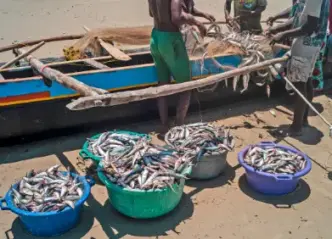
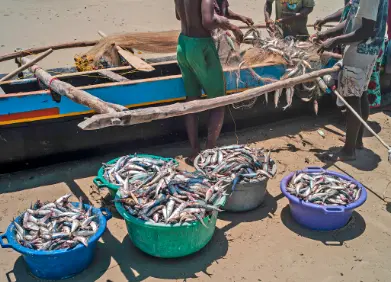
Fishers in Madagascar have faced tougher sea conditions, forcing many to travel farther to catch enough fish to support their families.
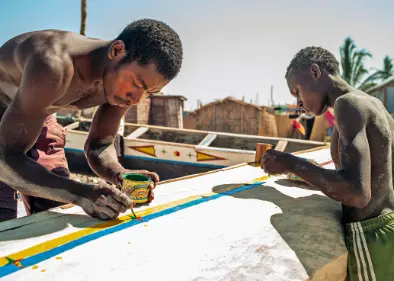
In Mantanito, a fishing village on the country’s Menabe coast, Vezo families depend on the sea for food and income. They build their own traditional outrigger canoes and use fishing skills passed down through generations.
However, changing weather conditions and pressure on fish stocks are making their work harder. Nariky, a 46-year-old fisher, spent a day repairing his nets after strong winds kept him ashore. The next morning, he returned to sea.
“I left at about two in the morning and, luckily, came back with around 20 kilos of fish, including sardines, as well as a few crabs and some prawns,” he said.
Nariky asked to be identified only by his first name. On the village beach, wooden masts rise above painted canoes pulled onto the sand. Fishers remove silvery fish from their nets and place them in plastic basins.
Some of the catch feeds their families. The rest is sold to pay for school fees, healthcare and home repairs.
Vezo communities have depended on fishing along Madagascar’s western and southwestern coasts for generations. Their communities stretch from Morondava to areas south of Toliara.
The name Vezo is believed to come from the expression mivehy izao, meaning “to handle an oar”. Children often learn to sail, fish and understand the sea from an early age. Traditional Vezo canoes are carved from a single log, often from the farafatse tree, known scientifically as Givotia madagascariensis. The wood is valued for being light.
Canoe makers shape the hull by hand. They then attach wooden beams connecting the canoe to a float. This outrigger helps keep the narrow boat stable, while a square sail helps it move across the water.
“I built all eight of my canoes myself,” said Jean Tsimiraiky, 24.
“It takes me three days to build a canoe about five metres long. I’ve been doing this for about ten years, since I left school.”
Fishers use different methods, including nets and seines. Some also dive underwater to catch fish. They rely on knowledge passed down through generations to decide when and where to fish. They study the wind, tides and currents, and know where fish are likely to gather during different seasons.
But conditions have become more difficult.
Nariky said he sometimes travels up to 50 kilometres to find enough fish. When the wind becomes too strong, he stays on land.
A 2022 study of the Barren Isles, off Madagascar’s west coast, examined how weather affects fishing. Researchers combined fishers’ knowledge of winds and waves with weather data covering 1979 to 2020. They estimated that the number of hours when conditions allowed canoes to go to sea had fallen by about 22 hours per year over the period.
Samantha Farquhar, the study’s lead author, said wind was the main factor affecting when fishers could safely take their sailing canoes out. Vezo fishers have long relied on seasonal wind patterns to plan their trips.
“When those expected patterns become less predictable or are disrupted, fishing opportunities can be reduced,” Farquhar said.
She said the findings could help explain the difficulties reported by fishers in Mantanito. However, more research would be needed to confirm whether the conditions there reflect a long-term change.
Because historical weather measurements are limited, researchers reconstructed past conditions using data from satellite observations, other measurements and atmospheric models. Farquhar stressed that local knowledge was also important.
“Local observations, traditional knowledge and accounts passed down orally in fishing communities are just as important. They can offer valuable insights into how the environment has changed over time and help interpret scientific data in light of local conditions,” she said.
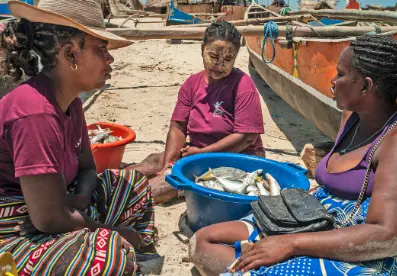
Research in Ampasimandroro, Maintirano, also found that weather often prevented fishers from going to sea.
Avisoa Francis Nirindrainy, a co-author of the study who interviewed fishers there, said most respondents identified southerly winds as the main reason they stayed ashore. Many said sailing or fishing became difficult or dangerous when wind speeds reached 25 to 30 kilometres per hour.
Waves measuring one to two metres were also enough to stop some fishing trips. Meanwhile, winds below about five kilometres per hour were often too weak to carry canoes to distant fishing grounds. In such conditions, some fishers stayed close to shore.
Nirindrainy said fishers in Mantanito could face similar challenges because both communities depend on small-scale fishing along Madagascar’s west coast. However, further research would be needed to establish whether they experience the same conditions.
In Ampasimandroro, fishers also use weather forecasts shared by the local Blue Ventures office to decide when to go out.
When bad weather keeps them away from the sea, some fish in rivers or sheltered waters. Others earn money by driving bicycle rickshaws or three-wheeled motorised vehicles known as bajajs. Some women also take up sewing and other small jobs to make up for lost income.
Beyond the weather, declining fish stocks pose another threat to coastal livelihoods. The World Bank has estimated that climate change could reduce Madagascar’s maximum catch potential by up to six per cent by 2040 and nearly 10 per cent by 2050 under pessimistic scenarios.
Research in Menabe has also highlighted pressure from fishing.
For 13 of the 20 most common species in one small-scale fishery, fishing-related deaths were higher than natural mortality. Researchers also found that many fish were caught before they could reproduce.
Nariky has already moved along the coast in search of better fishing opportunities. He left Andranopasy, a village south of Belo-sur-Mer, about 80 kilometres away, after struggling to support his family.
“We put in the effort and spent hours at sea, but we caught little and made hardly any money,” he said.
Moving in search of better fishing grounds has long been part of Vezo life. However, finding a more reliable source of income remains difficult. Women also contribute to household earnings by selling fish at local markets and gathering shellfish or crustaceans.
Mahereza, looks after the household while her husband goes fishing. She said she sometimes sells dried fish, but her earnings are uncertain.
“Sometimes I have a few dried fish to sell, like today. But that’s rare,” she said.
“I sell the fish directly at the market. Prices vary by species, but they’re usually between 7,000 and 9,000 ariary a kilo. When sales are good, I can make an average of 30,000 ariary a day.”
The prices amount to about $1.50 to $2 per kilogramme, while a good day’s sales can bring in around $6.50.
Most of her customers are local. However, her earnings are often not enough to cover daily expenses.
Bad weather makes the situation worse by keeping canoes on the beach and reducing opportunities to earn money.
To protect their livelihoods, fishers in Mantanito have formed an association that encourages more sustainable fishing practices.
Its president, Ramiandrisoa Sylvain, is also a fisher. He said the group works with nearly 800 fishers and holds weekly discussions on ways to protect marine resources.
“We make sure fishing seasons are respected and adapt our gear to reduce practices that could damage the seabed or catch fish before they mature,” he said.
“We made these changes following recommendations from the authorities, who help us understand and follow fishing regulations.”
The association hopes that protecting fish stocks will help families earn a living today and preserve fishing for future generations.
For Nariky, however, the difference between a difficult day and a successful one can still depend on the wind.
A short break in strong winds can mean the chance to return to sea, catch enough fish and provide for his family.
Credit: Aina Zo Raberanto by Bird story agency